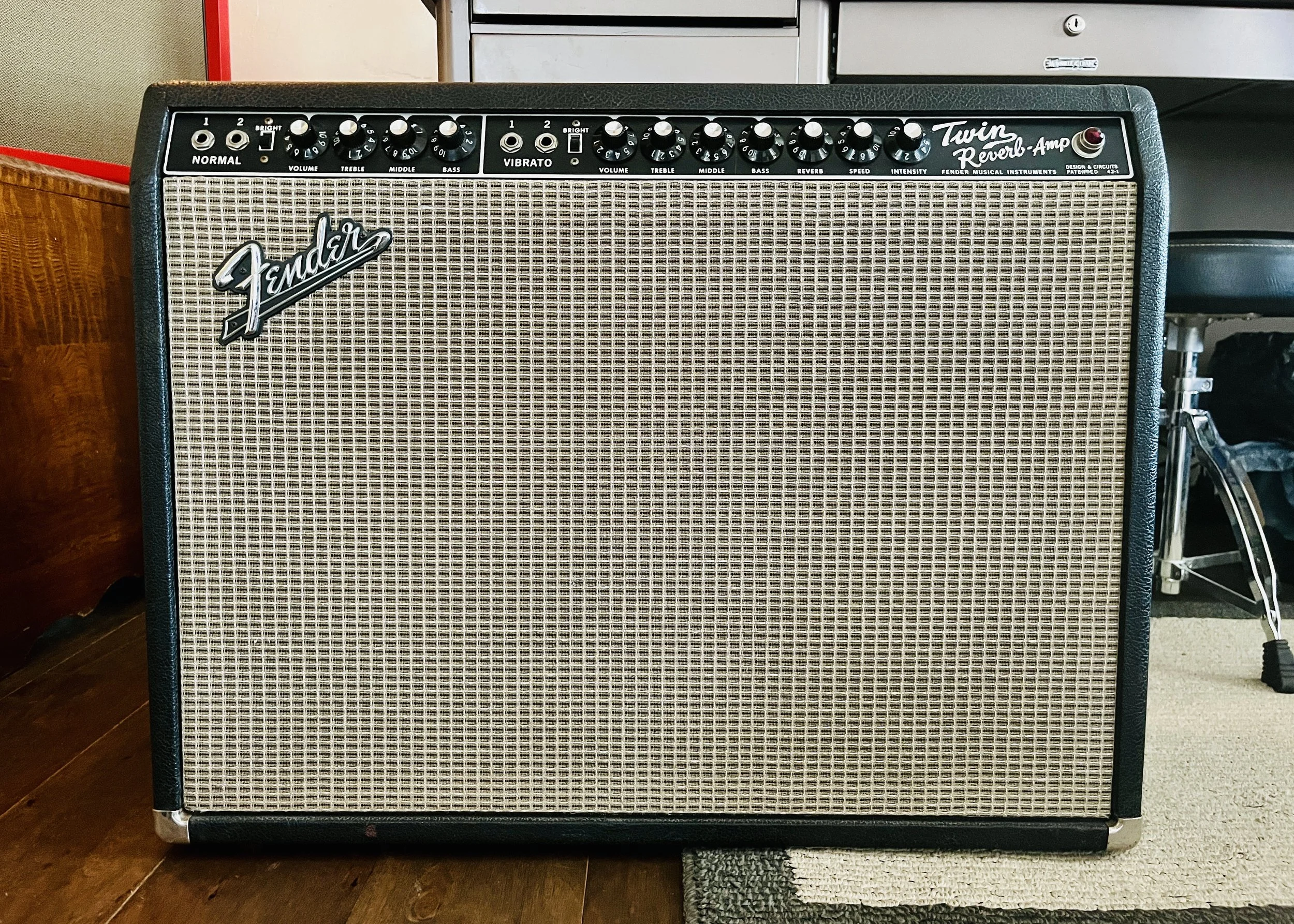
1965 Fender Twin Reverb
There are many versions of the Twin Reverb that Fender made during the 1960’s and 1970’s. All of them were very popular with musicians then and now and consequently the Fender Twin Reverb is the most common vintage amp that I get in. This 1965 Twin Reverb is much more rare than the Silver-Panel versions made in the 70’s, it was made before the buyout of Fender by CBS in 1968 and is considered the high-water mark of high wattage clean pedal-platform type amplifiers made by Fender or anyone else for that matter. This is the year Fender chose for its Vintage 65’ Reissue line for a reason, it is the best year of production for Fender Black-Panel amplifiers and they command the most interest and money for collectors and professional musicians alike. These are incredible sounding amps with 85 Watts RMS of power, 2 x 12” speakers, and in my opinion the greatest sounding Reverb and Tremolo effects of any model made by Fender. Country players took to this version of the Twin for its crystal clear tone with huge dynamics. They are also a favorite with blues and rock players who plugged all manor of effects units into these to transform them into psychedelic machines and heavy ear-bleeding hard rock icons with equal ease. These amps can be tonal chameleons depending on the guitar or pedal-board used, or they can get those classic blues, country, and surf rock sounds they were intended for. Either way this is my favorite amplifier Fender ever made, period. I make no apologies for being biased here. Notable users include: Mike Bloomfield, James Burton, and Johnny Winter.
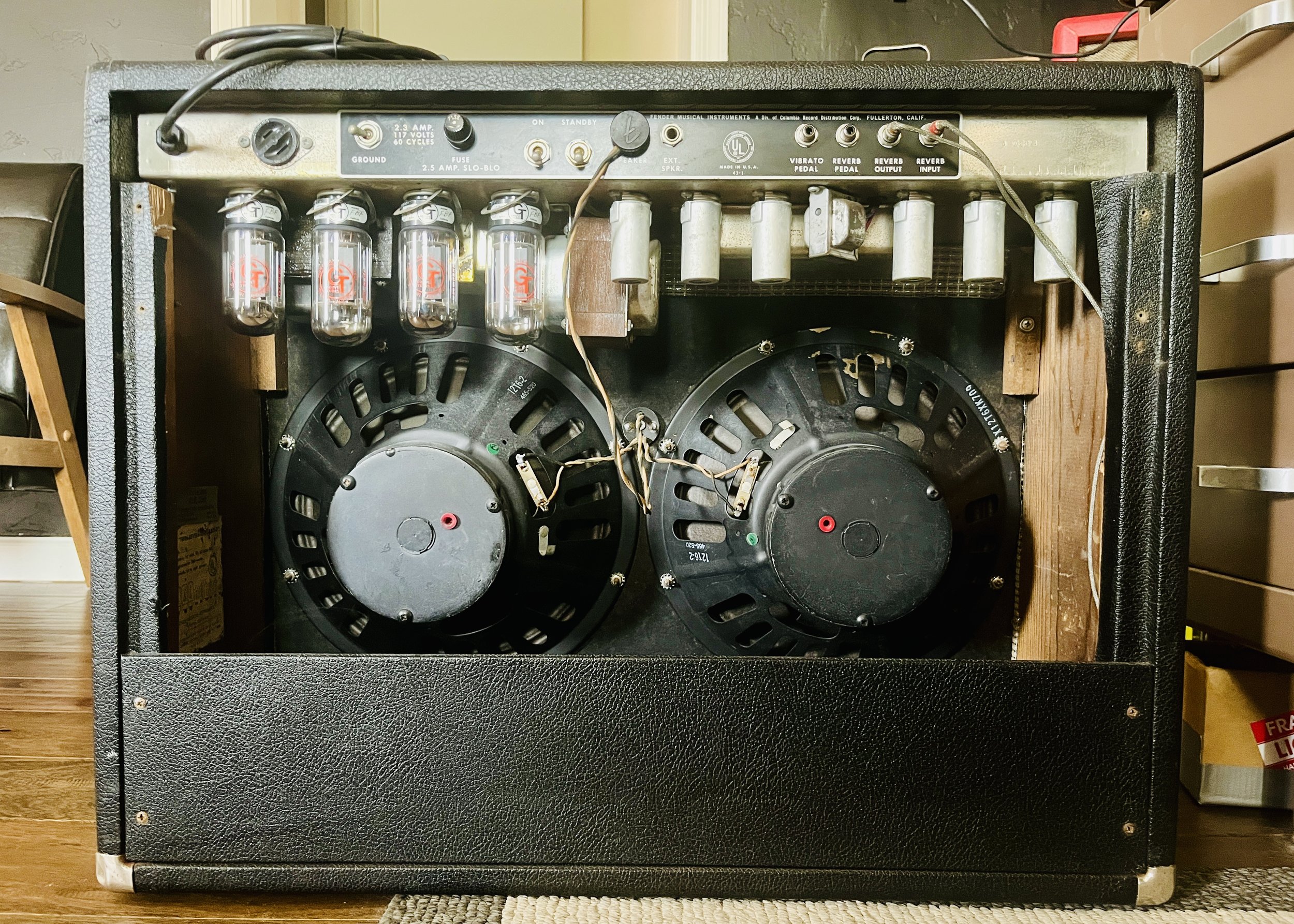
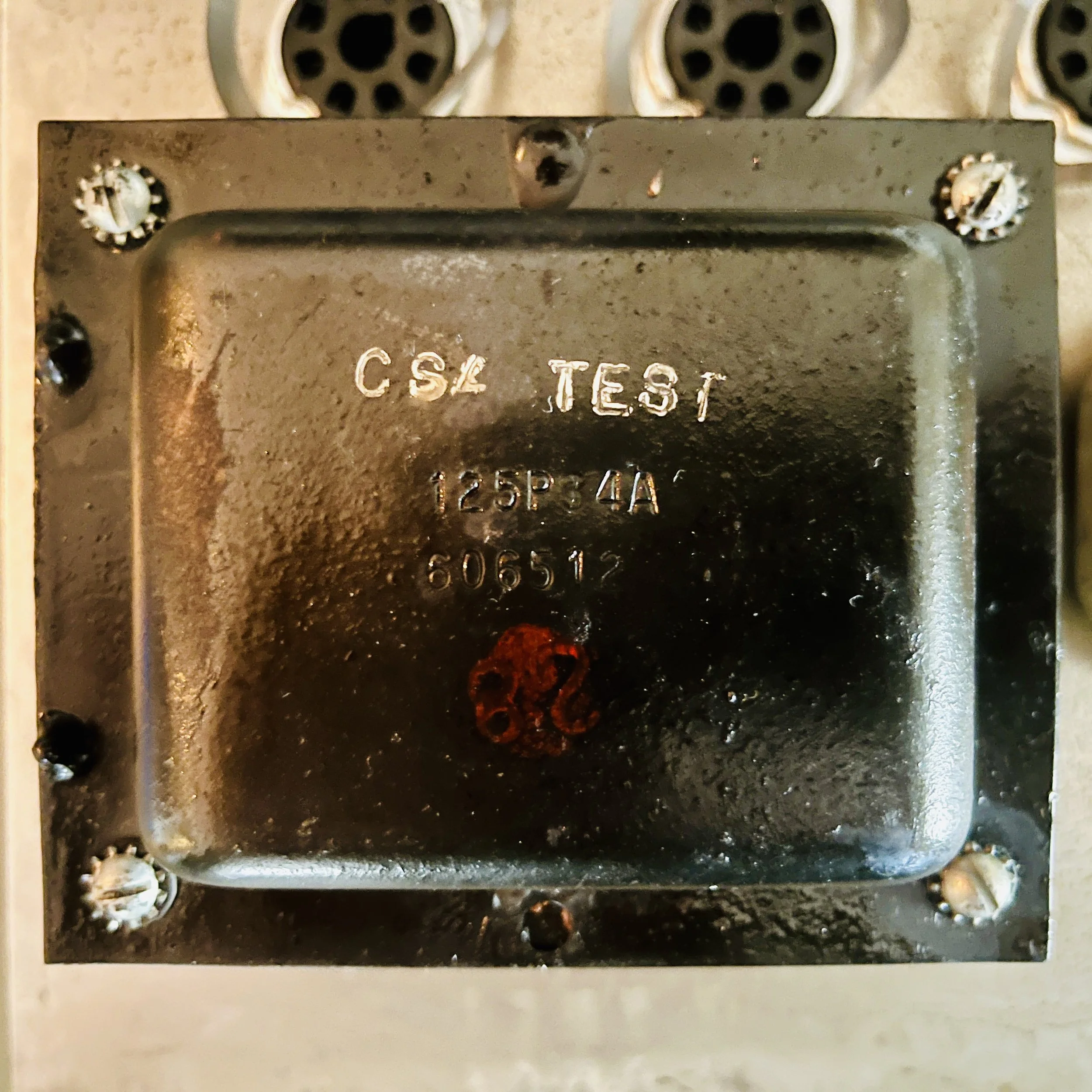
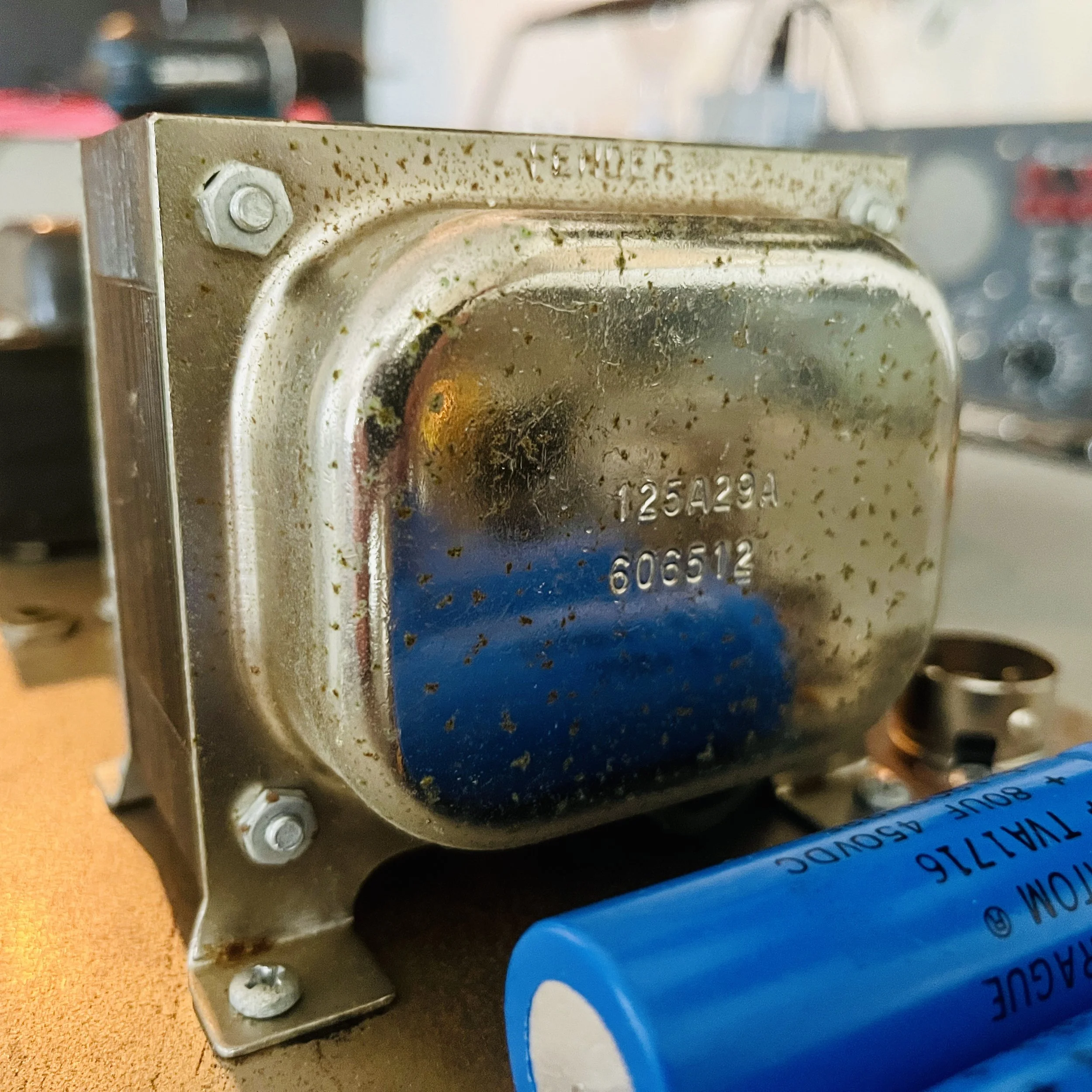
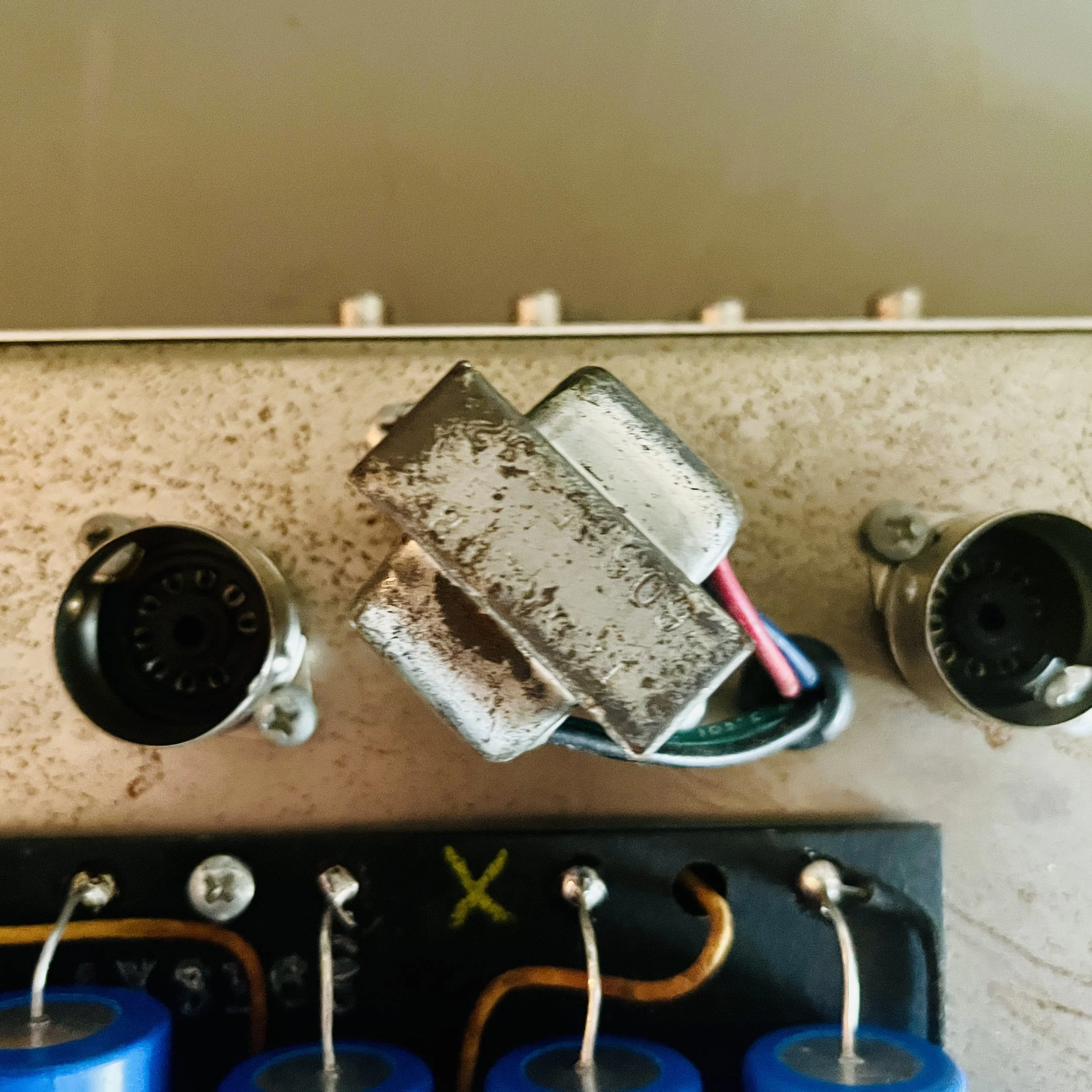
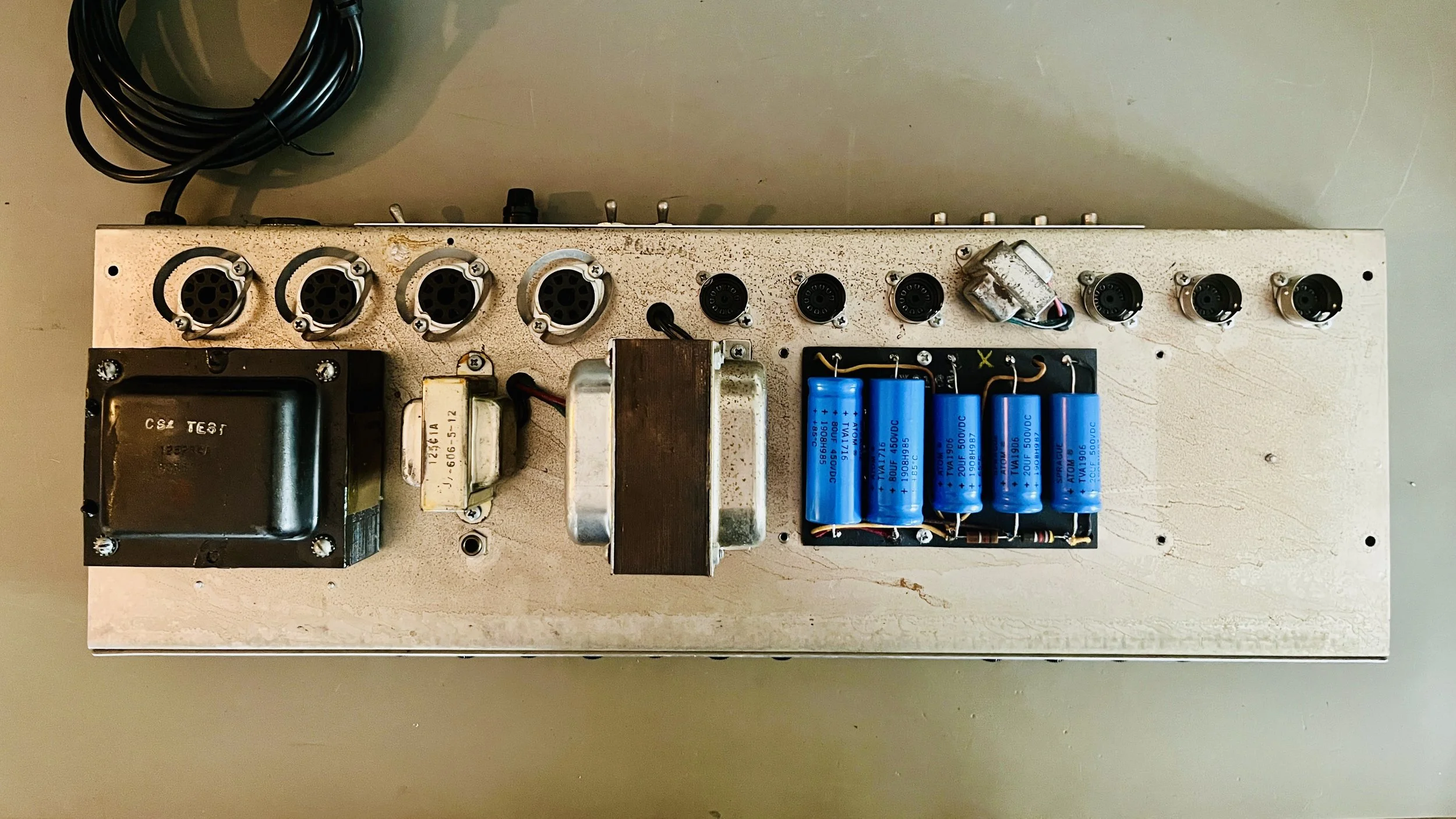
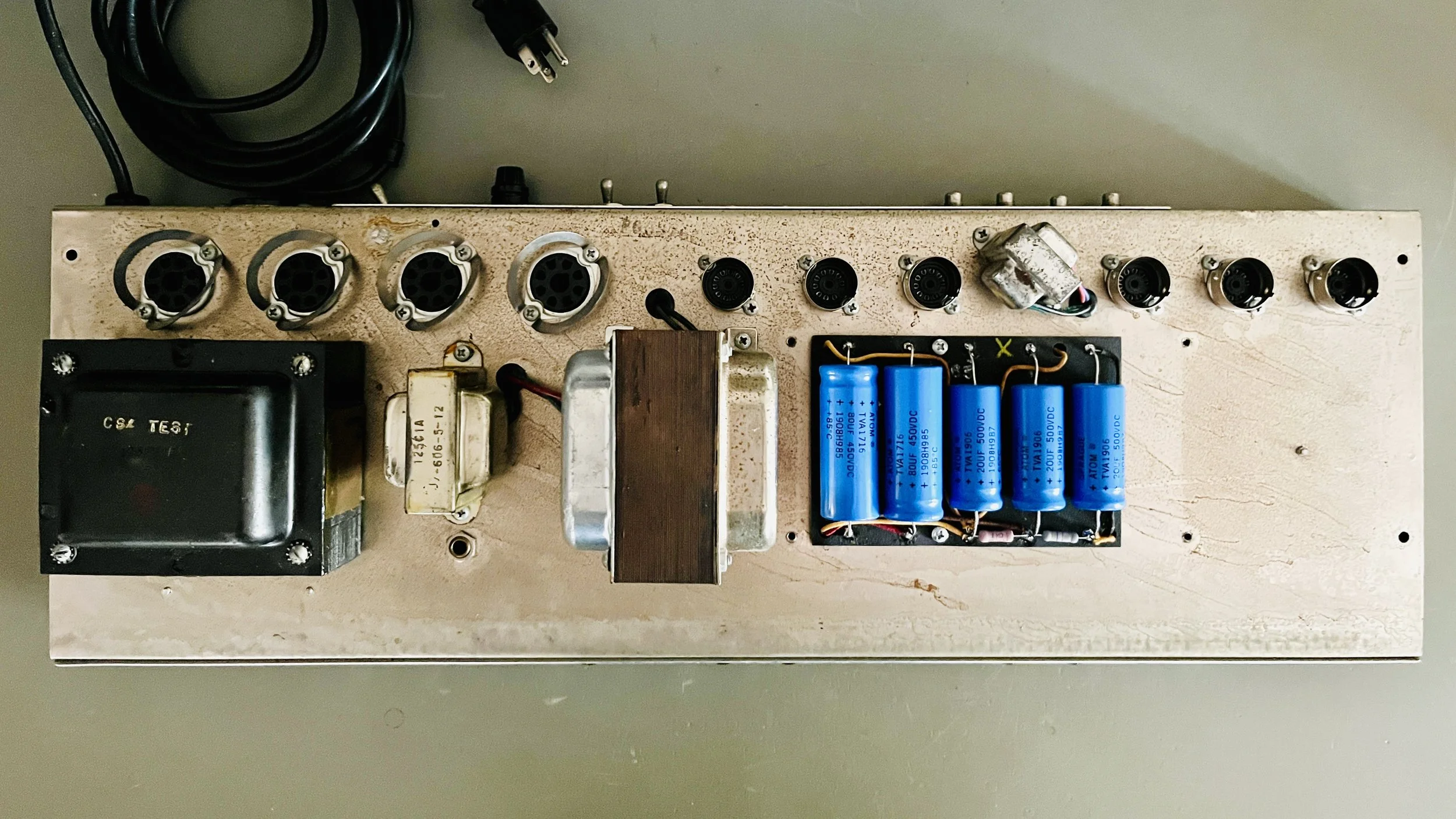
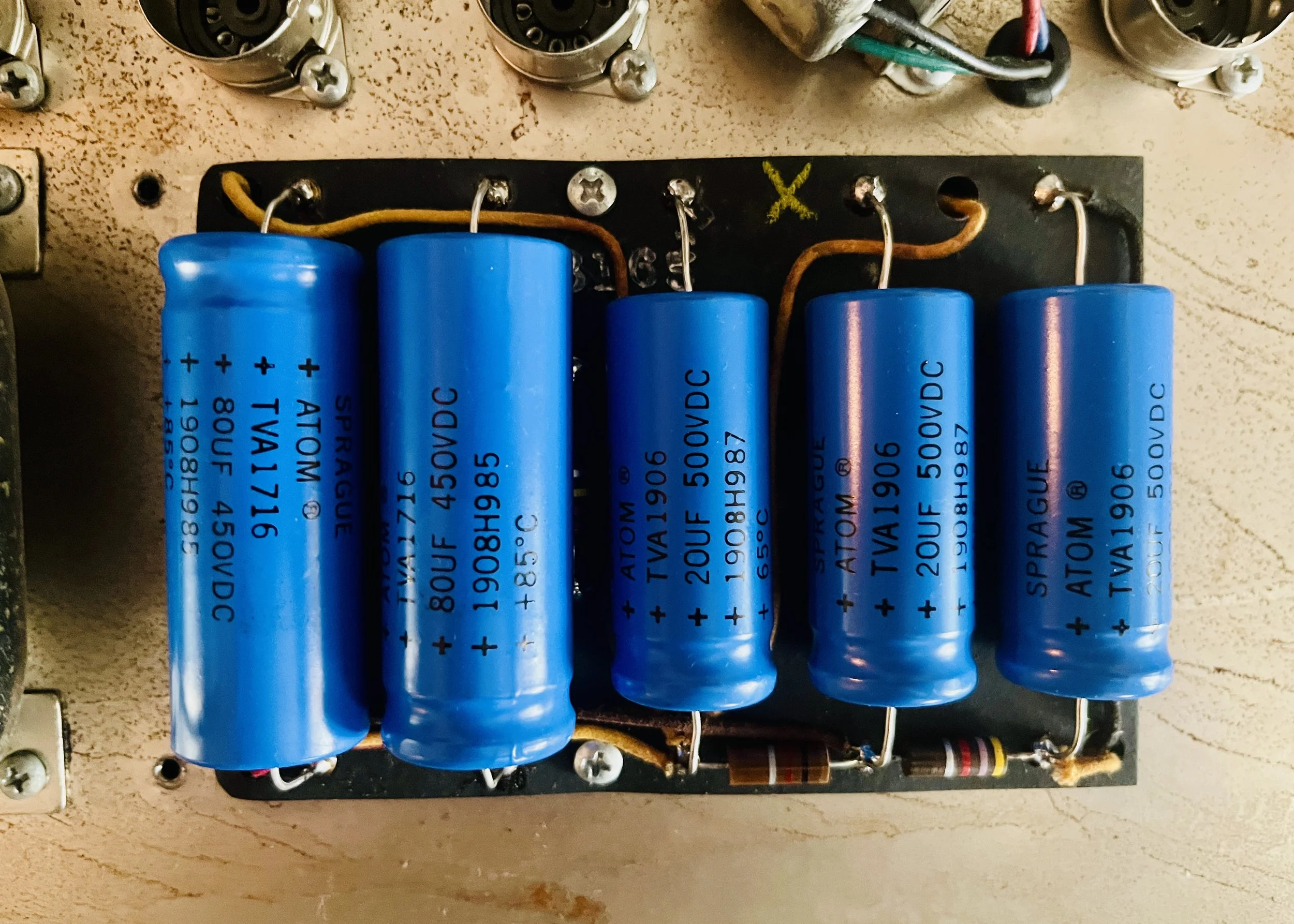
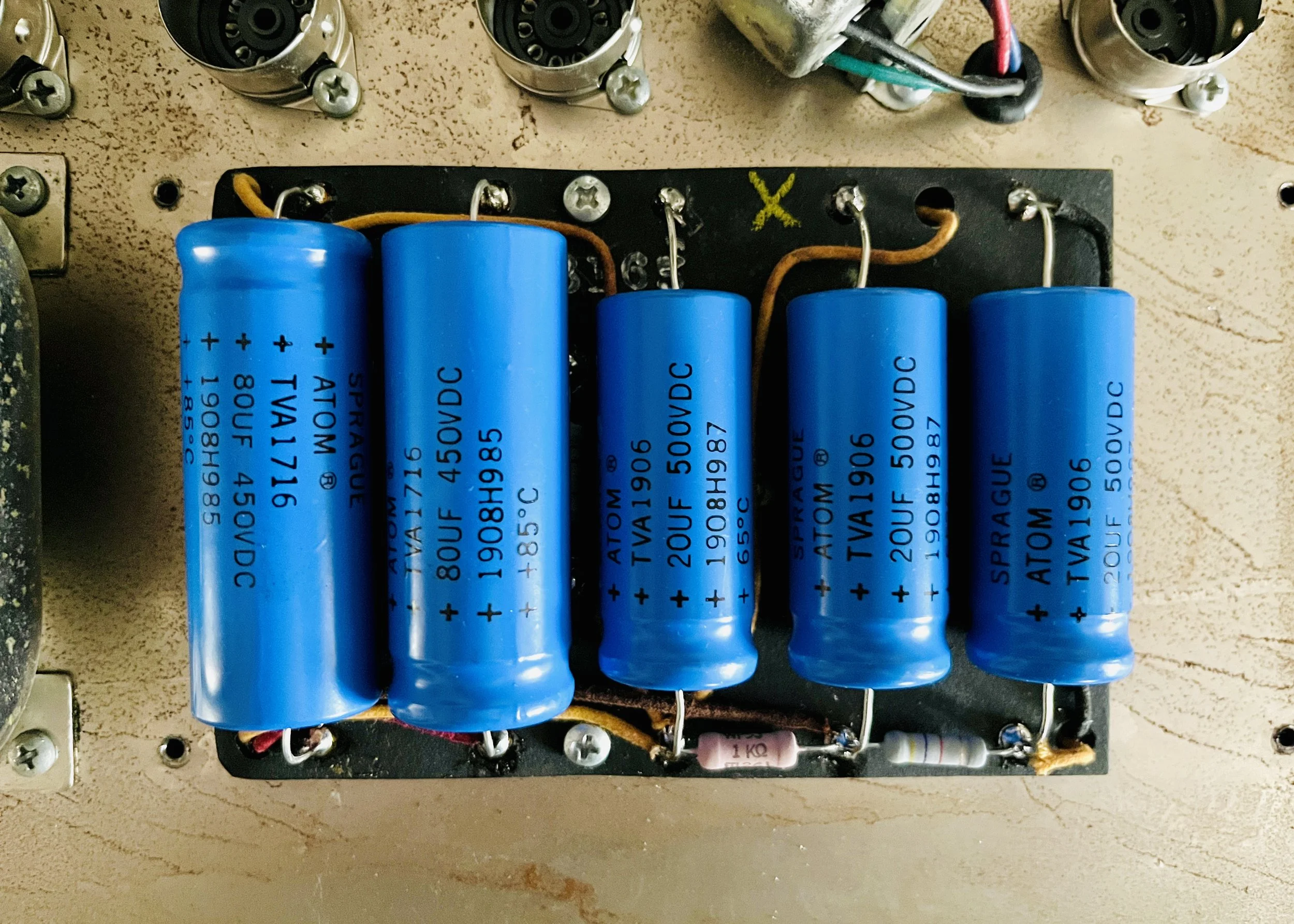
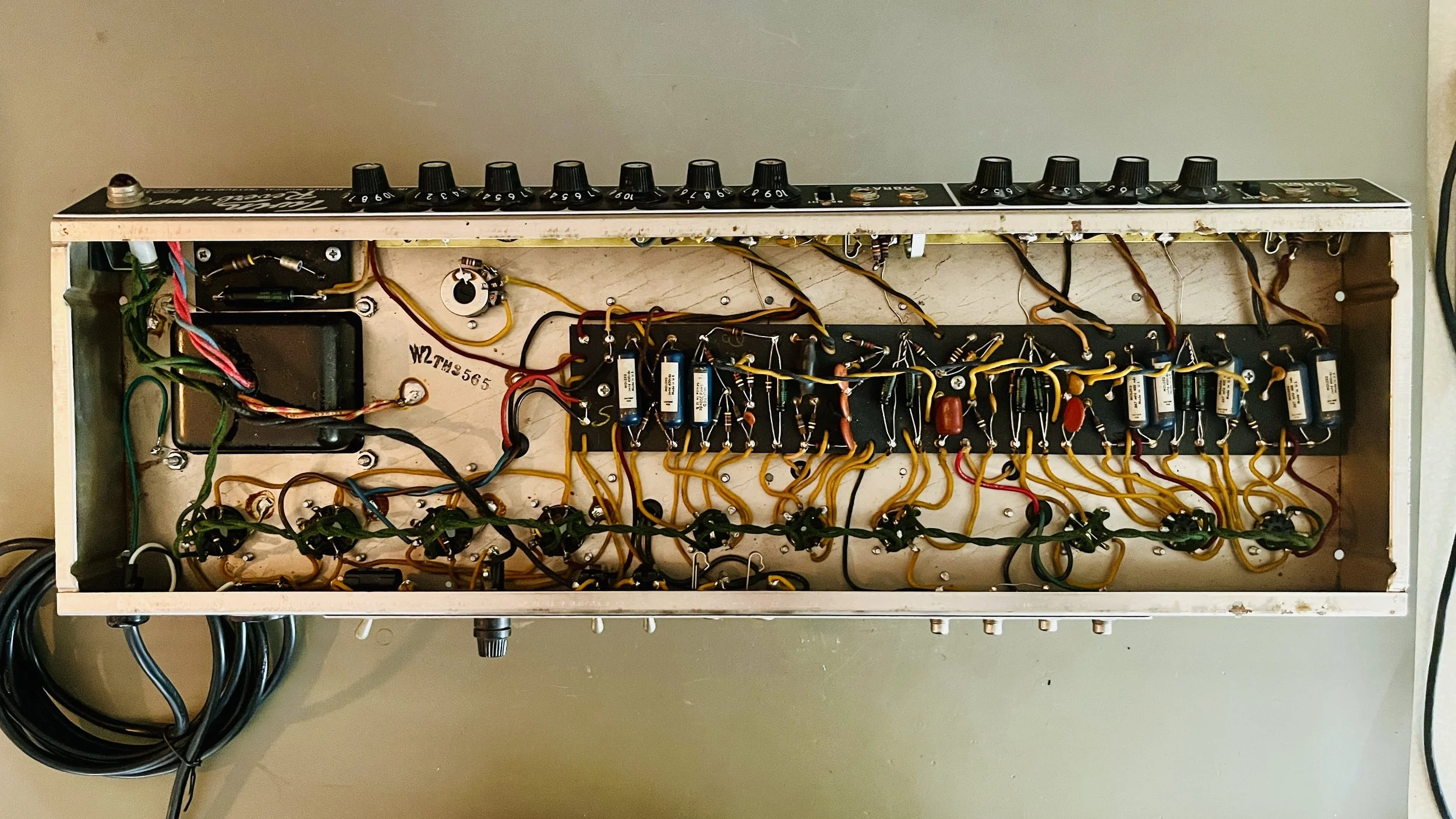
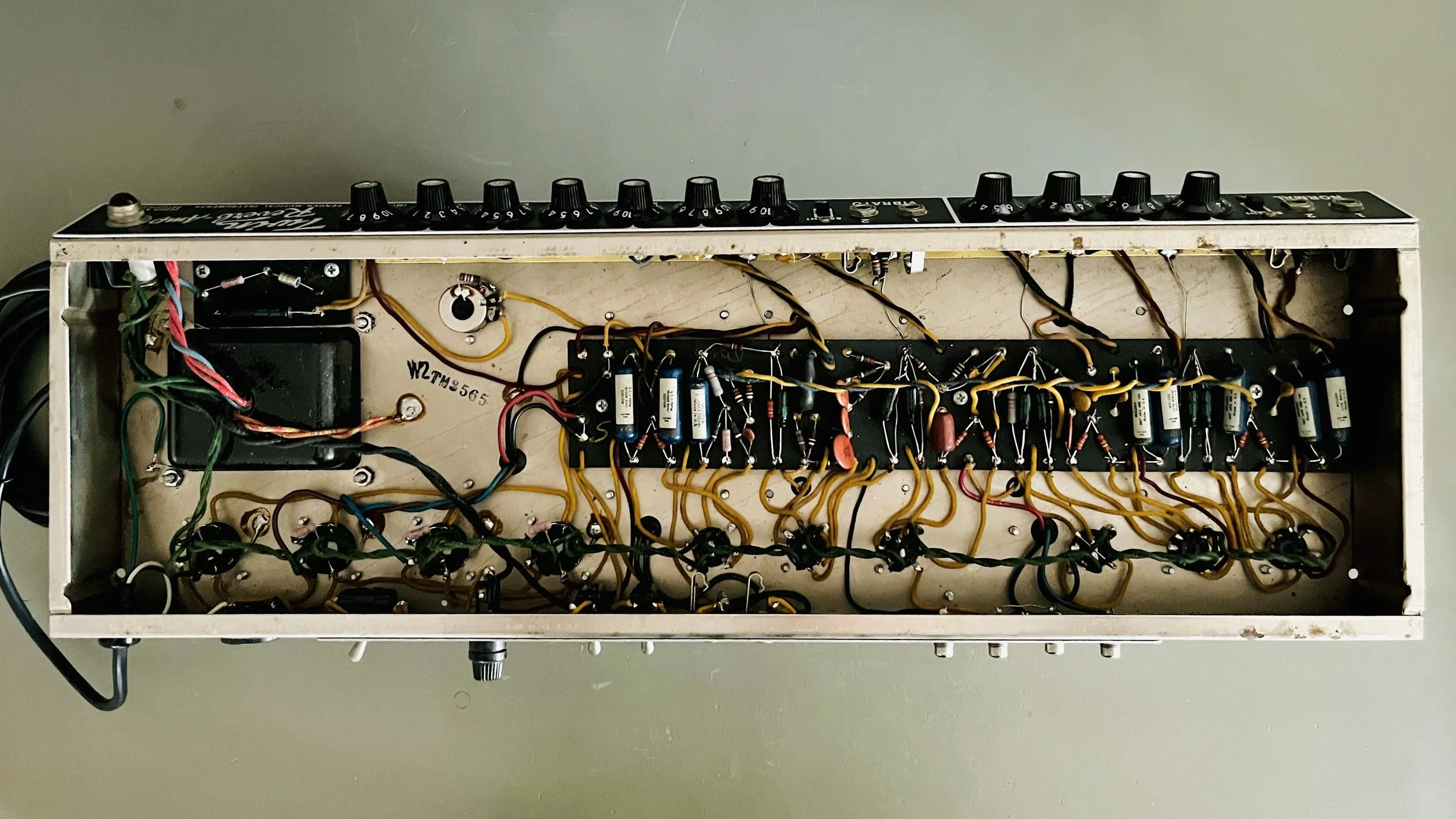
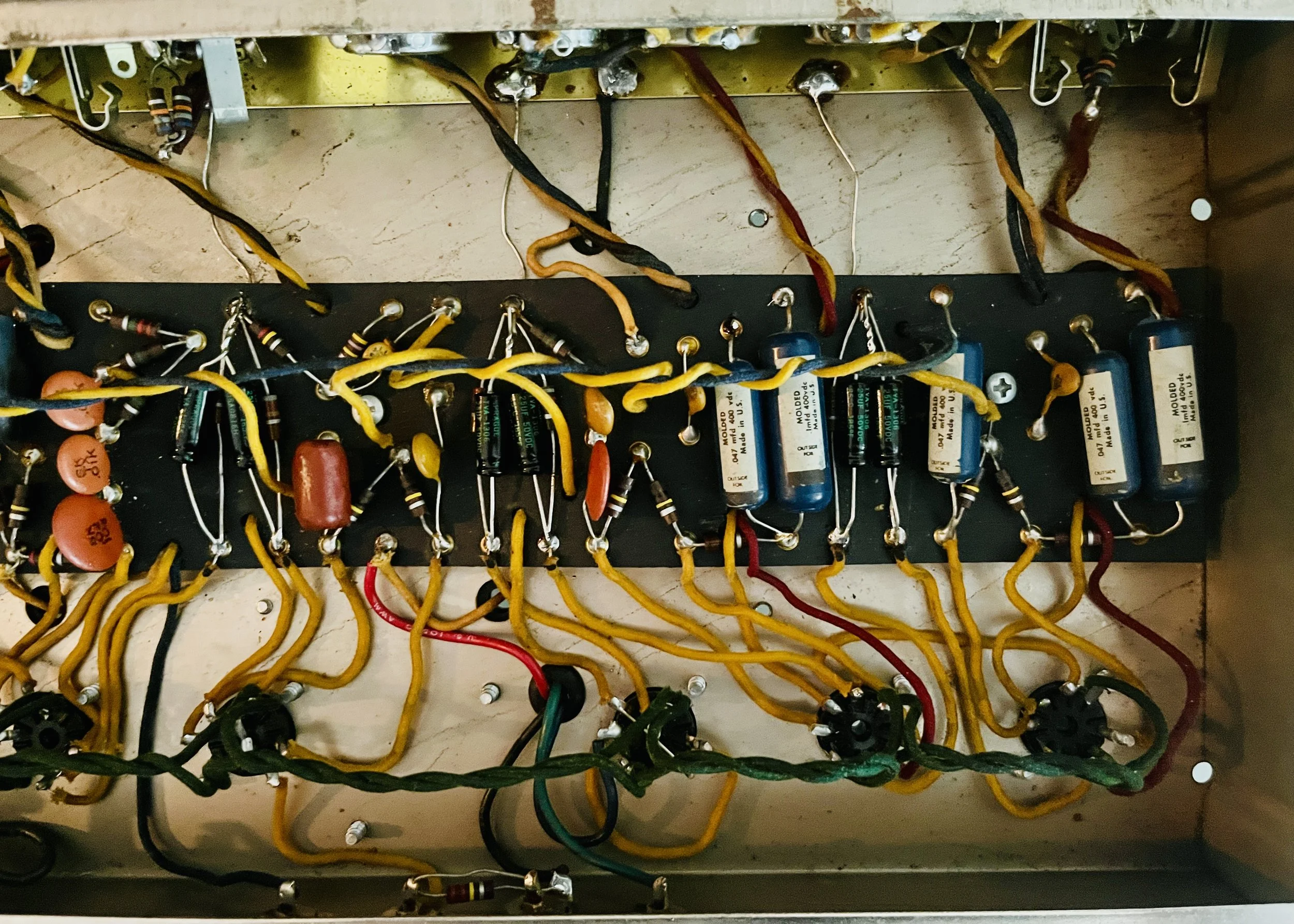
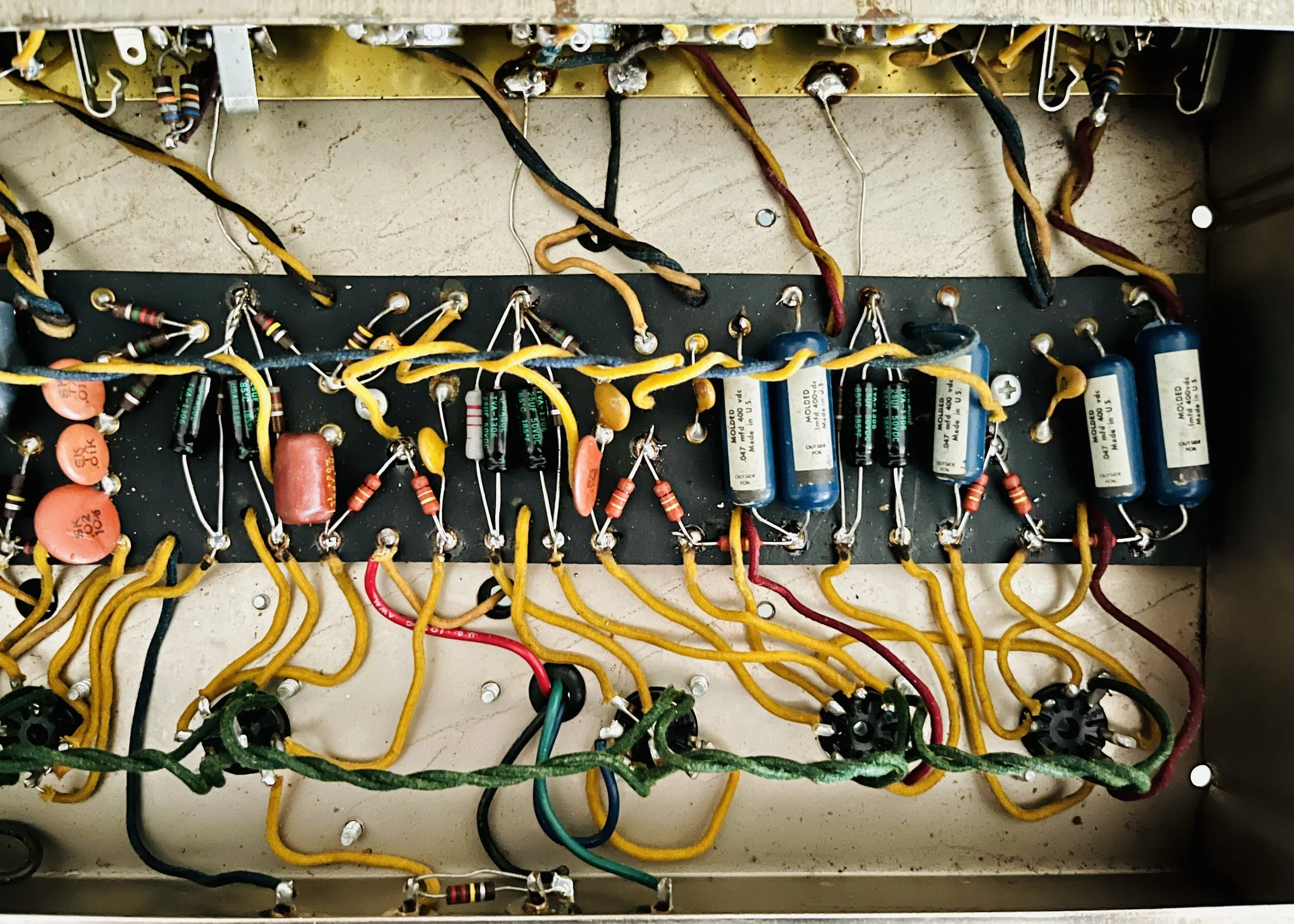
The amp was given a partial restoration to complete the previous one from years earlier. The competency of the older restoration (parts quality/technique) was actually great - they used the best possible parts and had clean technique, but there was some preventative maintenance and issues left unaddressed. It needed new power/screen/plate/misc. resistors, new tubes, and a good cleaning. Not much to do here thanks to its excellent condition and previous maintenance. A truly collector’s grade Fender Twin Reverb in nearly mint condition, it even has the original Oxford 12T-6 12” speakers with cones that have no damage! All original Schumacher made Power Transformer, Choke, Output Transformer, and Reverb Driver Transformer with matching date codes. Aesthetically, this amp looks almost new. You don’t see these often. This amp will be used in a recording studio and was setup to play everyday with no issues.
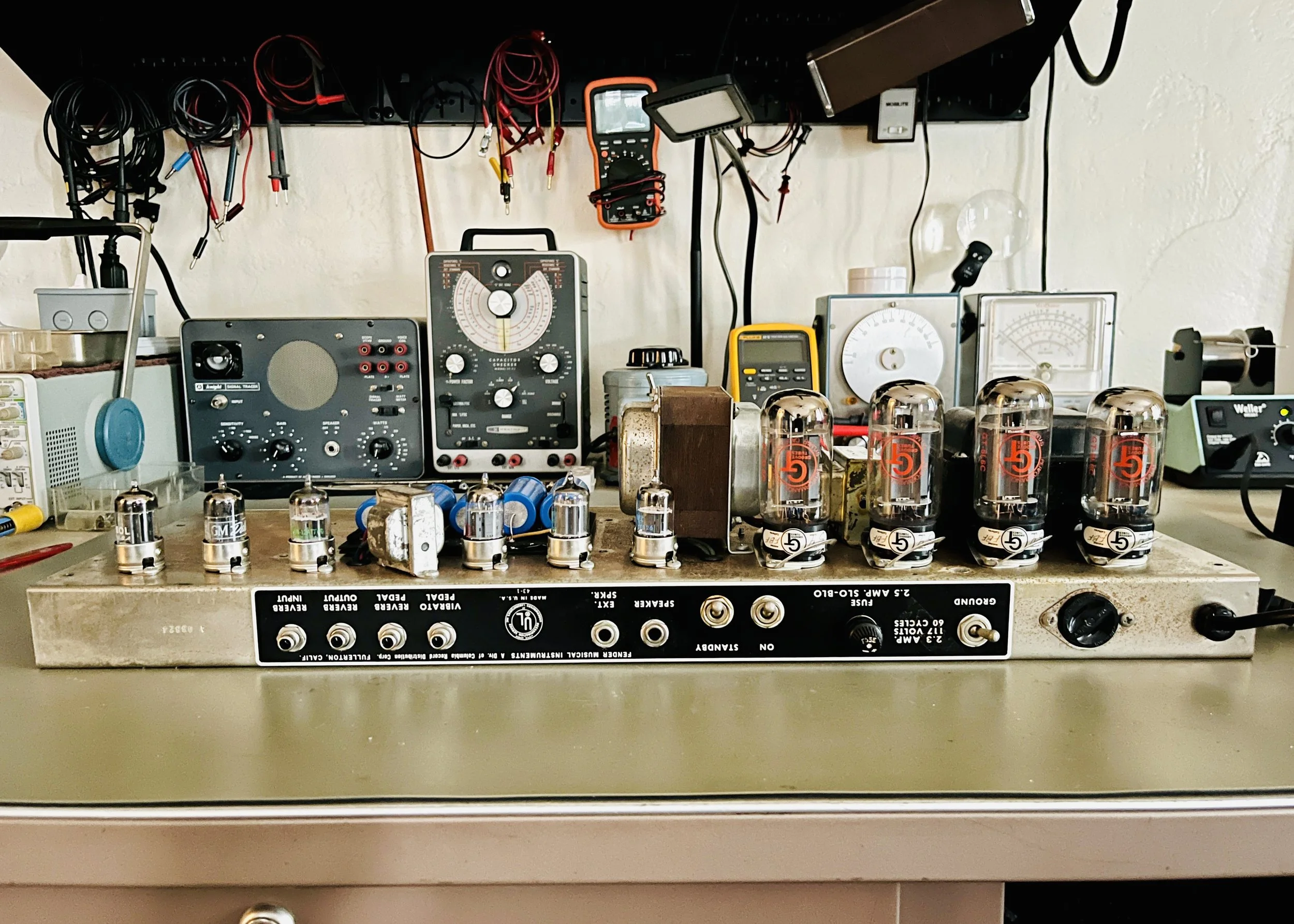
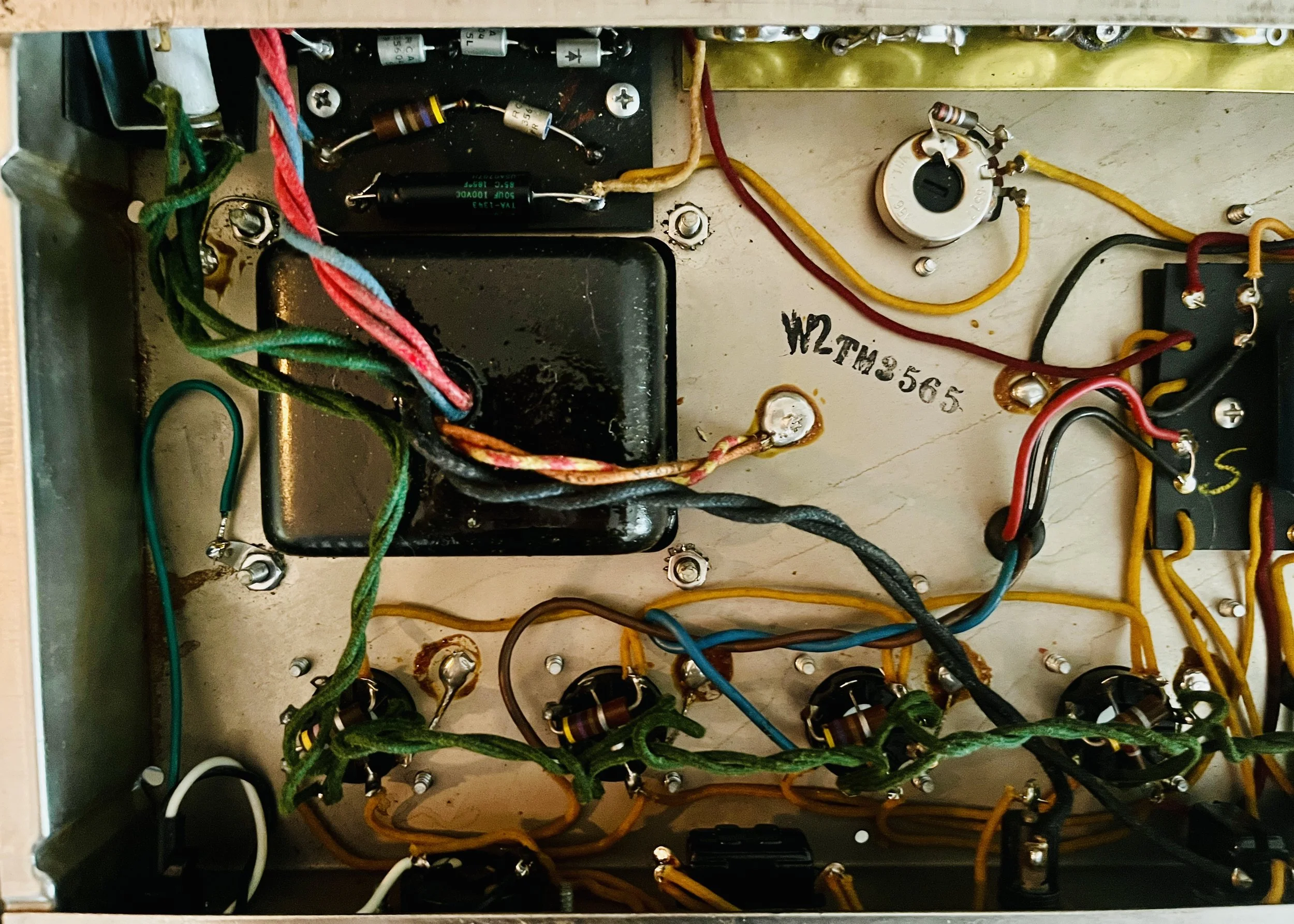
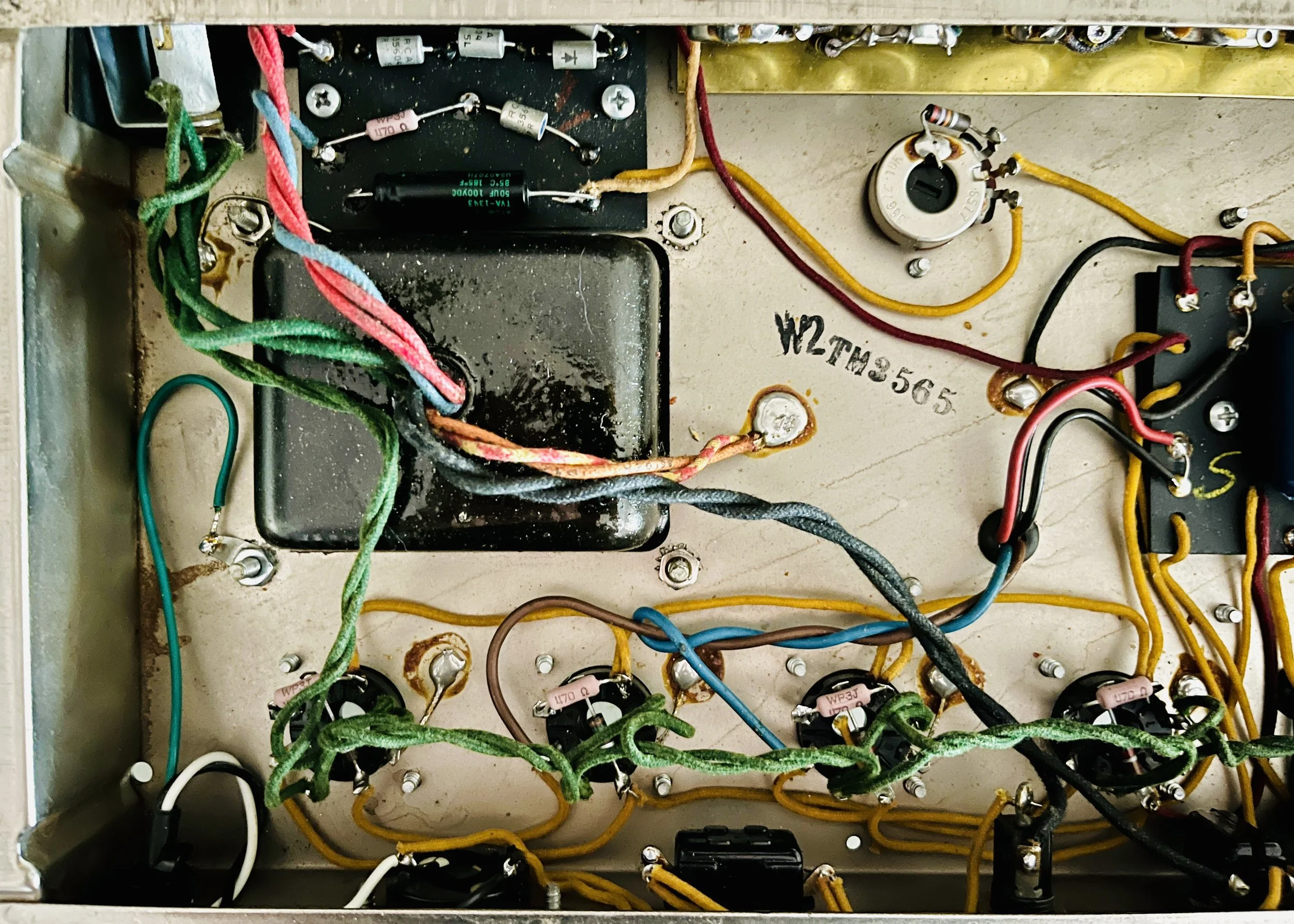
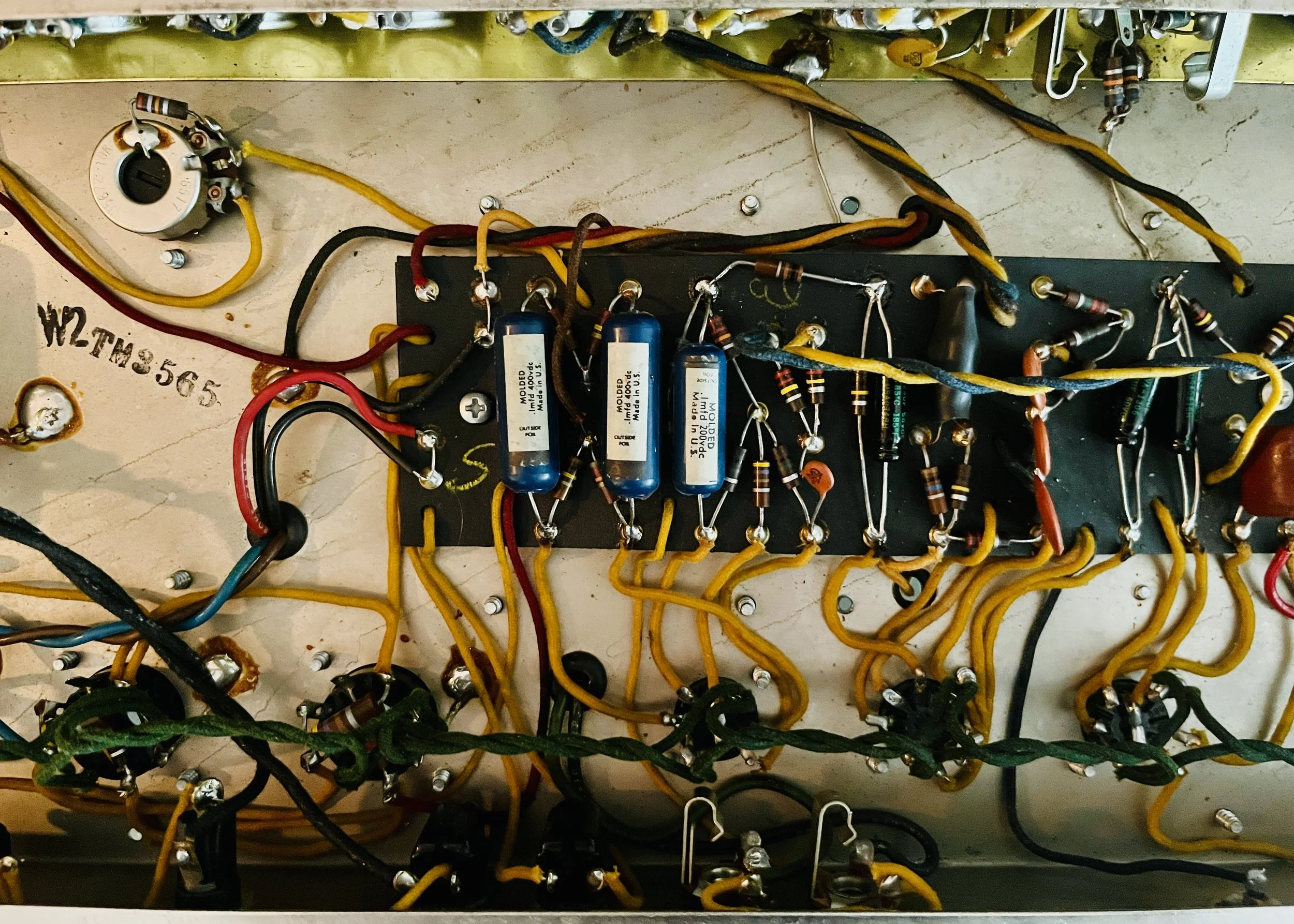
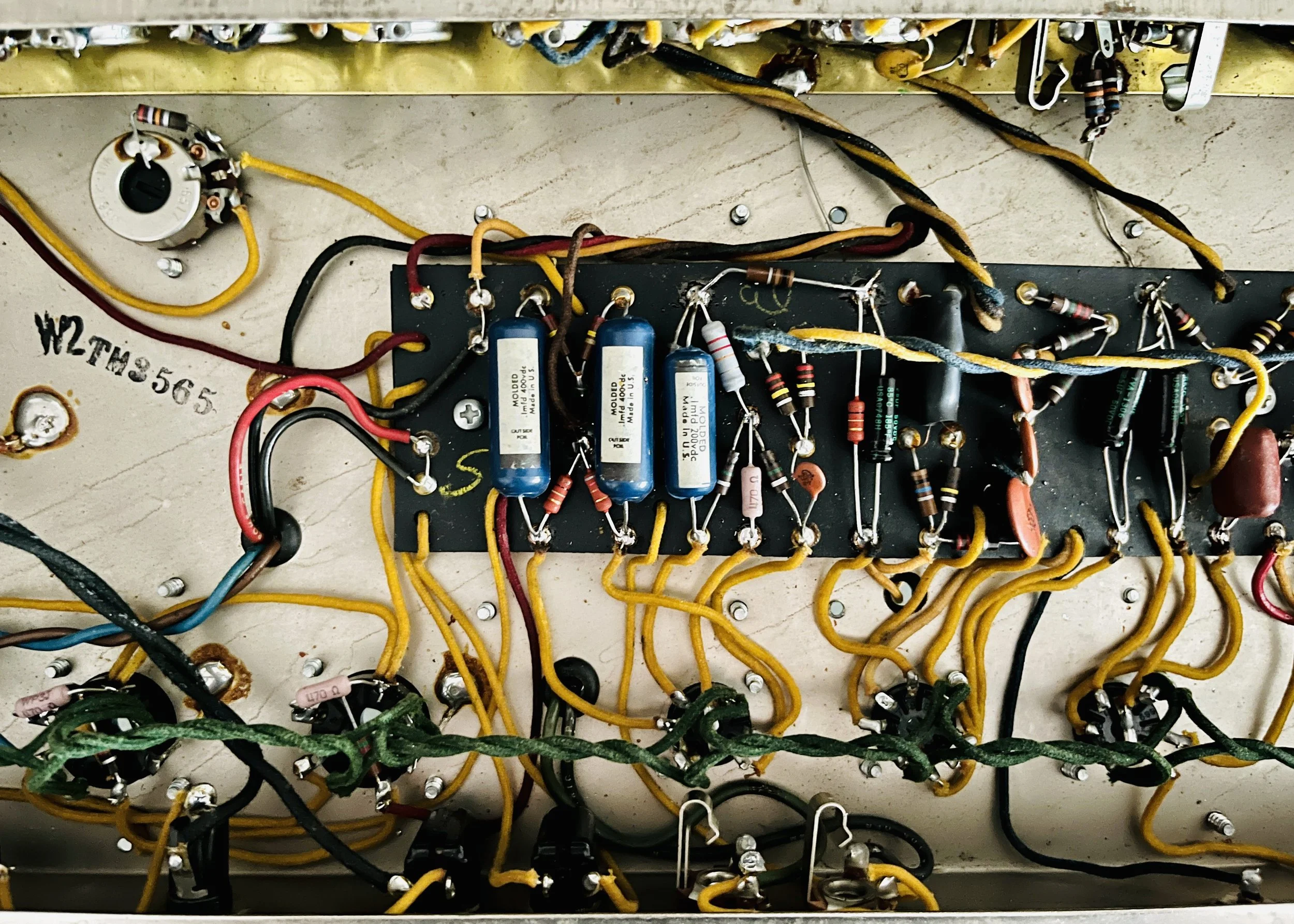
All possible preventative maintenance was then completed. New 5 Watt Cement/3 Watt Cement/2 Watt Metal Oxide power dropping resistors were installed in the power supply filter section and bias circuit for better reliability and lower noise floor. The cathode resistors for V3 and V6 were replaced with 3 Watt Cement/2 Watt Metal Oxide type units due to heat damage. All plate resistors were replaced with 2 Watt Reduced Mass Metal Film type units for preventative maintenance, reliability, and to lower the noise floor. All screen resistors were replaced with 3 Watt Cement 470 ohm type units for same reasoning. A new 3AG 250v 3A Fuse was installed as the one present was underrated.
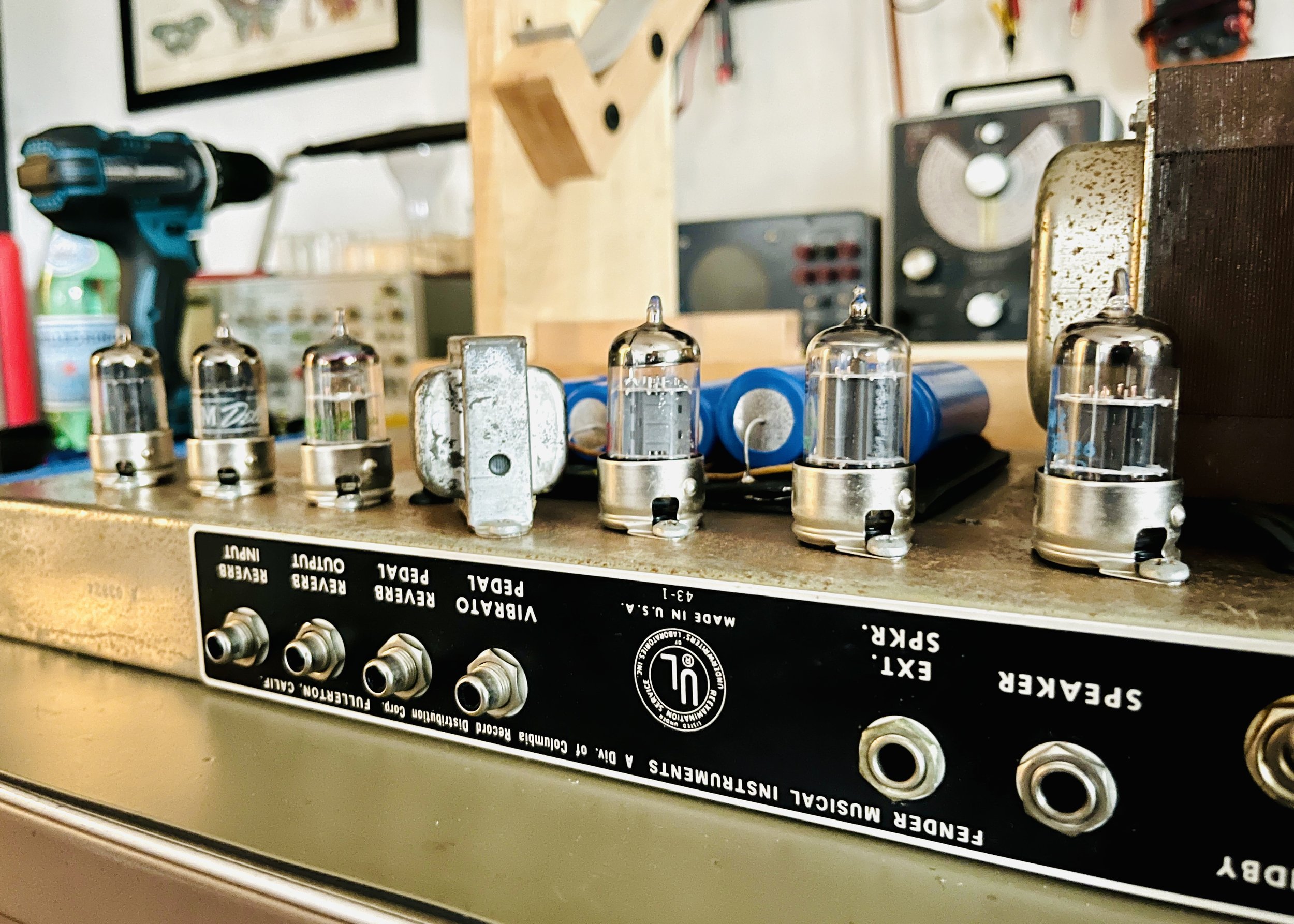
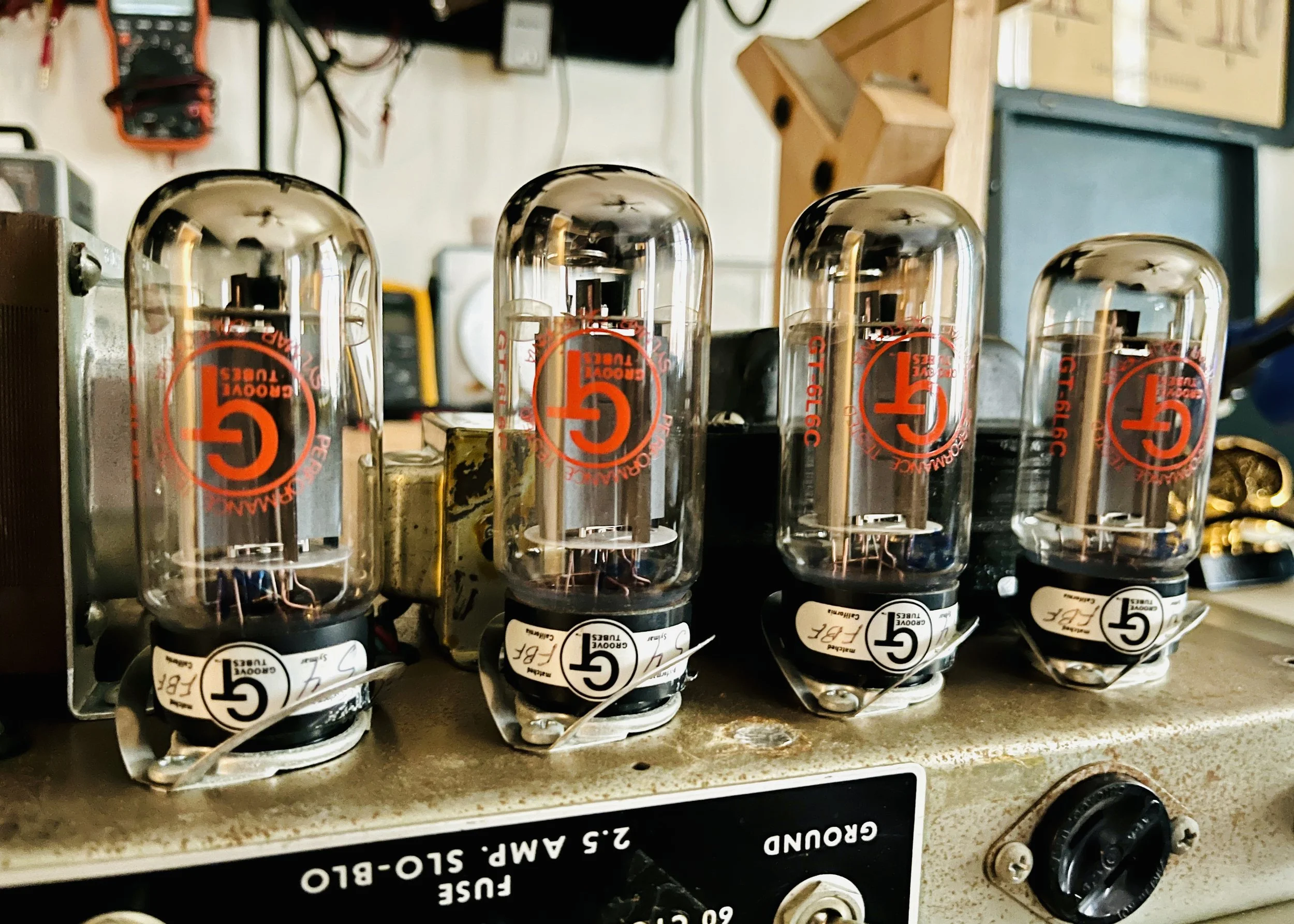
The original tubes did not all test good or had issues with noise. All were replaced. My selection of NOS tubes was tapped for this project, with some of the best made tubes available being used. This was the final lineup: V1 = NOS TUNGSOL 12AX7A, V2 = NOS DELCO 12AX7A, V3 = NOS GE JAN 12AT7WC, V4 = NOS TUNGSOL 12AX7A, V5 = NOS SYLVANIA 12AX7A, V6 = NOS PHILLIPS JAN 12AT7WC, V7-V10 = NOS GT 6L6GC Matched Quad. This particular quad of 6L6GC’S was made by Groove Tubes in the early 2000’s, when they bought a large supply of NOS parts from Phillips stock to be assembled in the US and sold as new tubes. Essentially these are NOS power tubes, just assembled a couple of decades later than intended. A strange and short-lived but awesome product from GT. The 6L6GC's Fixed Bias was set to %50 Class AB Plate Dissipation with a B+ of 437VDC. The tube sockets were all re-tensioned to stop loose tubes from potentially falling out and were then treated with De-Oxit to remove/prevent corrosion. The pots were sprayed out and the amp was cleaned inside and out.