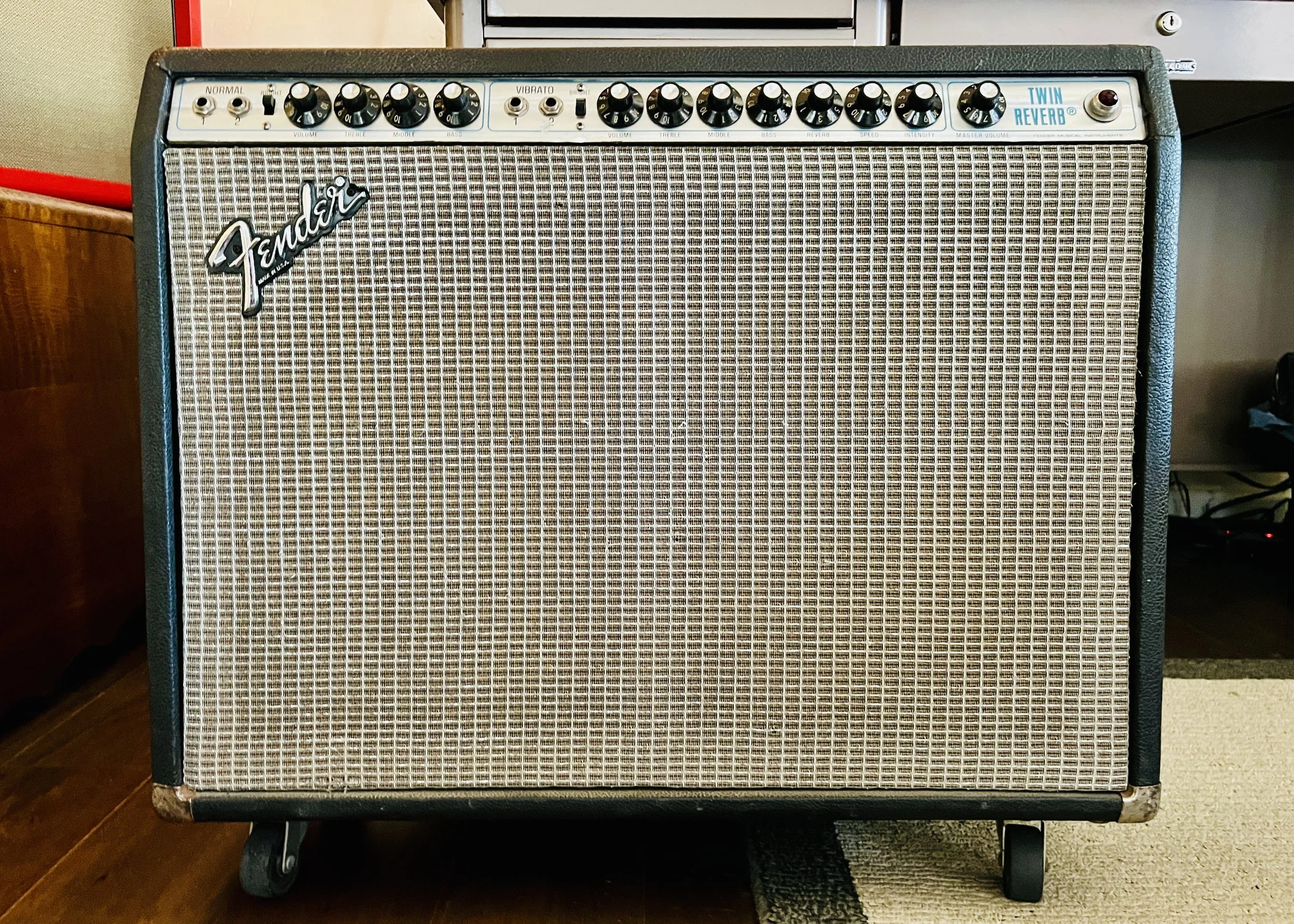
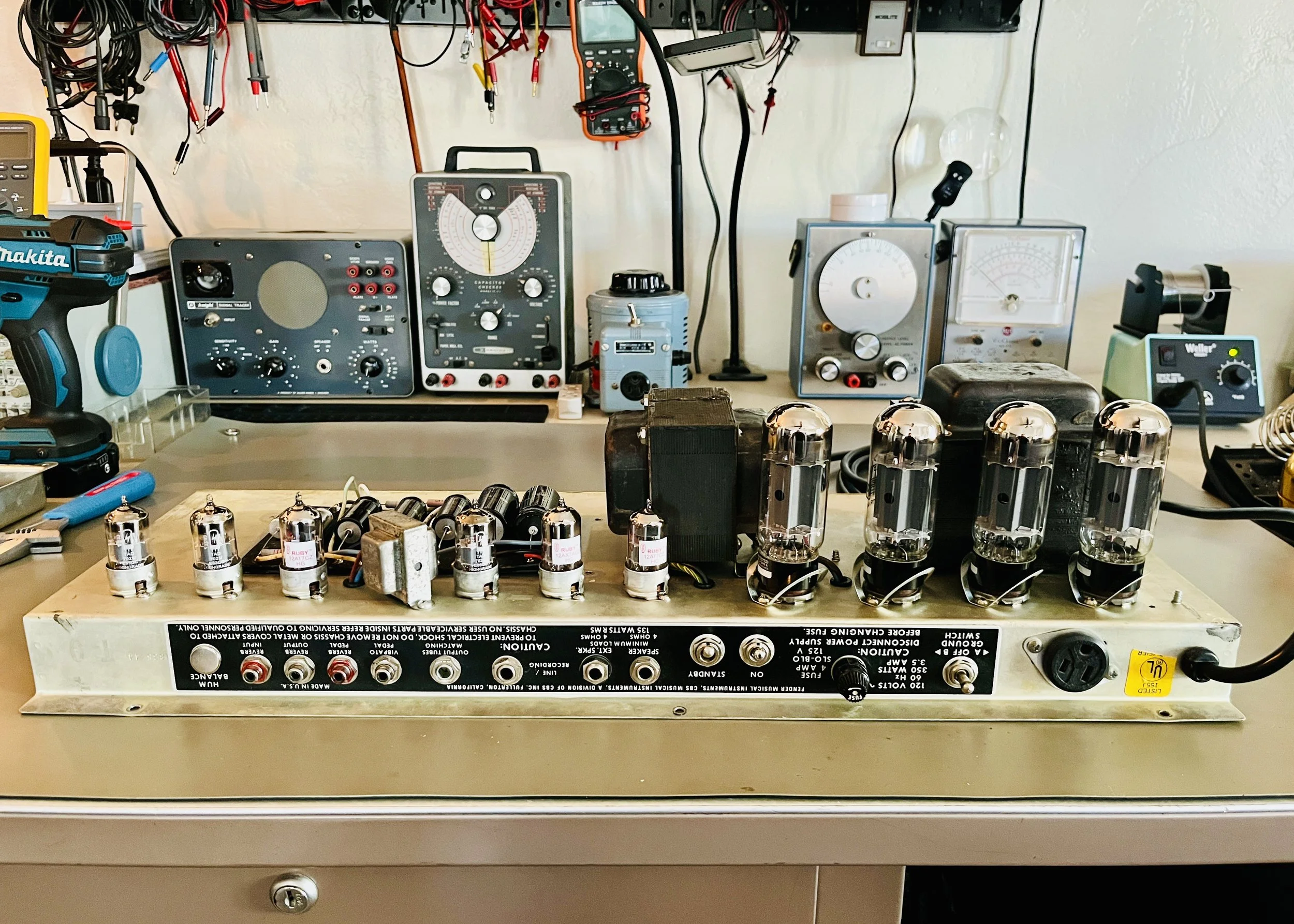
1979 Fender Twin Reverb 135W UL
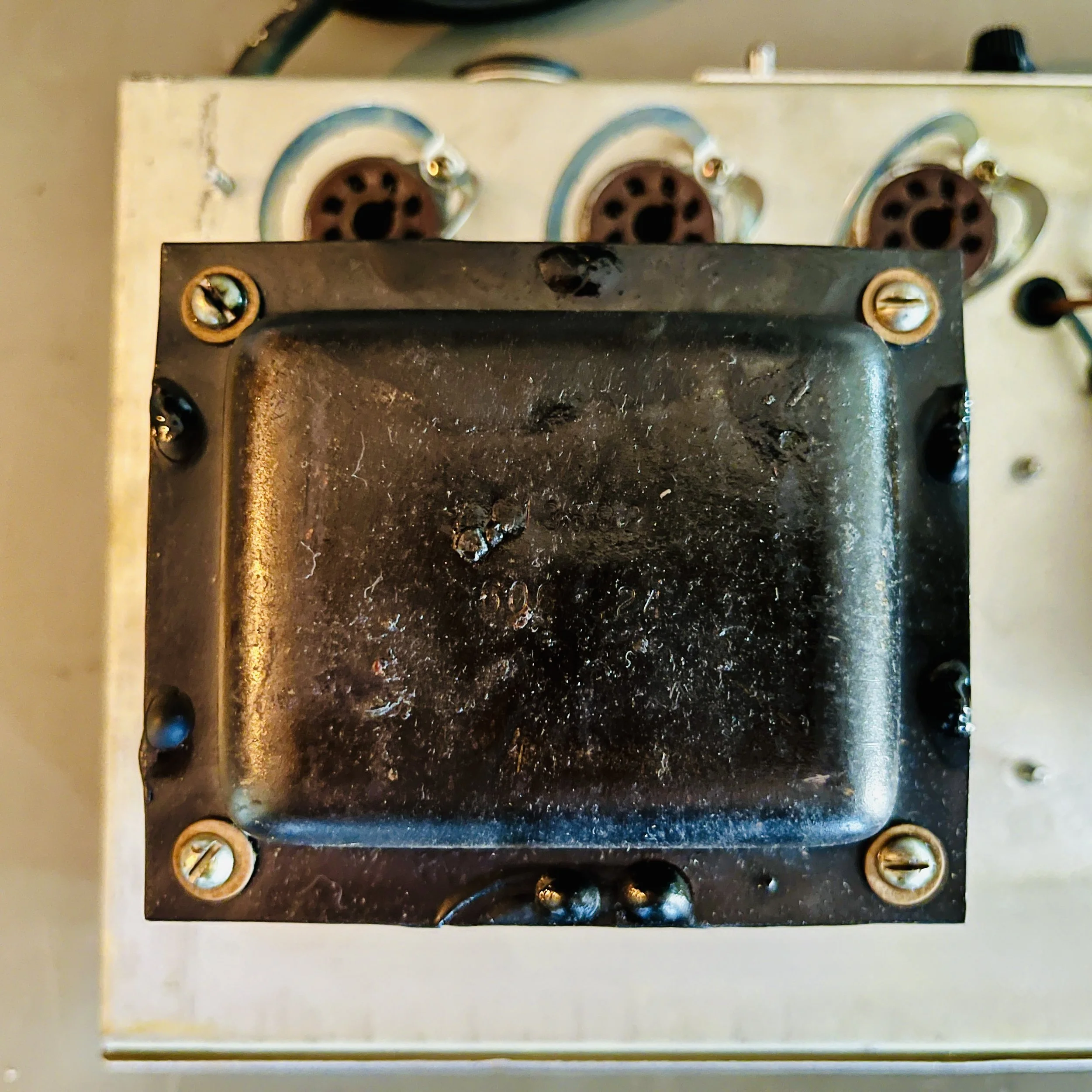
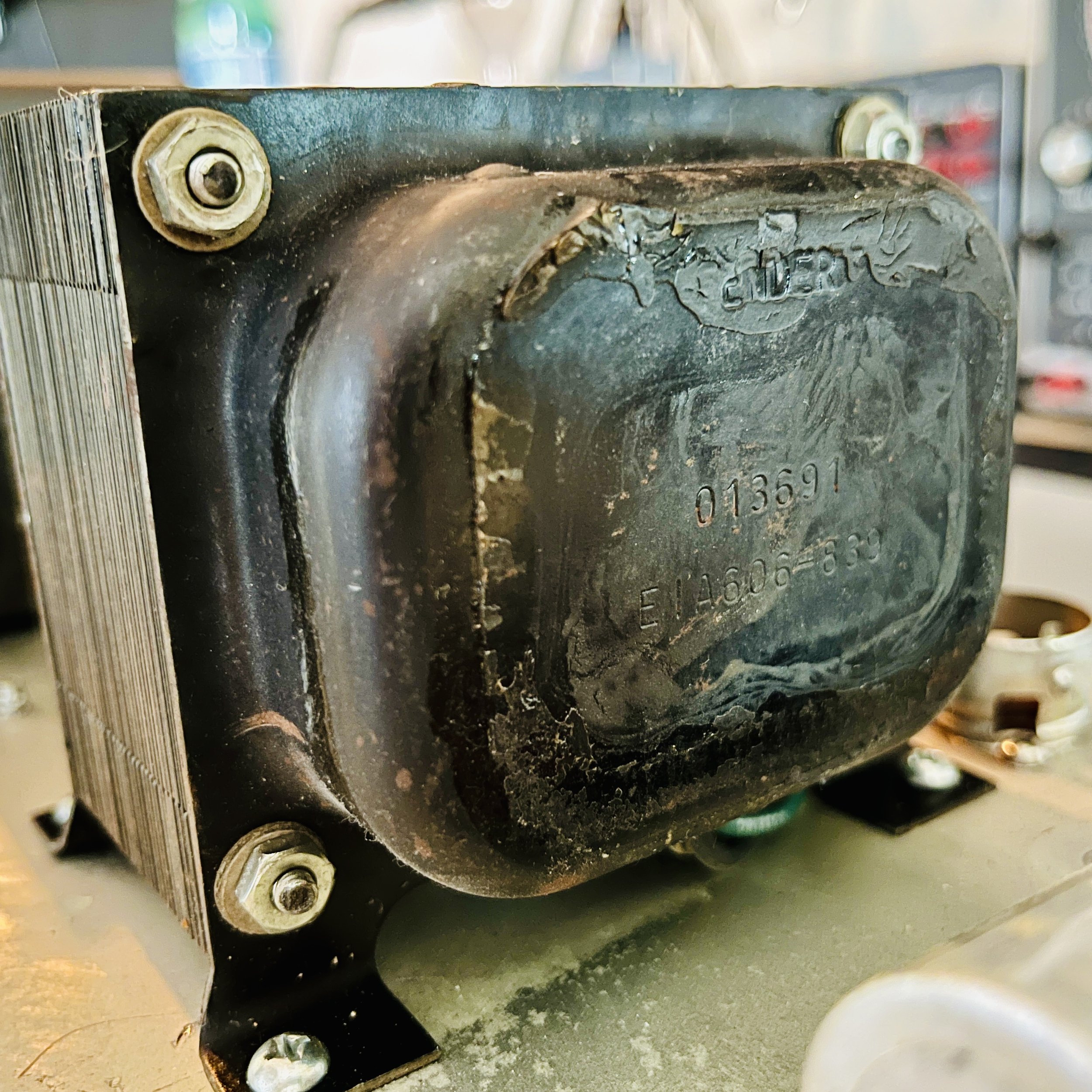
There are many versions of the Twin Reverb that Fender made during the 1960’s and 1970’s. All of them were very popular with musicians then and now and consequently the Silver-Panel Fender Twin Reverb is the most common vintage amp that I get in. This 79’ Twin was made after the buyout of Fender by CBS in 1968 and is the 135 Watt Ultra-Linear version, the tone of which is often debated and criticized compared to the older revisions. There are a lot of circuit changes here compared to even the most recent previous revision, the non-UL Silver-Panel Twin Reverb (CBS 100W MV), that make this amp cleaner, and to many peoples ears, colder and harsher. The main change being the Output Transformer going from standard Pentode operation to Ultra-Linear operation, which is a type of circuit design straight out of the Hi-Fi world of audio engineering. Designed for maximum clean efficiency Ultra-Linear mixes the best qualities (in engineering terms) of Pentode and Triode operation of the output tubes, which makes the power scaling of the output section less logarithmic and more linear, hence the name. This translates to much cleaner tone with almost no distortion available at all. Ultra-Linear’s big advantage is it’s extremely high output power compared to either Triode or Pentode operation, meaning instead of 80-100 Watt RMS from a quad of 6L6GC’s a UL circuit can wrangle 135 Watts RMS out of the same tubes. These can be great sounding amps however and have all the standard preamp, EQ, and effects options of most Twin Reverbs. Country and Jazz players really took to these Ultra-Linear models and a lot of Fender Rhodes electric piano players as well. These amps got a bad rap largely from rock guitarists disappointed with the lack of warmth or overdrive.
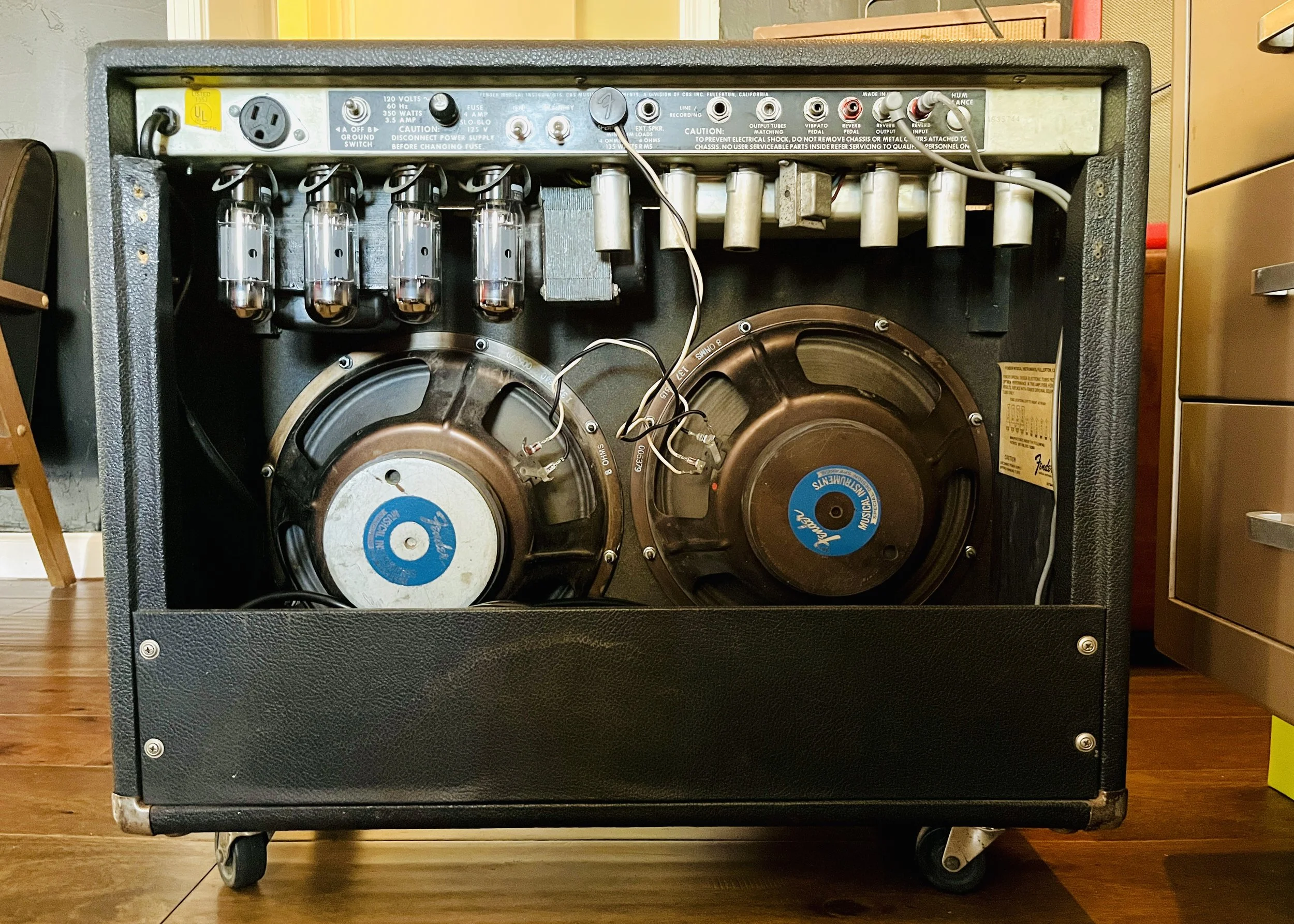
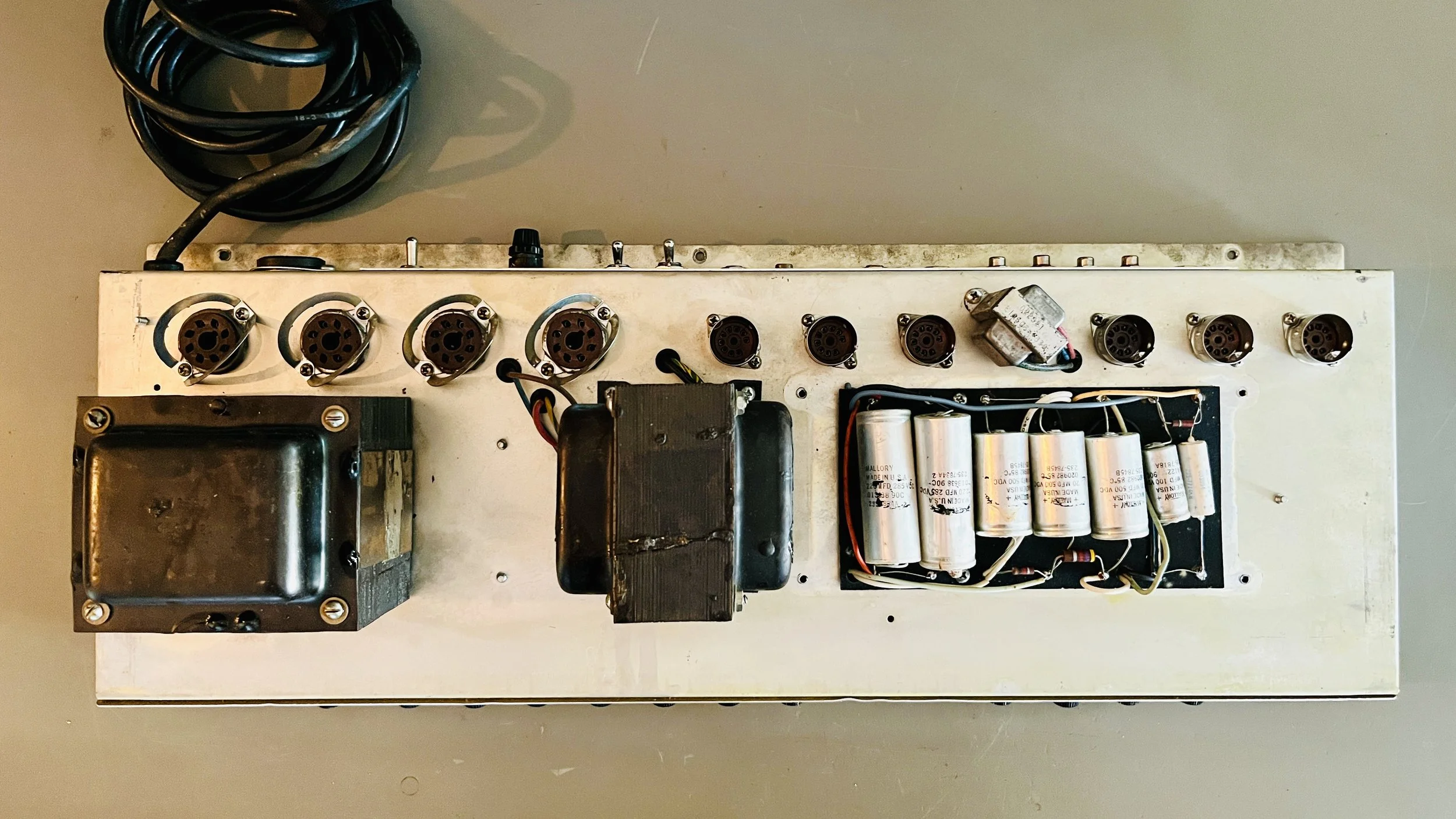
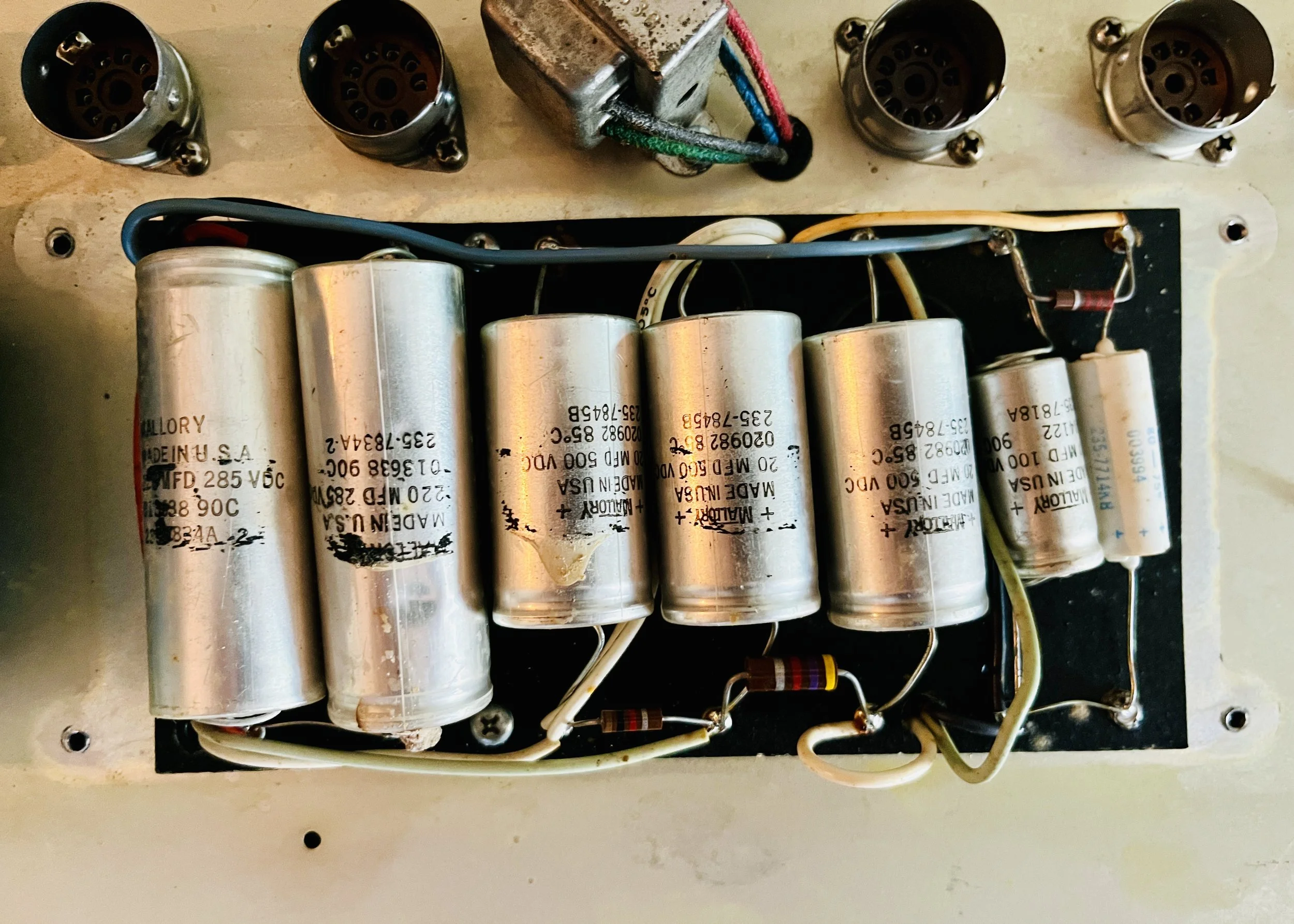
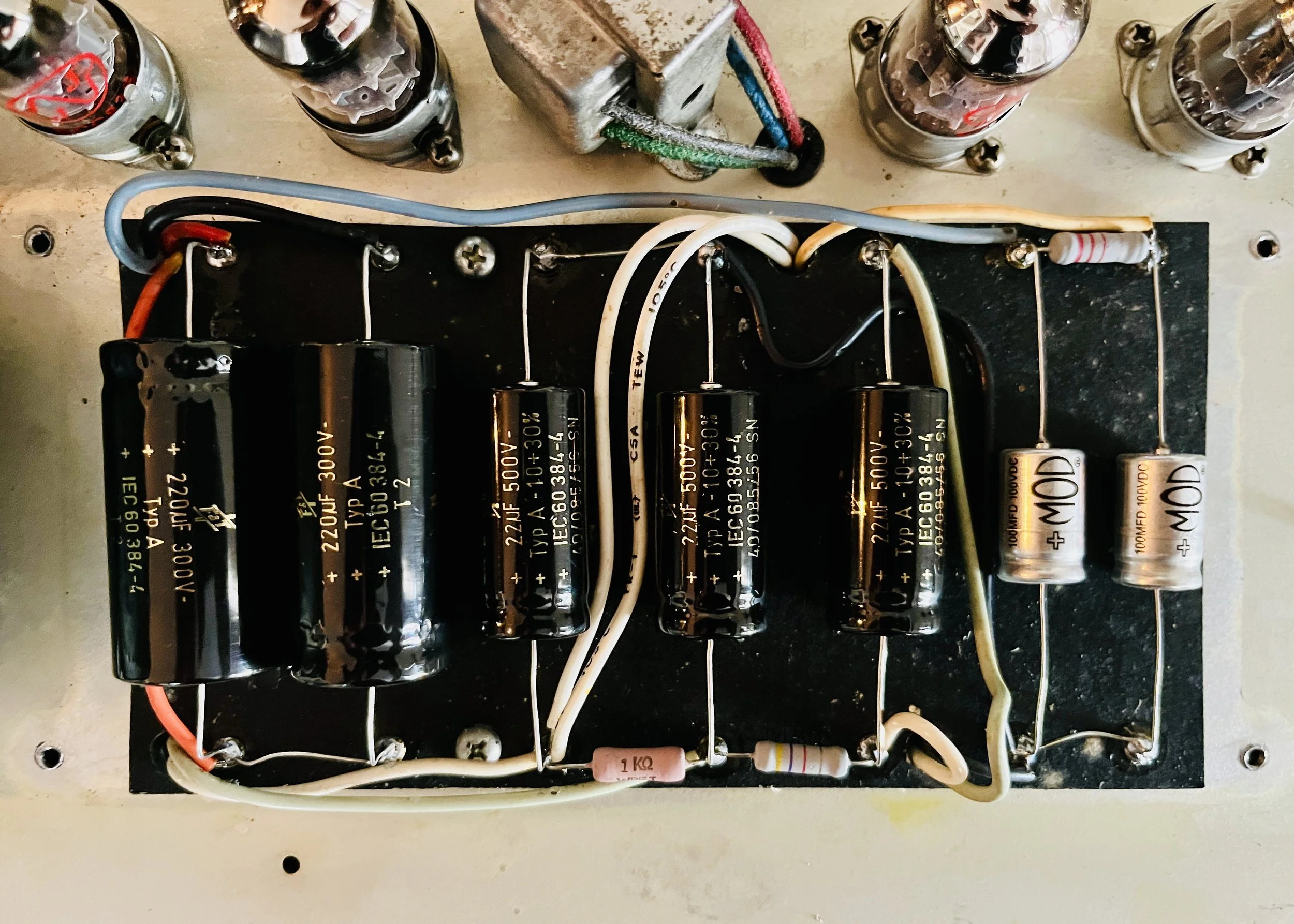
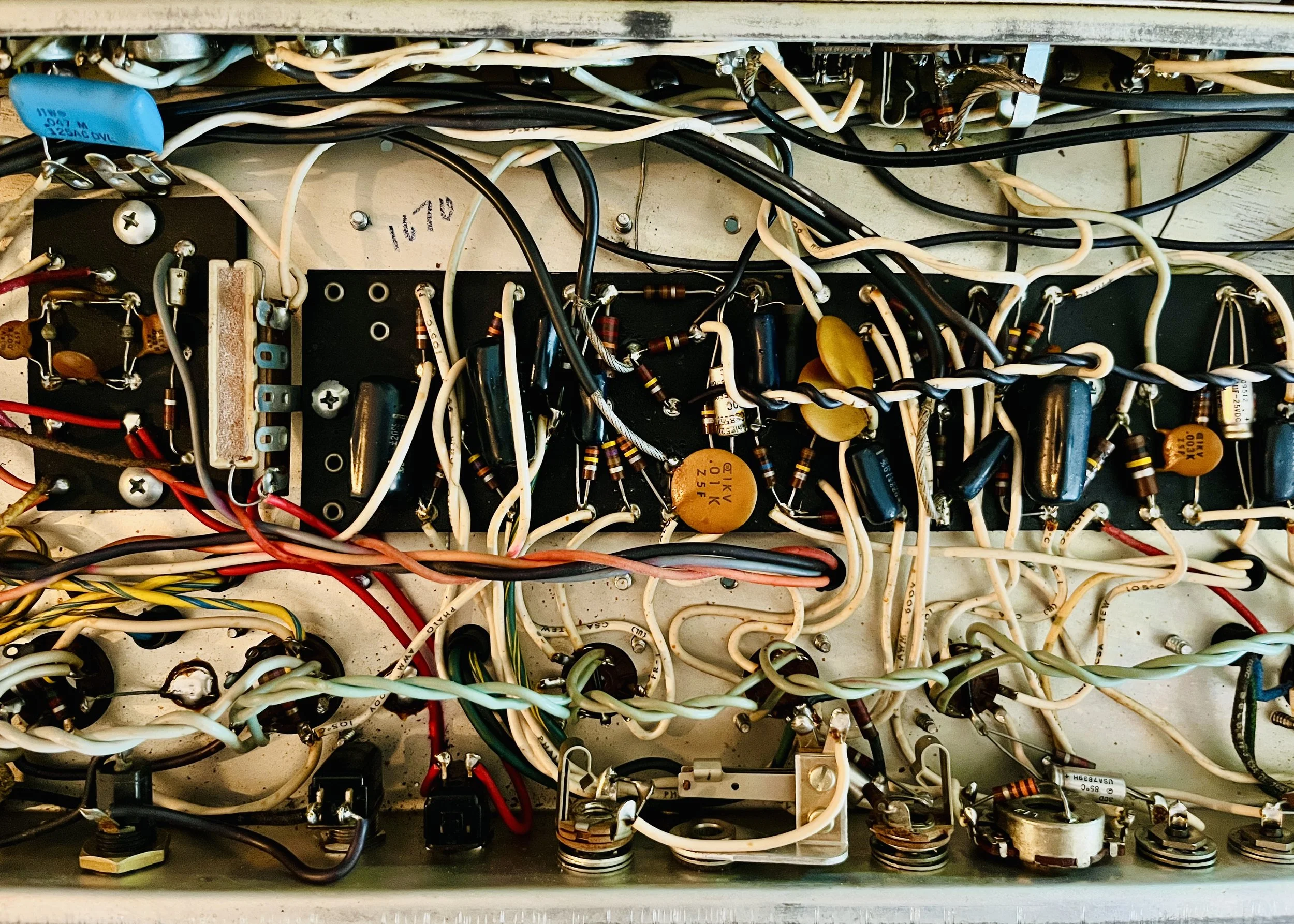
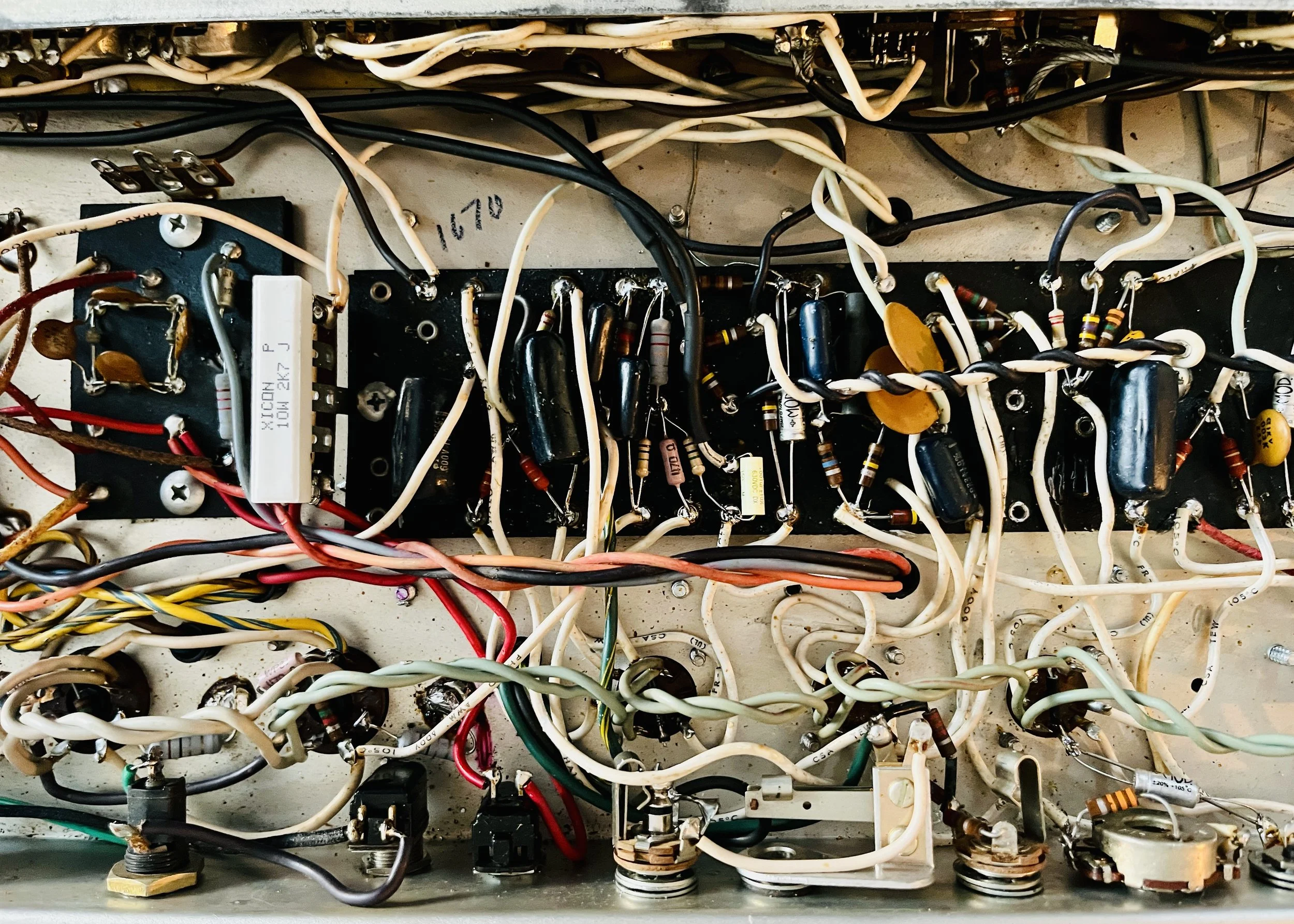
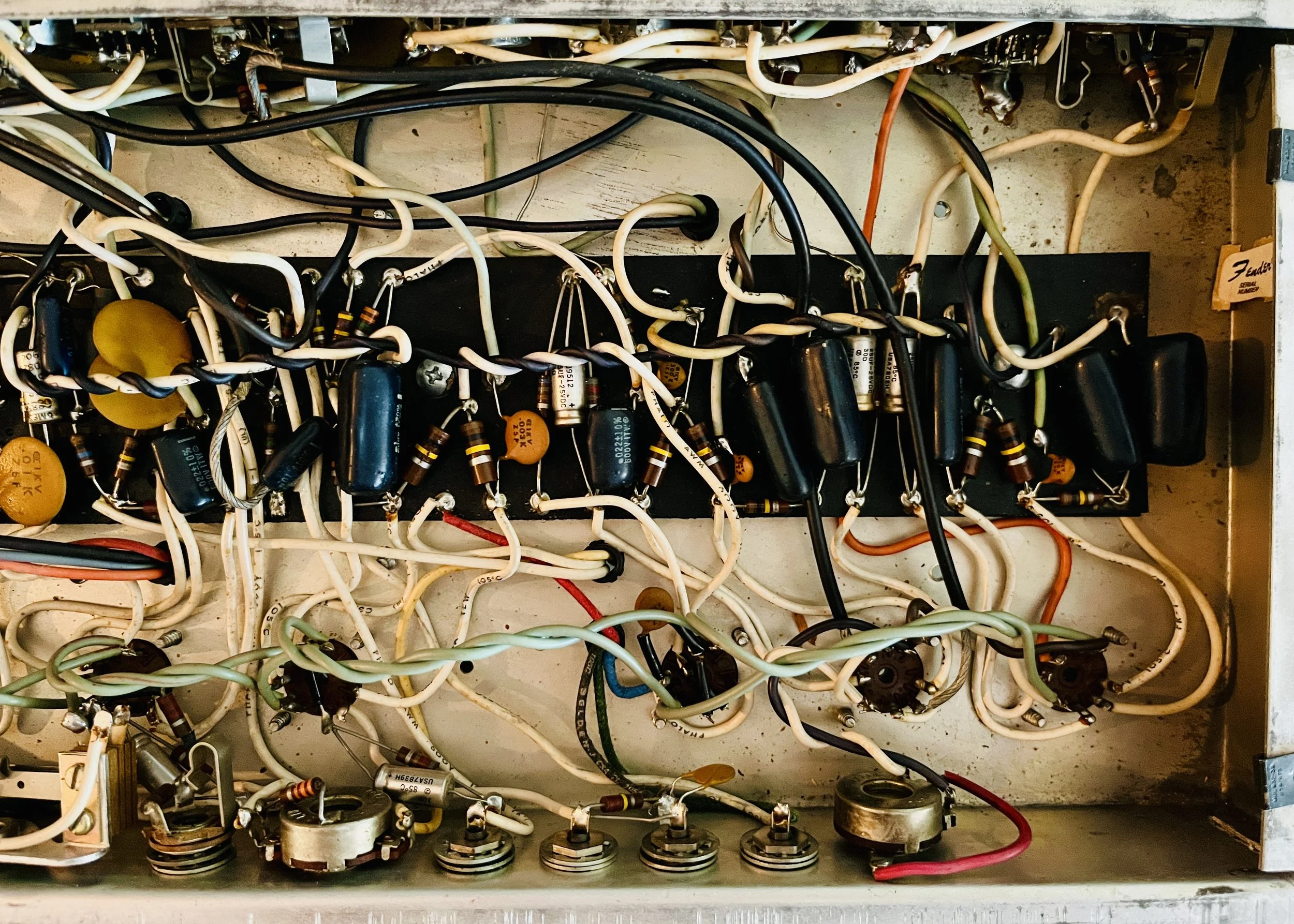
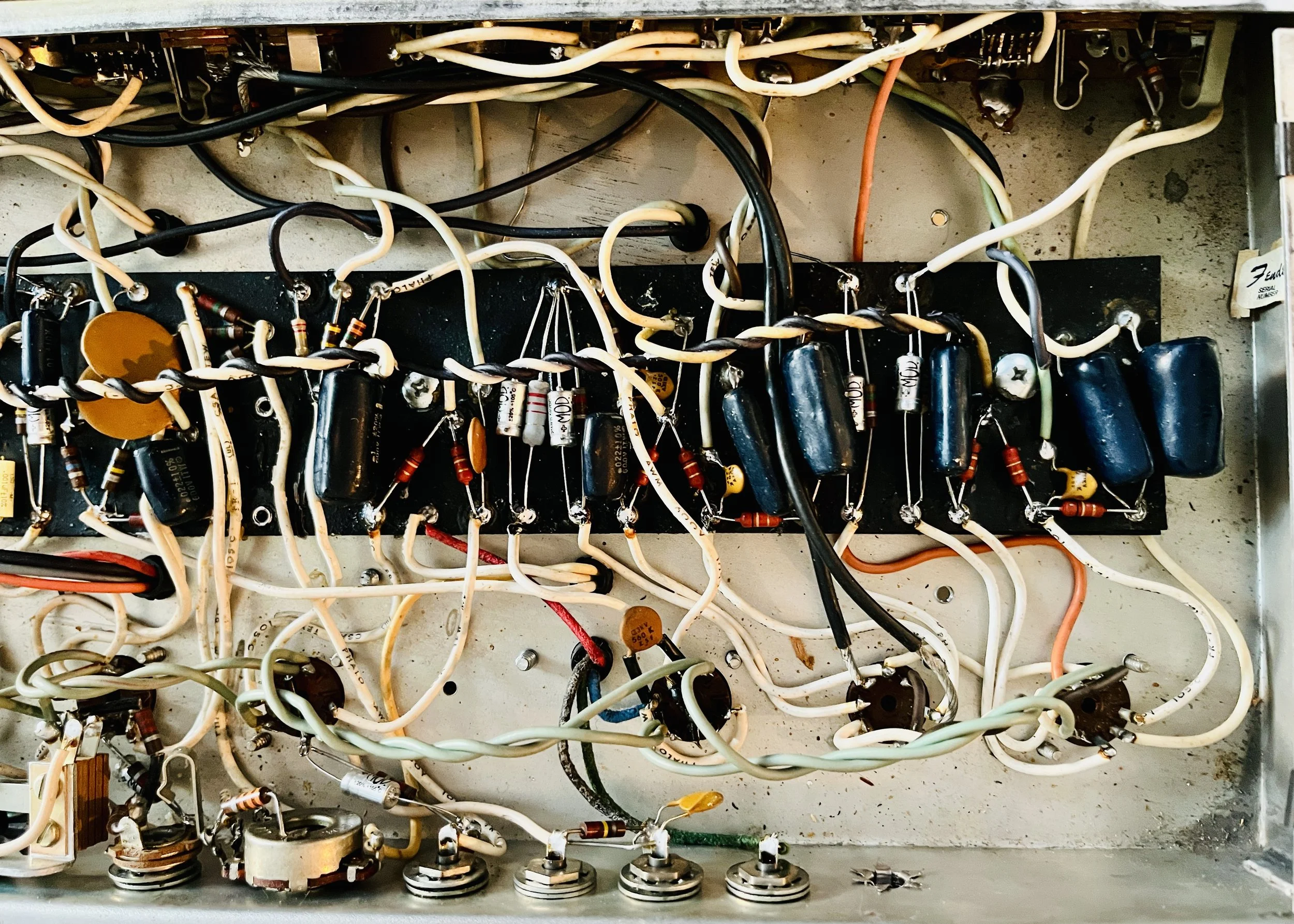
This amp came in to my shop in completely original condition other than being re-tubed. The amp did not work well upon arrival, it had leaking filter caps, heat damaged power resistors, and the tone was dull. This one needed a full restoration including a cap job for all electrolytics, new power dropping/screen/misc. resistors, a 3 prong AC cord, power tube biasing, cleaning, and tube socket re-tensioning. Along with this, the preamps were modded to Black-Panel AB763 spec at customer request to bring more warmth and natural overdrive to the amp. The guitarist that owns this amp wanted something that would play better for more rock oriented tones, so this was the goal for the end result of the resoration. While the power supply and Ultra-Linear output sections are very different from the Black Panel AB763 Twin Reverb, they are not actually responsible for the majority of the overall tone unless you are playing at max volume constantly. The preamps are where most of the tone comes from here, so that is what we changed to make this a more ideal Rock N’ Roll machine.
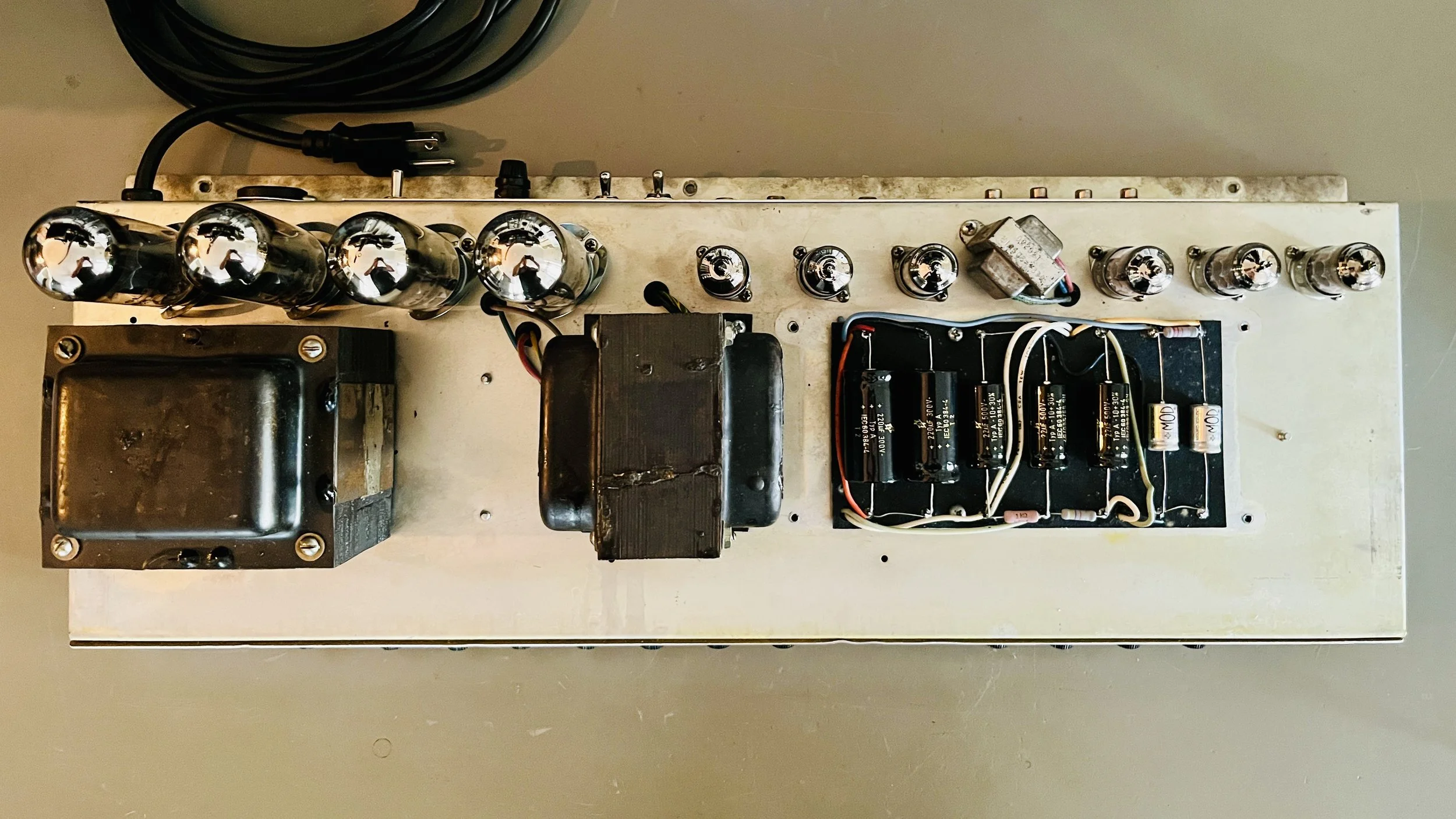
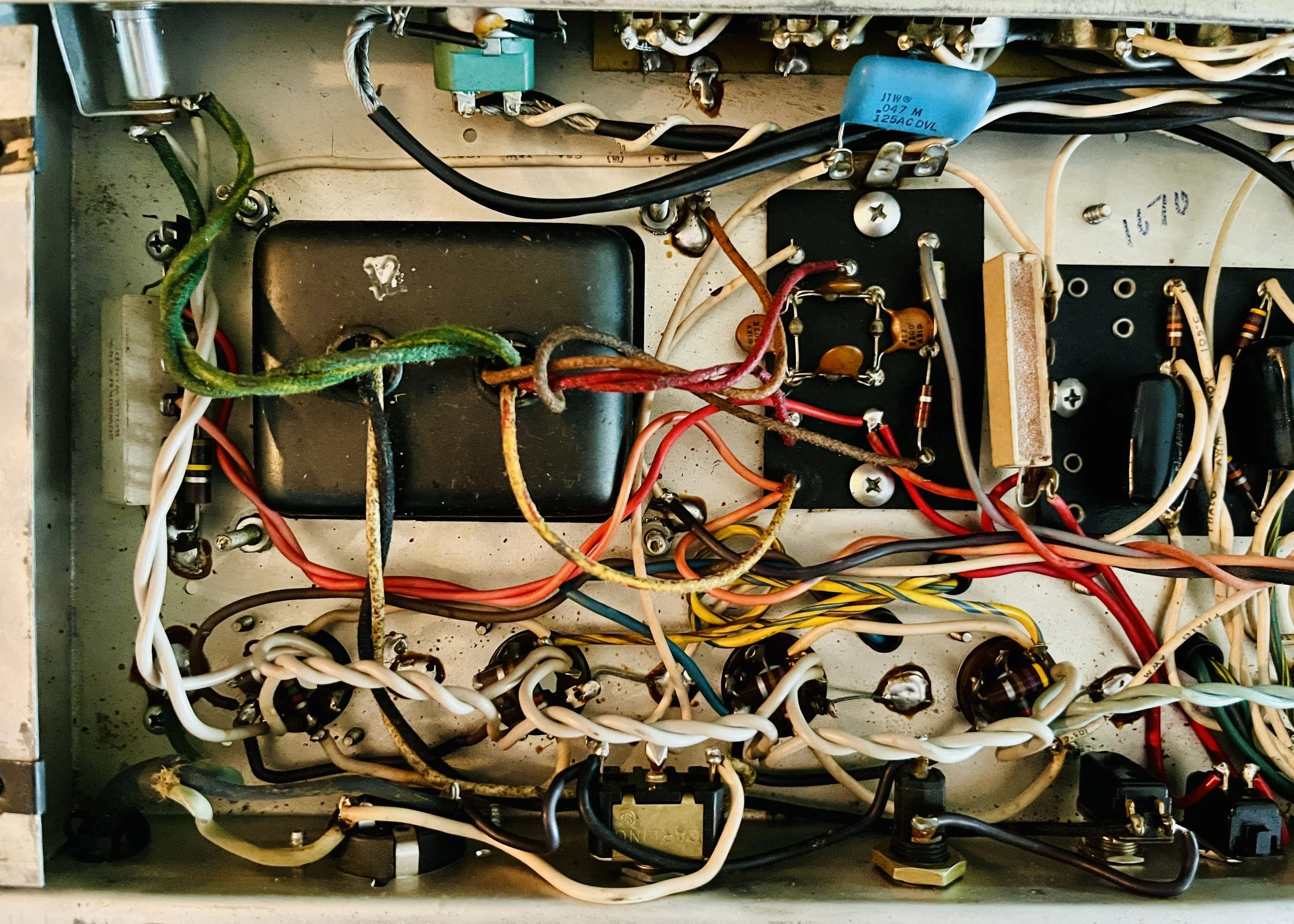
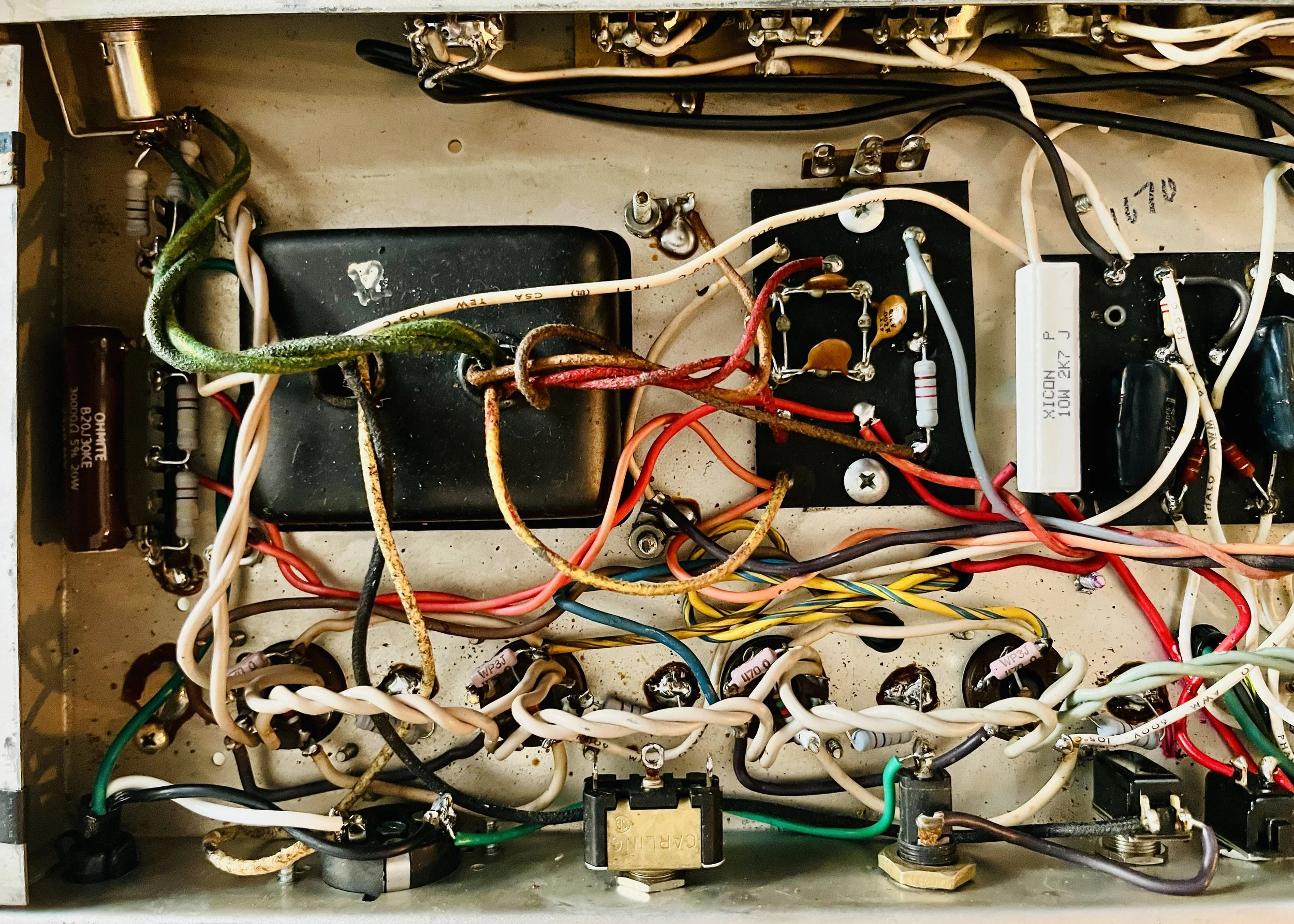
Amp was completely restored. The Vibrato channel Preamp and Phase Inverter sections were modified to 1960's Black Panel AB763 specifications upon customer request. All filter/bias/bypass caps were replaced with upgraded voltage and temperature rated F+T/MOD brand electrolytics. New 20 Watt Wire-wound/10 Watt Wire-wound/5 Watt Cement/2 Watt Metal Oxide power dropping resistors were installed due to the original parts showing heat damage, and for better reliability and lower noise floor. The cathode resistors for V3 and V6 were replaced with 2 Watt Metal Oxide type units for preventative maintenance. All plate resistors were replaced with 2 Watt Reduced Mass Metal Film type units for preventative maintenance, reliability, and low-noise. All screen resistors were replaced with 3 Watt Cement 470 ohm type units for same reasoning. Two new Phenolic Terminal Strips were installed in the filter section as the original large single unit was cracked in half. A new 3 Prong AC cord was installed to replace the worn out original unit.
1 ohm 2 Watt Metal Oxide resistors were installed on pin 8 of the power tubes to provide an easy way to check the bias. The Hum Balance pot on the back of the amp was removed due to it having noise issues, this was replaced with a more stable artificial center tap using discrete 100 Ohm 2 Watt Metal Oxide resistors tapped off the pilot lamp assembly. The empty space left behind was filled with a nickel plated hole cover. The coupling capacitor to the Phase Inverter was replaced with a Mallory 150 630v film type unit - this was part of the AB763 circuit mod. All other misc. resistor values were chosen to make amp compliant with AB763 values and were 1/2 Watt Carbon Film units. The Normal Channel preamp was given my Lead Channel modification to make the amp sound better with distortion pedals and overdrive in general. The Push-Pull Master Volume Boost was removed, as this circuit design from Fender was never liked by most guitar players, and personally I think it sounded awful for this amp. It was replaced with a standard Alpha 24MM 1MA potentiometer and the shielded wire used in this circuit was re-soldered and heat-shrinked to prevent shorts or ground loops. The boost is also no longer needed due to the previous modifications allowing for more gain but with smooth tone.
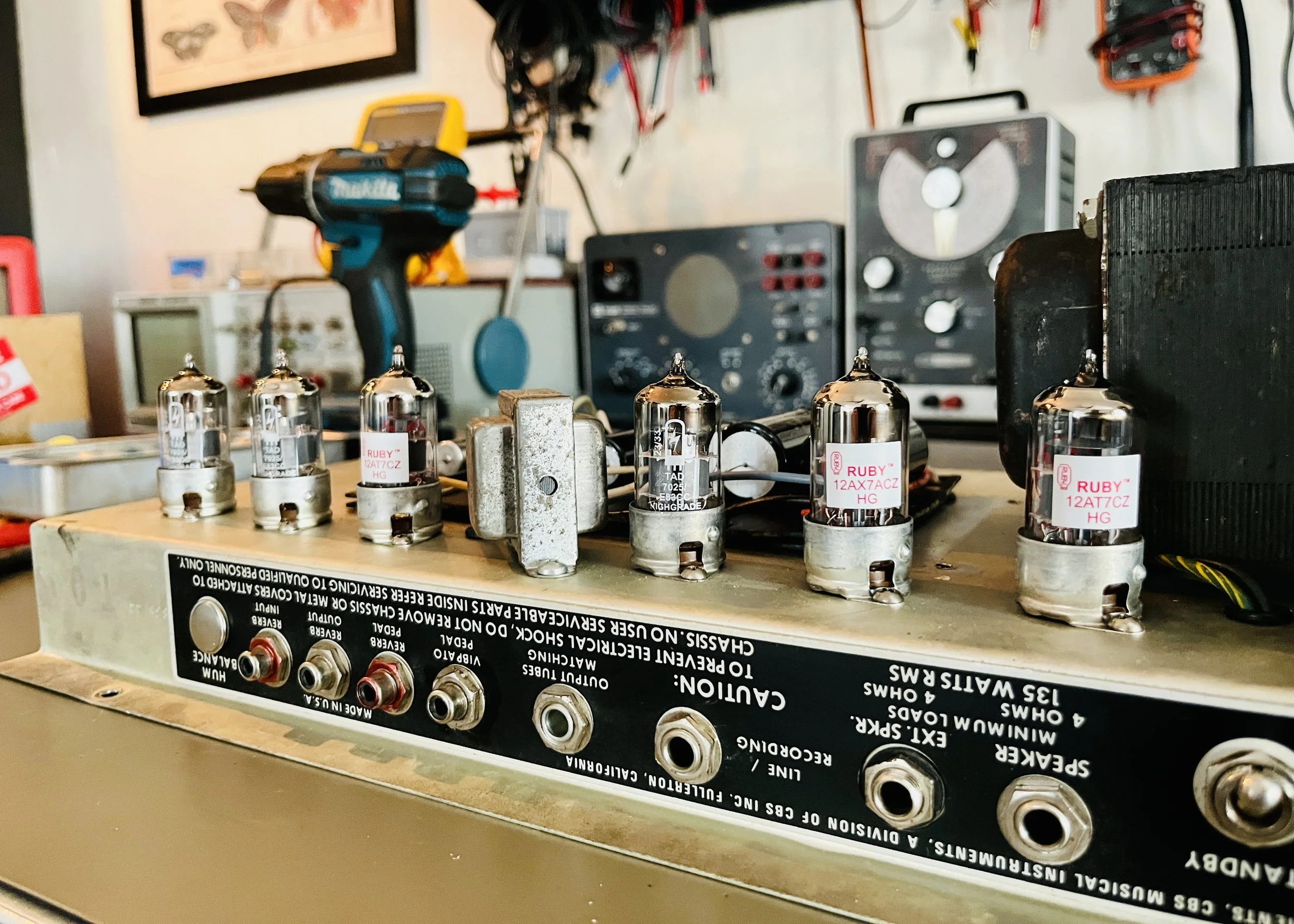
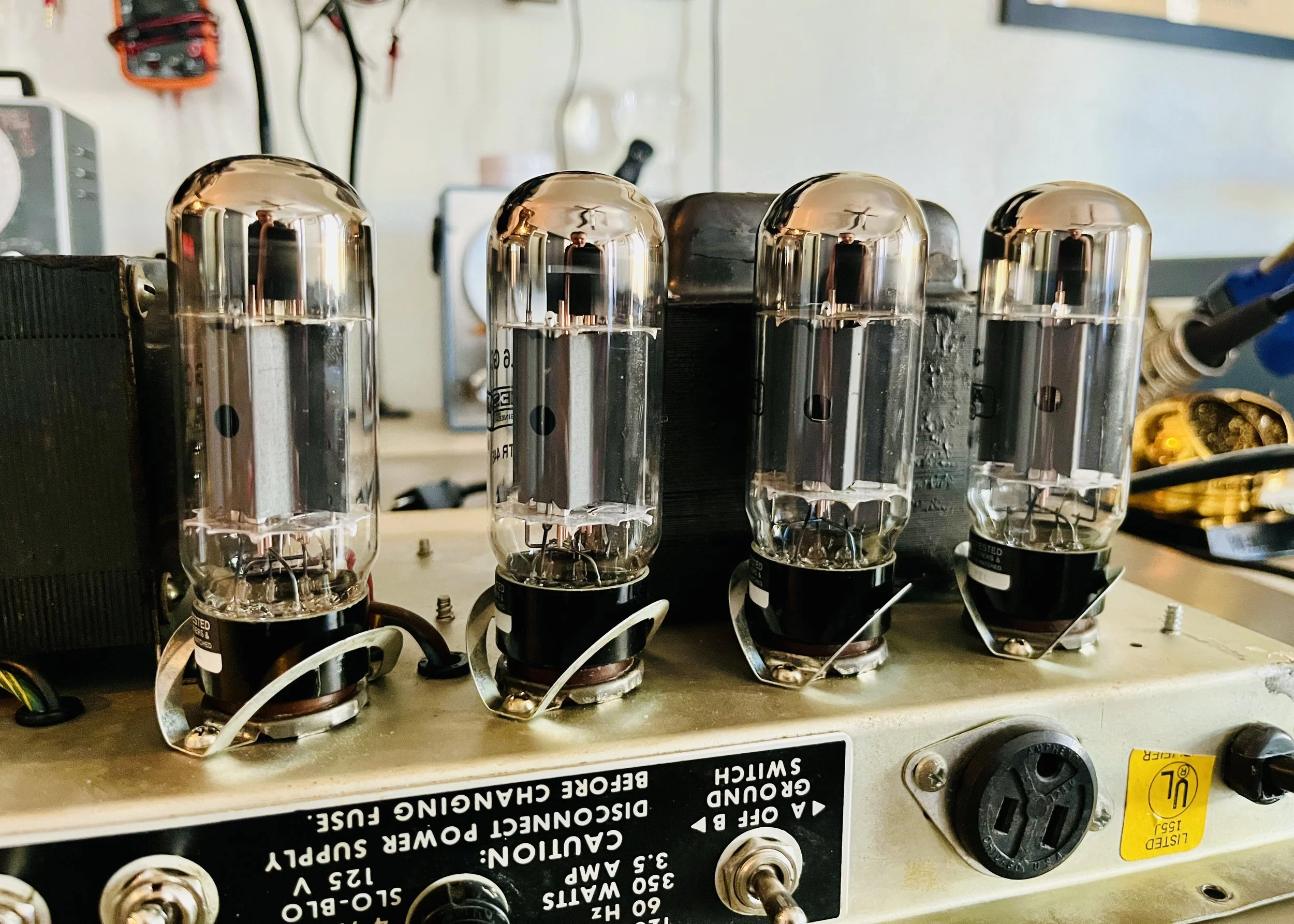
The original tubes all tested good. This was the tube compliment: V1/V2/V4 = TAD 12AX7A, V3/V6 = JJ 12AT7, V5 = JJ 12AX7S, V7-V10 = MESA 6L6GC-STR Matched Quad. The 6L6GC's Fixed Bias was set to %53 Class AB UL Plate Dissipation with a B+ of 495VDC. The tube sockets were all re-tensioned to stop loose tubes from potentially falling out and were then treated with De-Oxit to remove/prevent corrosion. The pots were sprayed out and the amp was cleaned inside and out. The Foot-Swicth pedal for Trem/Reverb had a broken SPST switch on the Reverb side, this was replaced with a Carling brand unit. Amp now functions well and has much better tone with more overdrive on tap.