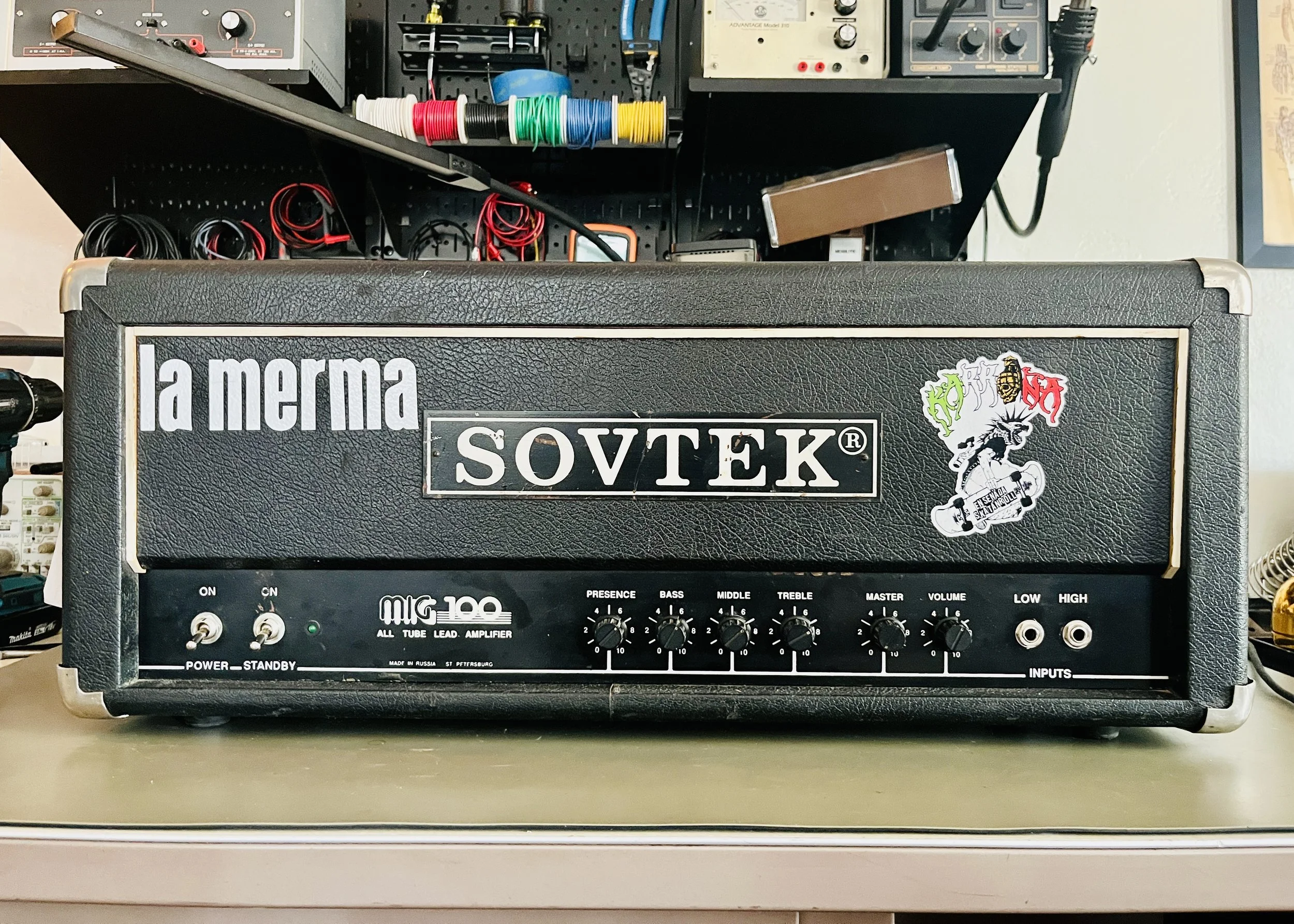
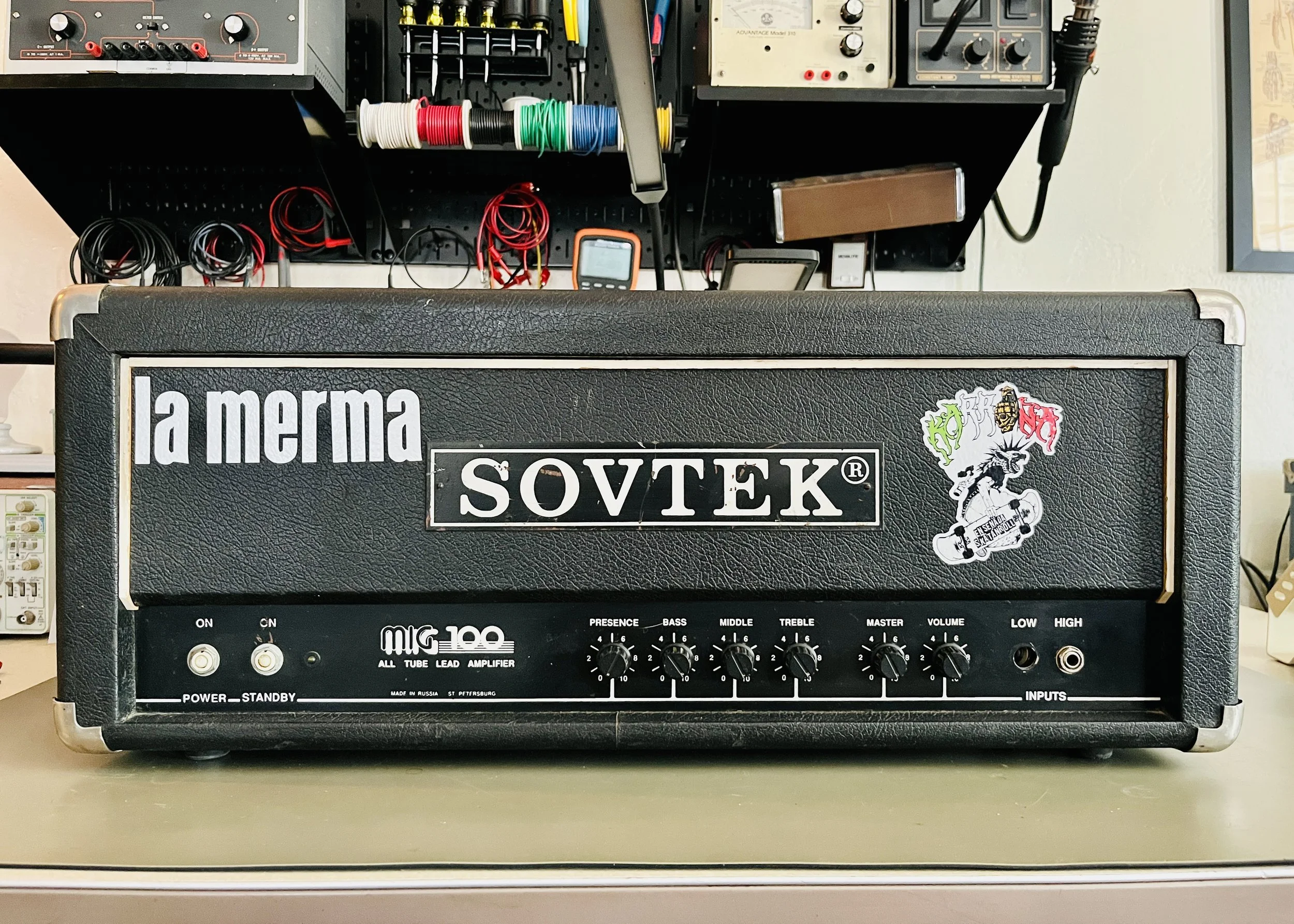
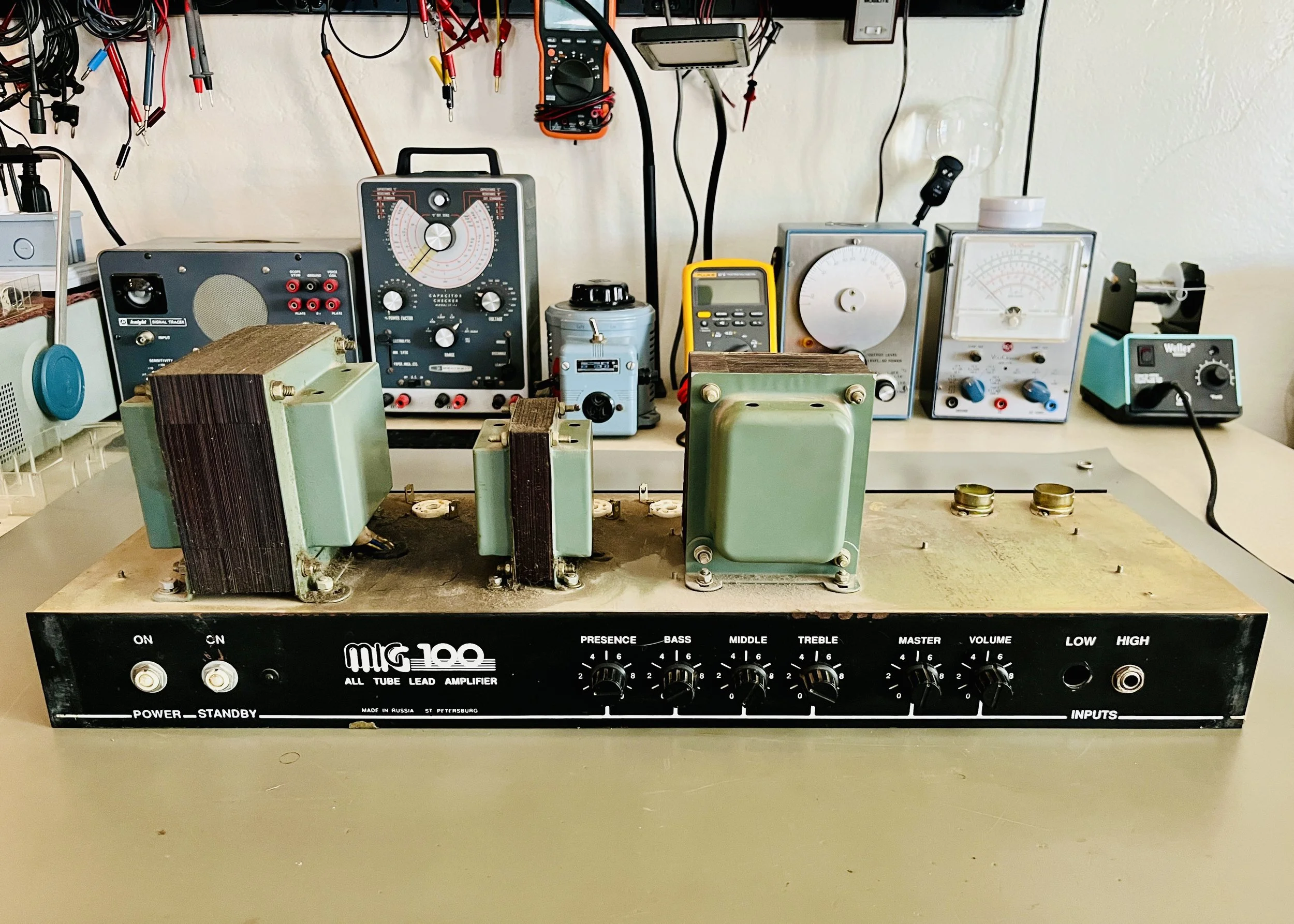
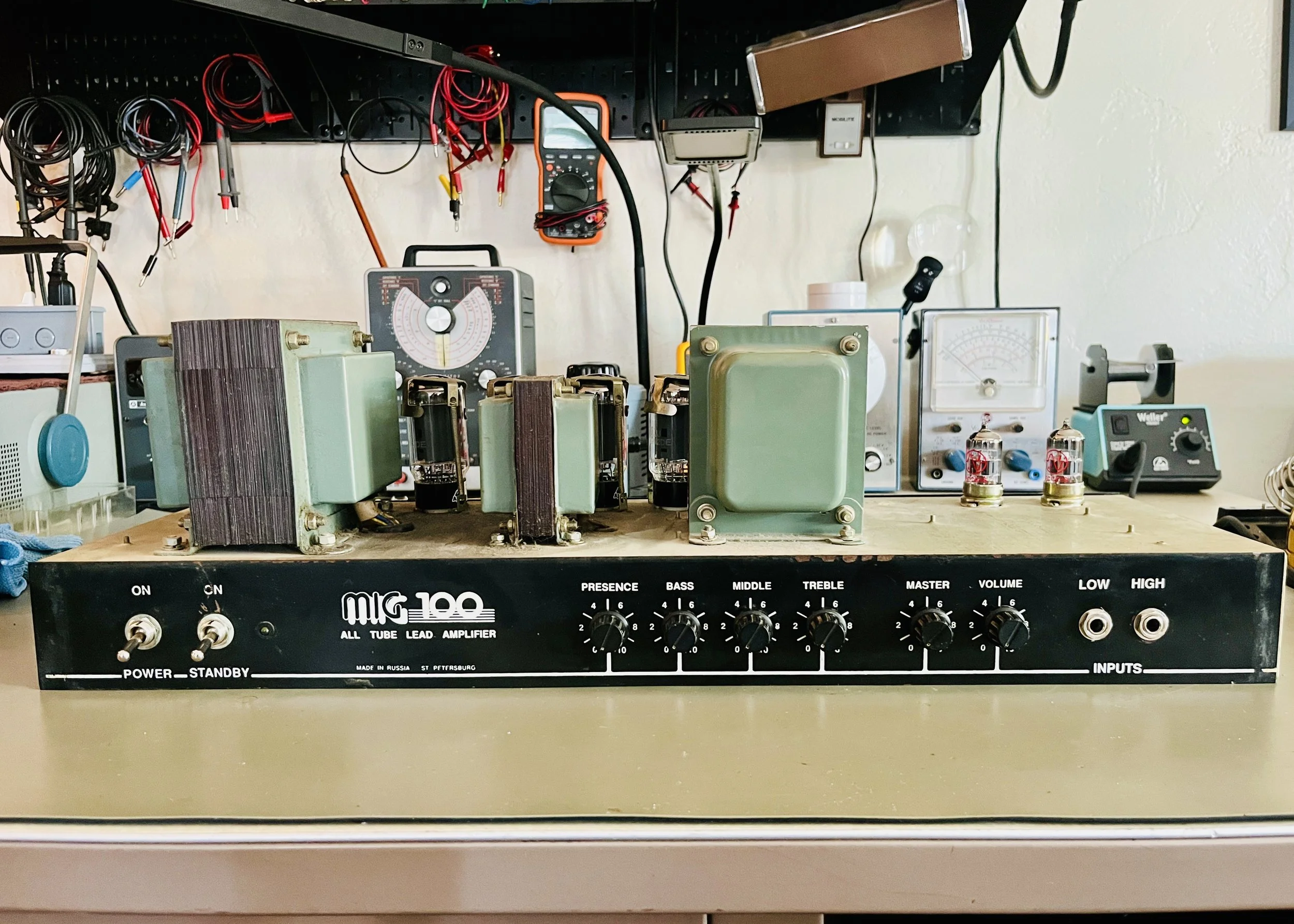
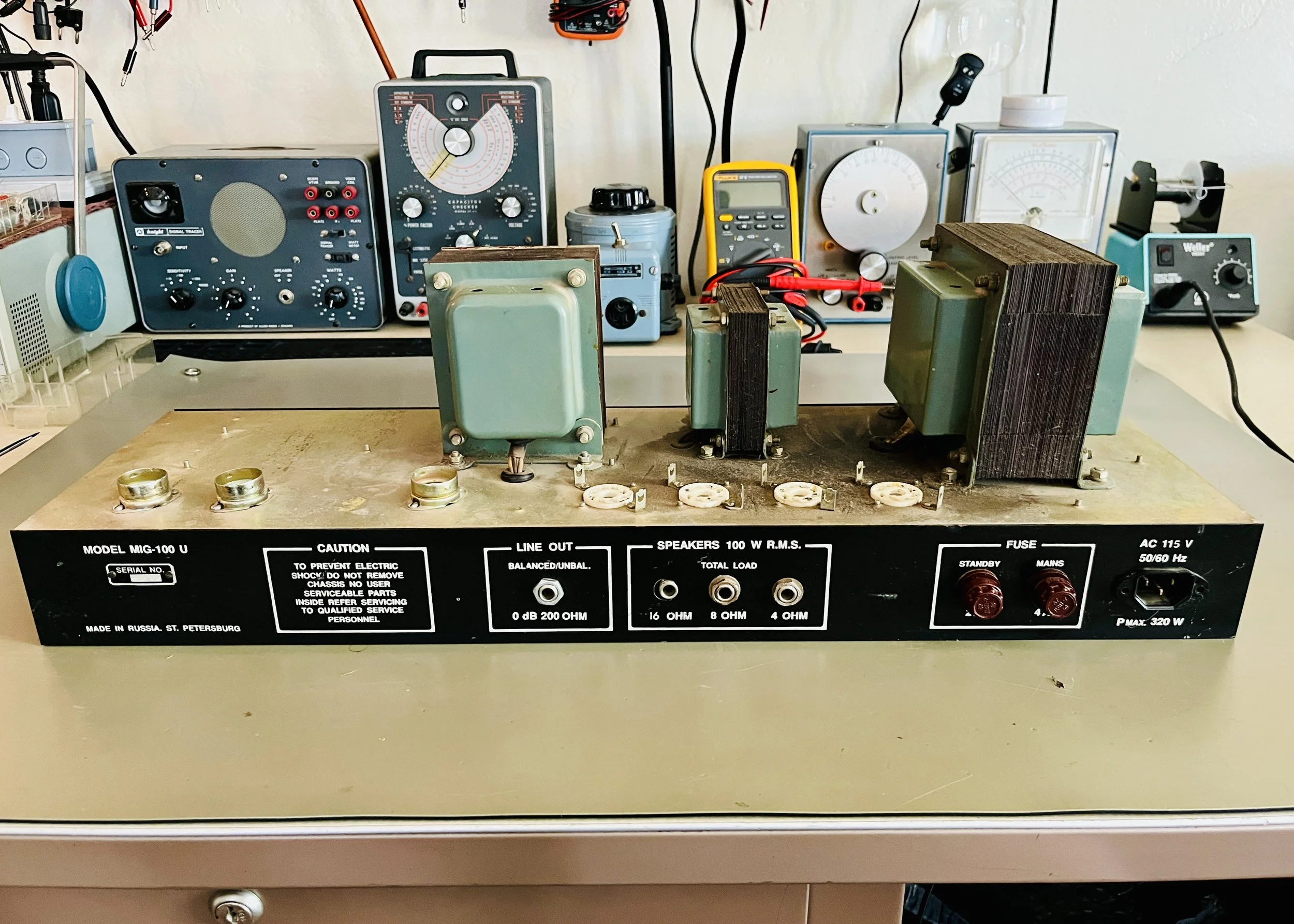
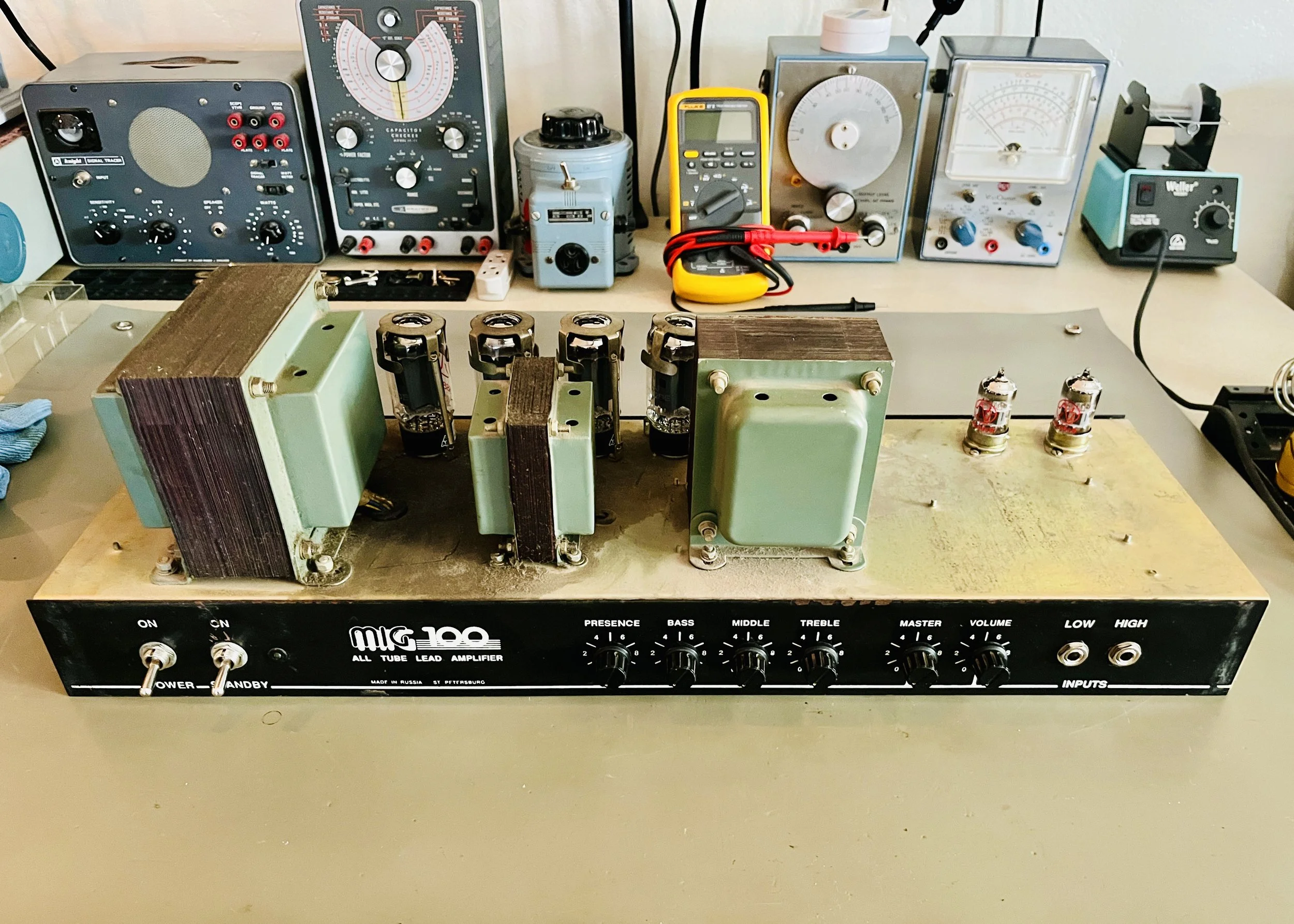
1993 Sovtek MIG 100 U
Sovtek is not very well known for making guitar amplifiers. However, every guitarist or bassist on earth knows Sovtek as one of the main manufacturers of modern vacuum tubes and that they are based in Russia. Sovtek is owned by Mike Matthews, the owner of Electro-Harmonix, lead designer of the LPB Booster and Big Muff (among many others), and a proud New Yorker who loves to smoke cigars. In the early 1990’s tube manufacturing was officially dead for all Western countries, the last western tube maker was the US company Sylvania, who sadly closed its doors in 1988. Not only were the Western factories closed, they were dismantled and the equipment scrapped or sold, so there was no practical way to bring them back. Building a new tube factory in the US, Canada, UK, Australia, or most of the EU was also a non-starter because our environmental laws no longer tolerated the large scale use of the heavy metals cadmium and cobalt. These highly poisonous and extremely long lasting (environmentally persistent) metals are necessary for manufacturing vacuum tubes. However, there was a huge resurgence of interest in vintage analog gear like tube amps (and effects) thanks to the explosion of the Grunge scene at the time, but no one was able to get enough new tubes. There was still a large but dwindling stock of NOS tubes available and China was shipping small amounts to the US but it wasn’t enough. Mike Matthews saw an opportunity in the former Communist/Eastern Bloc countries, who due to their economies operating with less money and older technology than the West, as well as their cultural attitude of eschewing disposable products, not to mention the lax environmental and labor laws, had kept all of the tube factories up and running. Now that Russia was a Democracy (sort of) Mike stepped in and bought the old Reflector Vacuum Tube Plant which was formerly operated by the Soviet Union and the Central Planning Committee in Saratov, Russia. He started producing large amounts of classic tube types that guitar players in the US were demanding and this became a massive success. During this time they also produced a small line of tube amps, the MIG series. After all, if you make the tubes, why not make the amps to put them in?
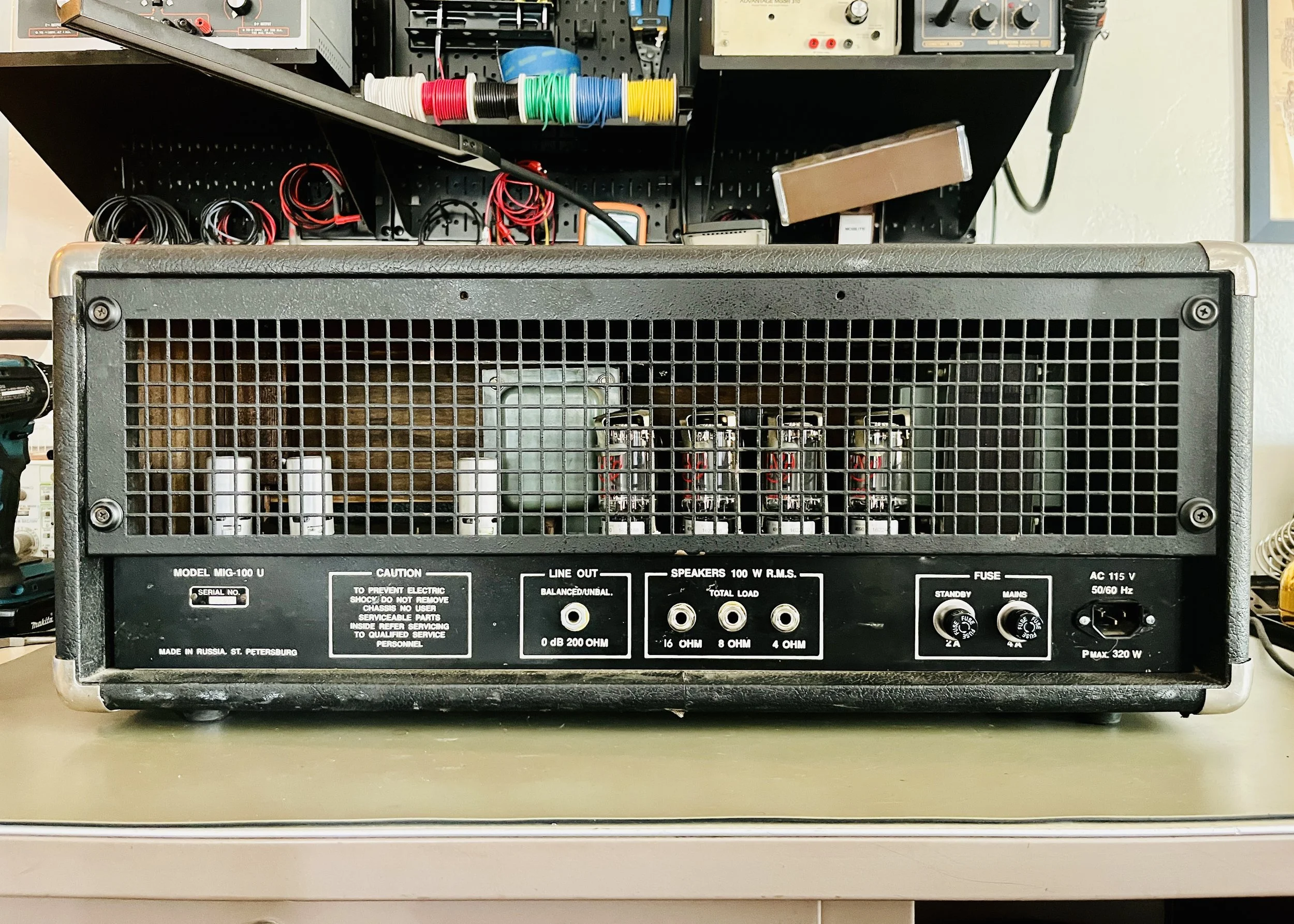
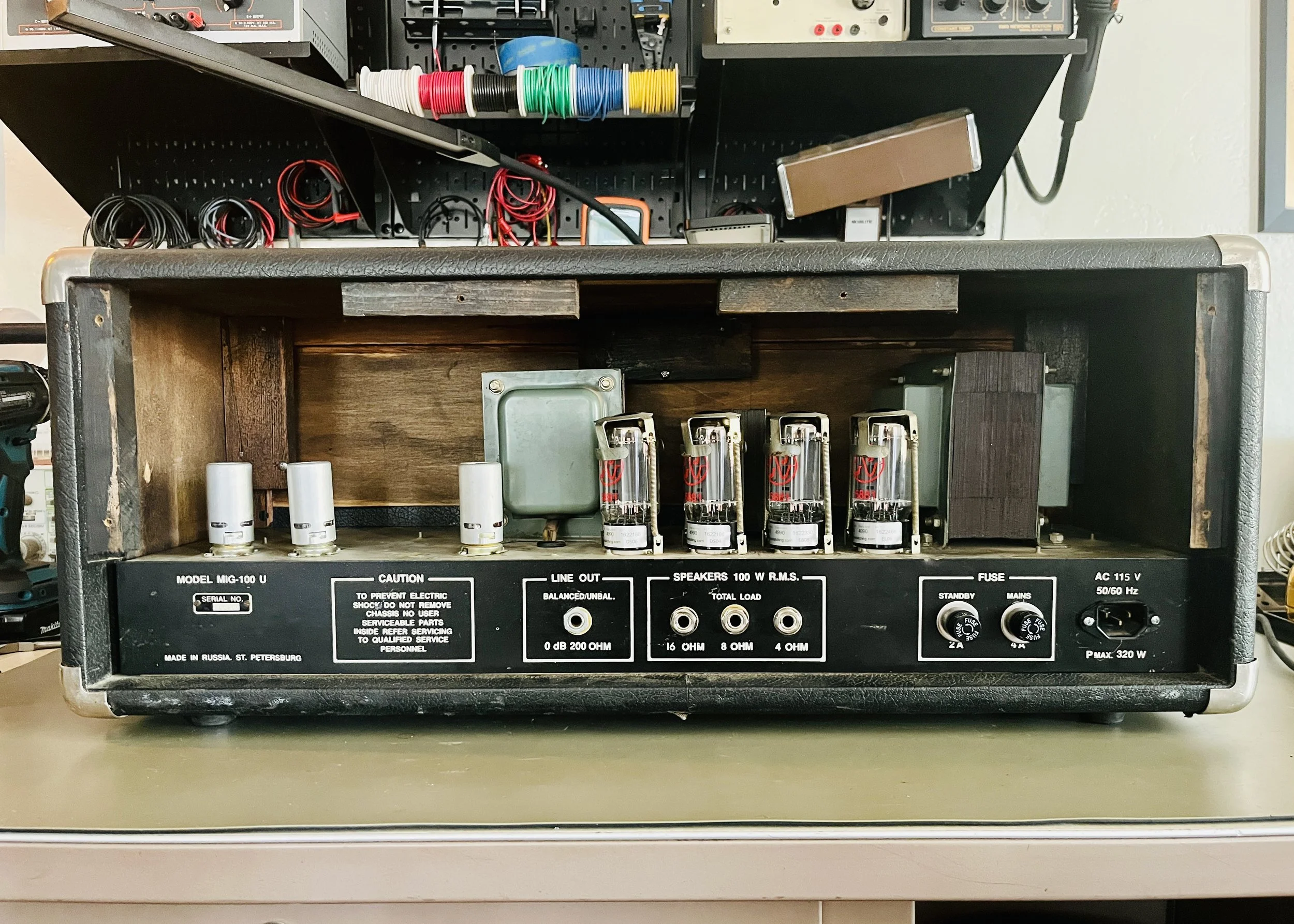
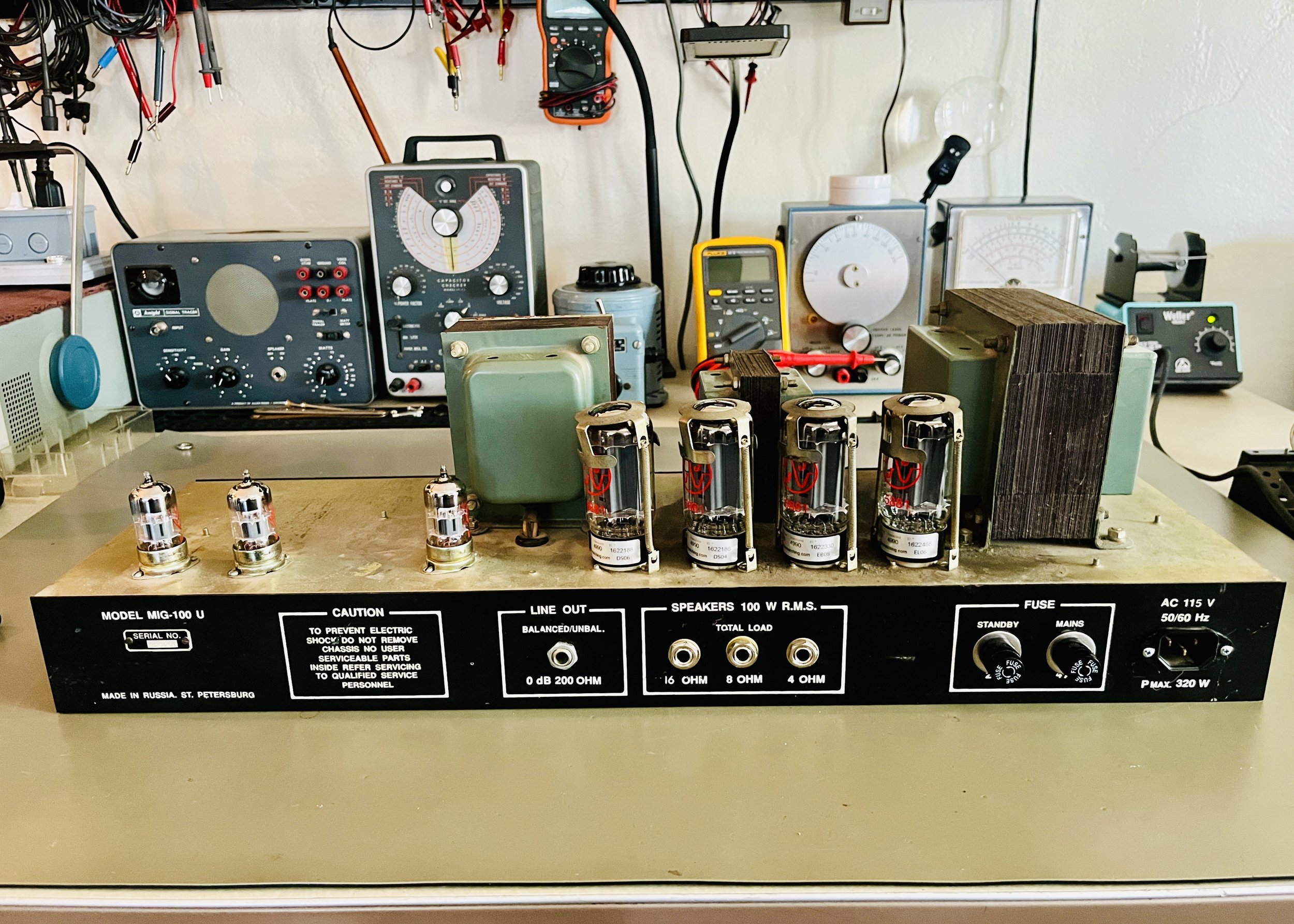
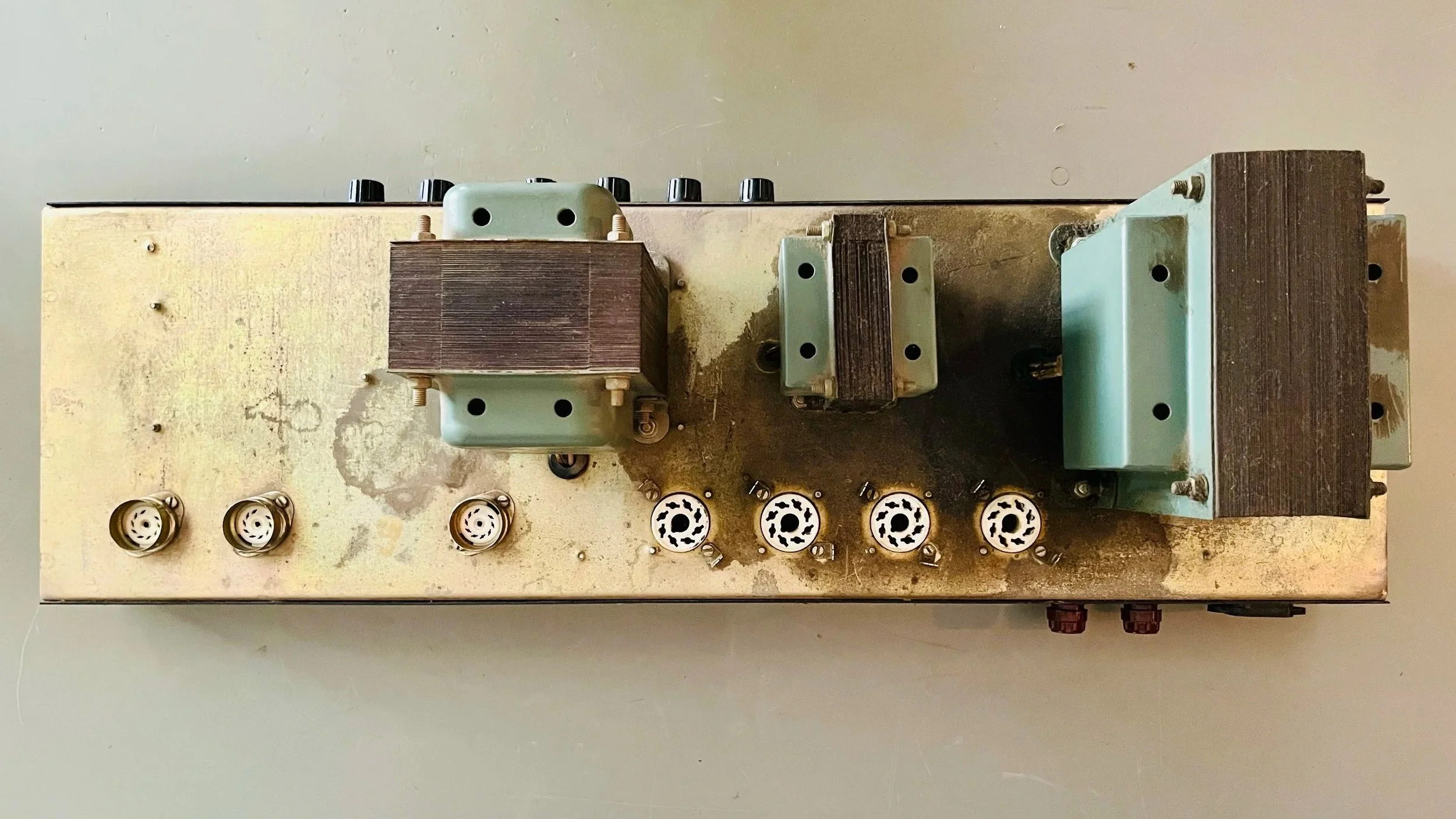
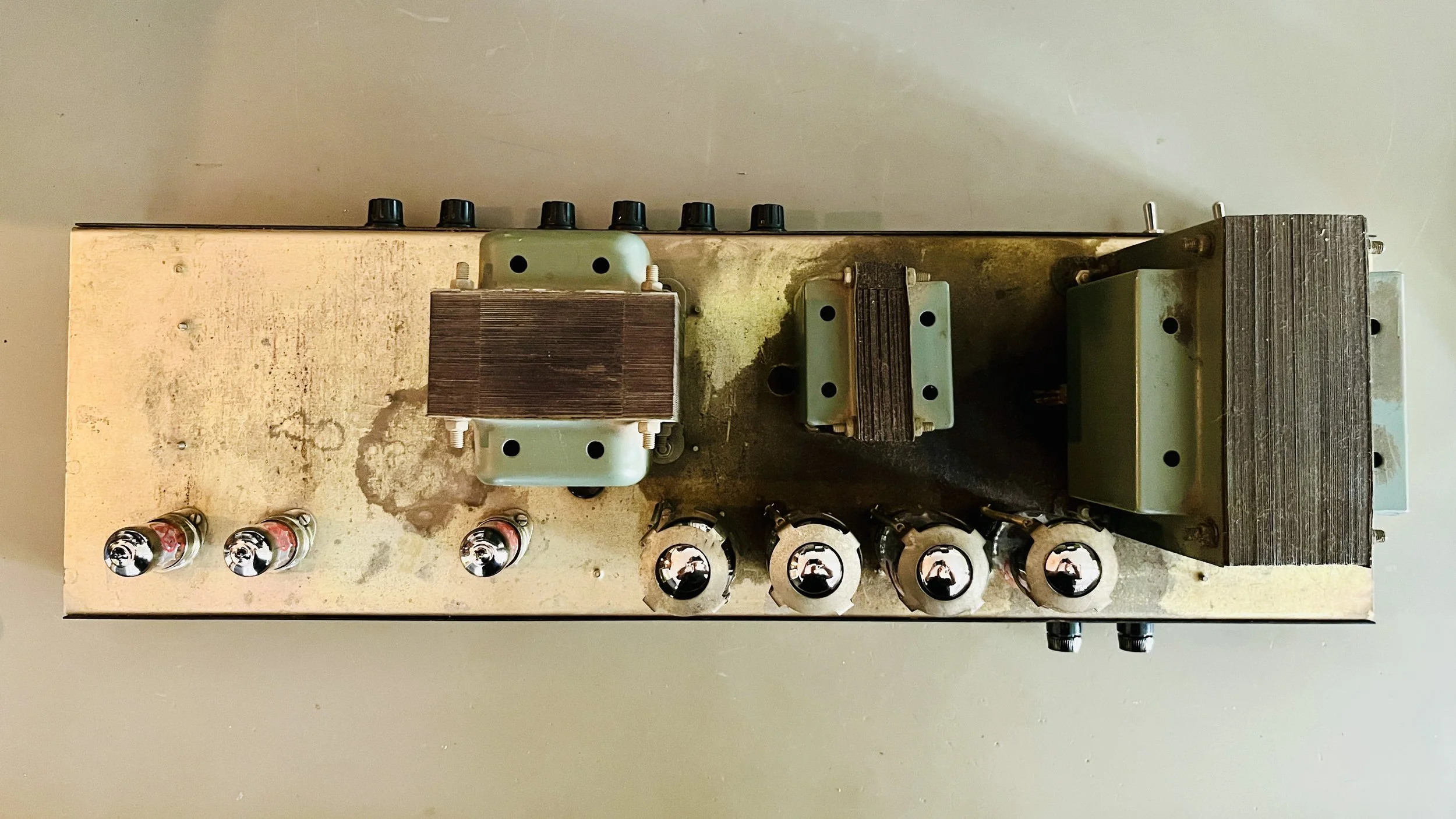
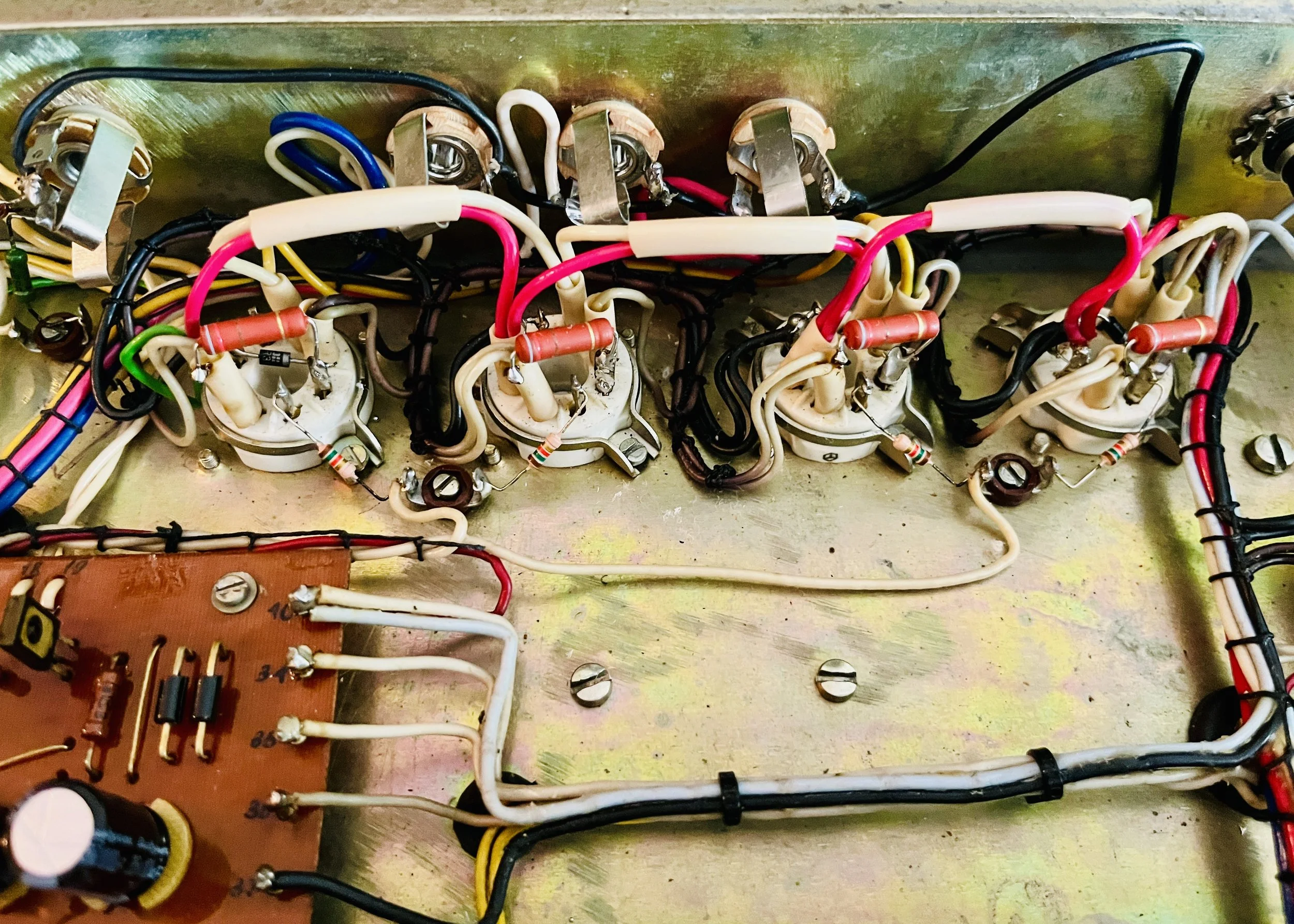
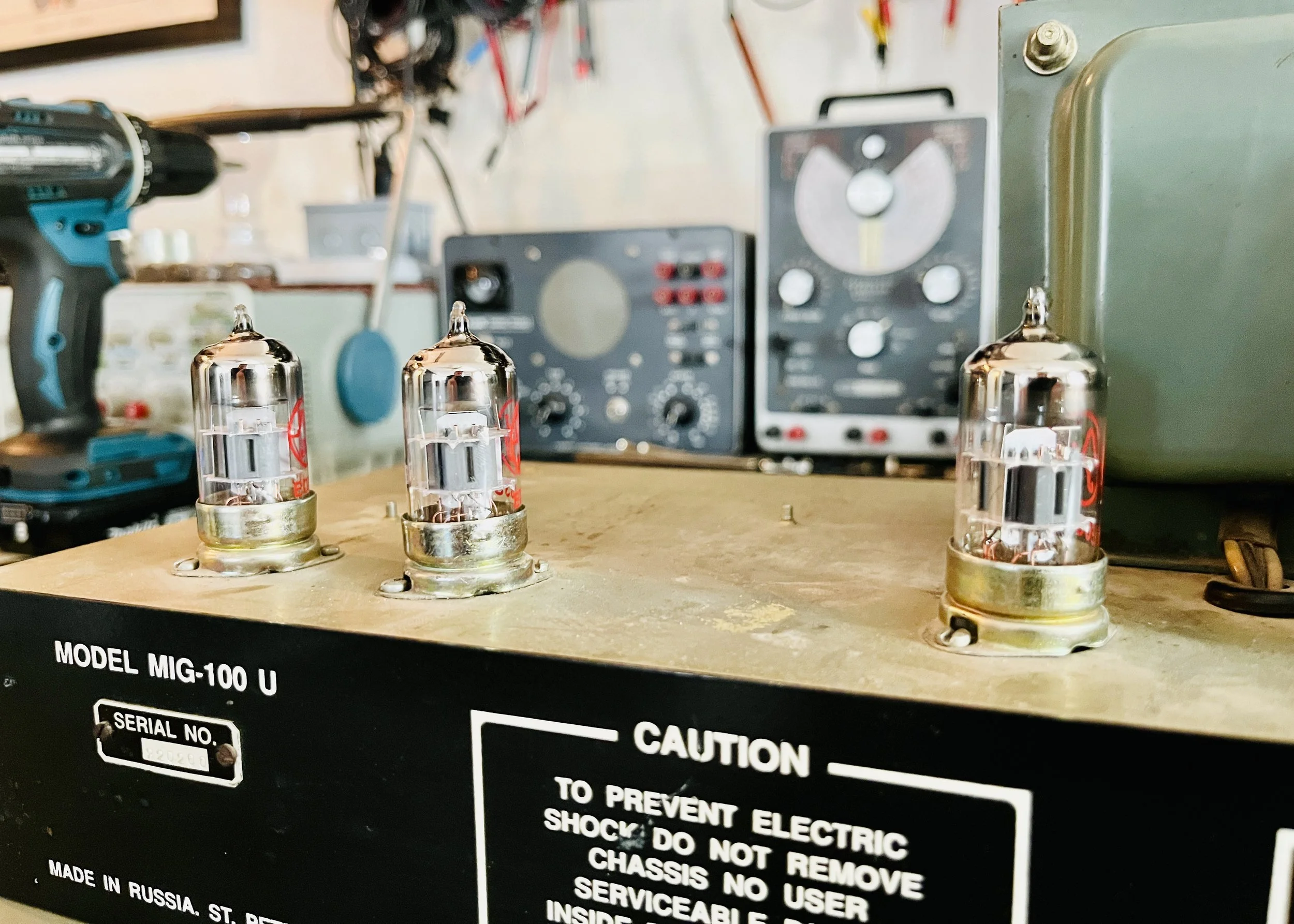
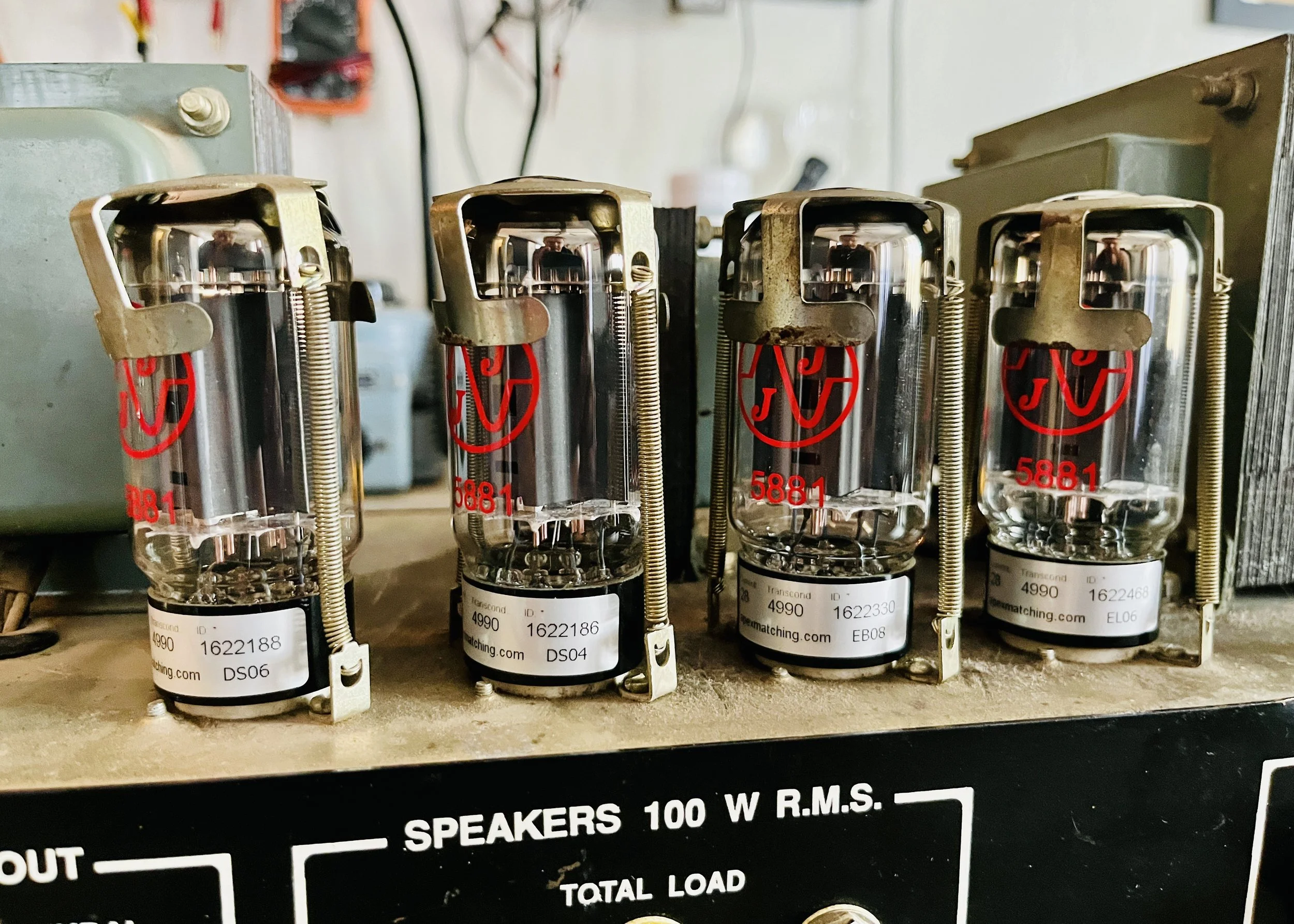
The MIG series were all takes on a combination of ideas from two main classic tube amps. The venerable Fender Tweed Bassman and the Marshall JCM 800. By using schematic design blocks borrowed from both of these models, Sovtek created something that had it’s own unique tone. These amps have lots of gain on tap and similar controls to the JCM series but the tone stack and looser feel to the amp comes from it’s Bassman roots. The MIG 100 U that we have here is a 100 Watt (actually more like 80 Watts at the most) amplifier that uses a quad of 5881 power tubes, has three 12AX7 preamp tubes, and a solid state rectifier. These amps are built like a JCM 800, with single sided PCB’s for main circuits and some hand-wiring for the tube sockets and pots/jacks. The common rumor about these amps is that they were made with left-over Soviet military parts, this is only very lightly true, mostly they were just decent tube amps built with standard Russian parts from the 1990’s in a tube factory. Notable users: Josh Scott of JHS Pedals, Brian Warren of Weatherbox, and Nick Bassett of Whirr.
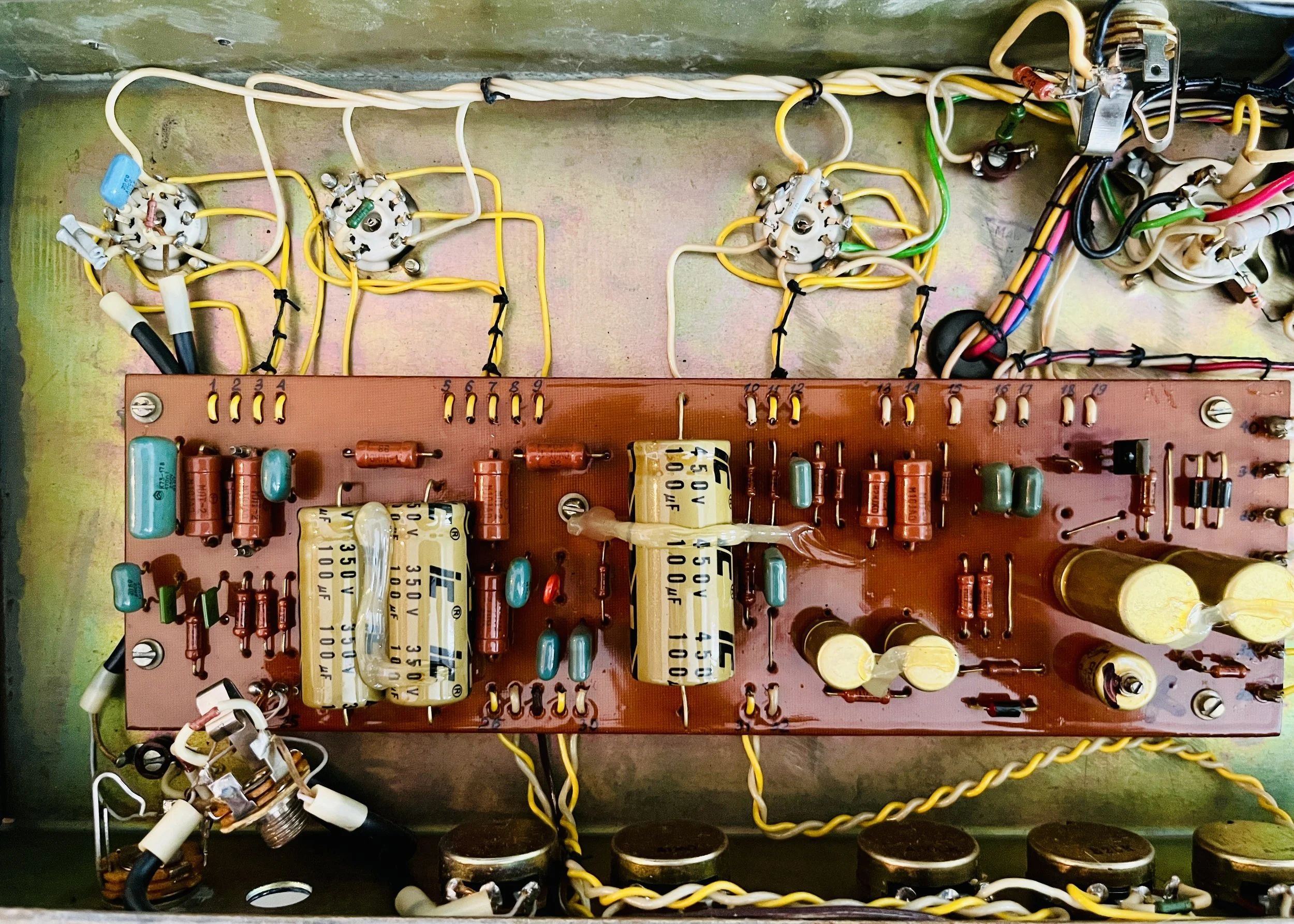
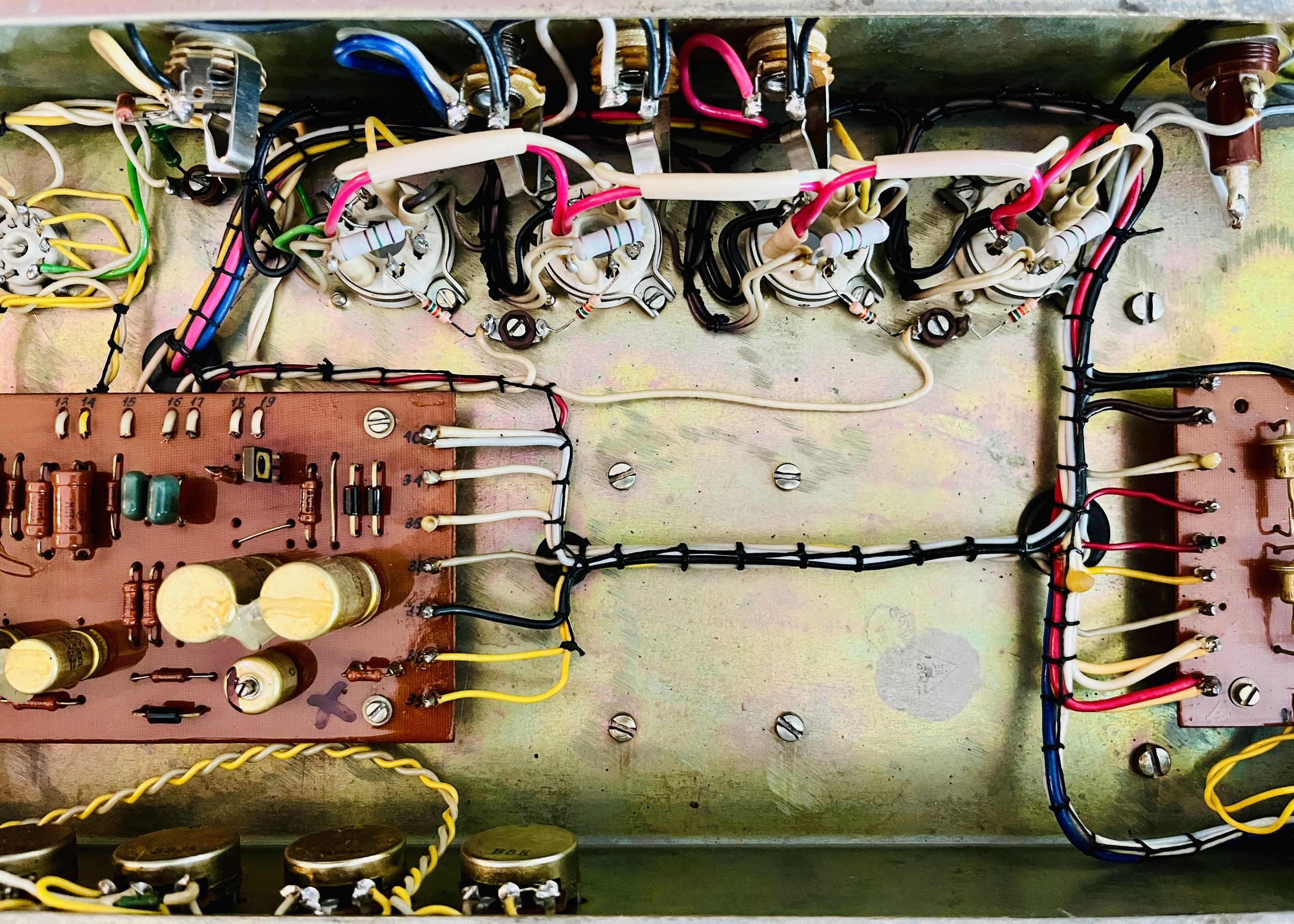
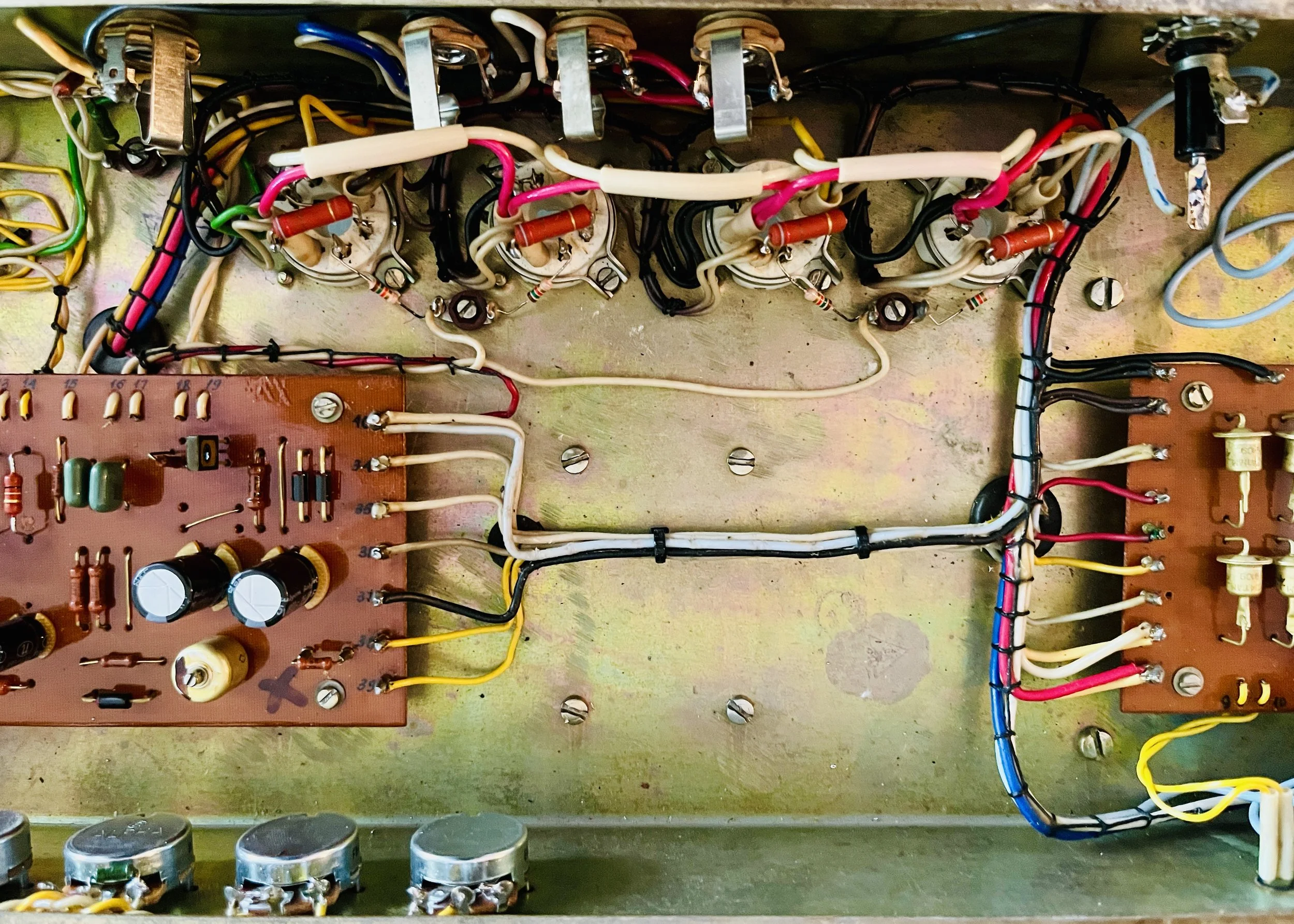
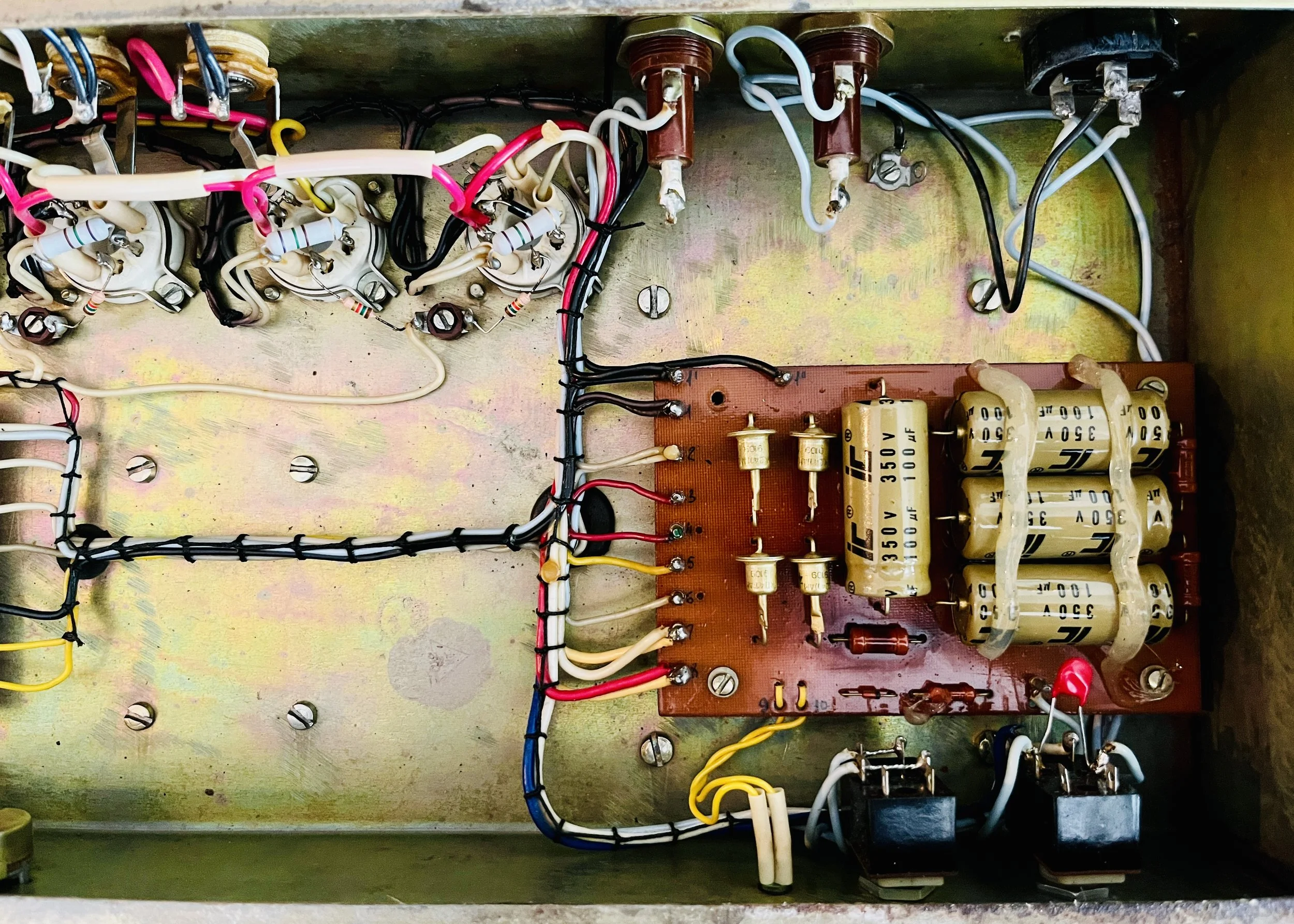
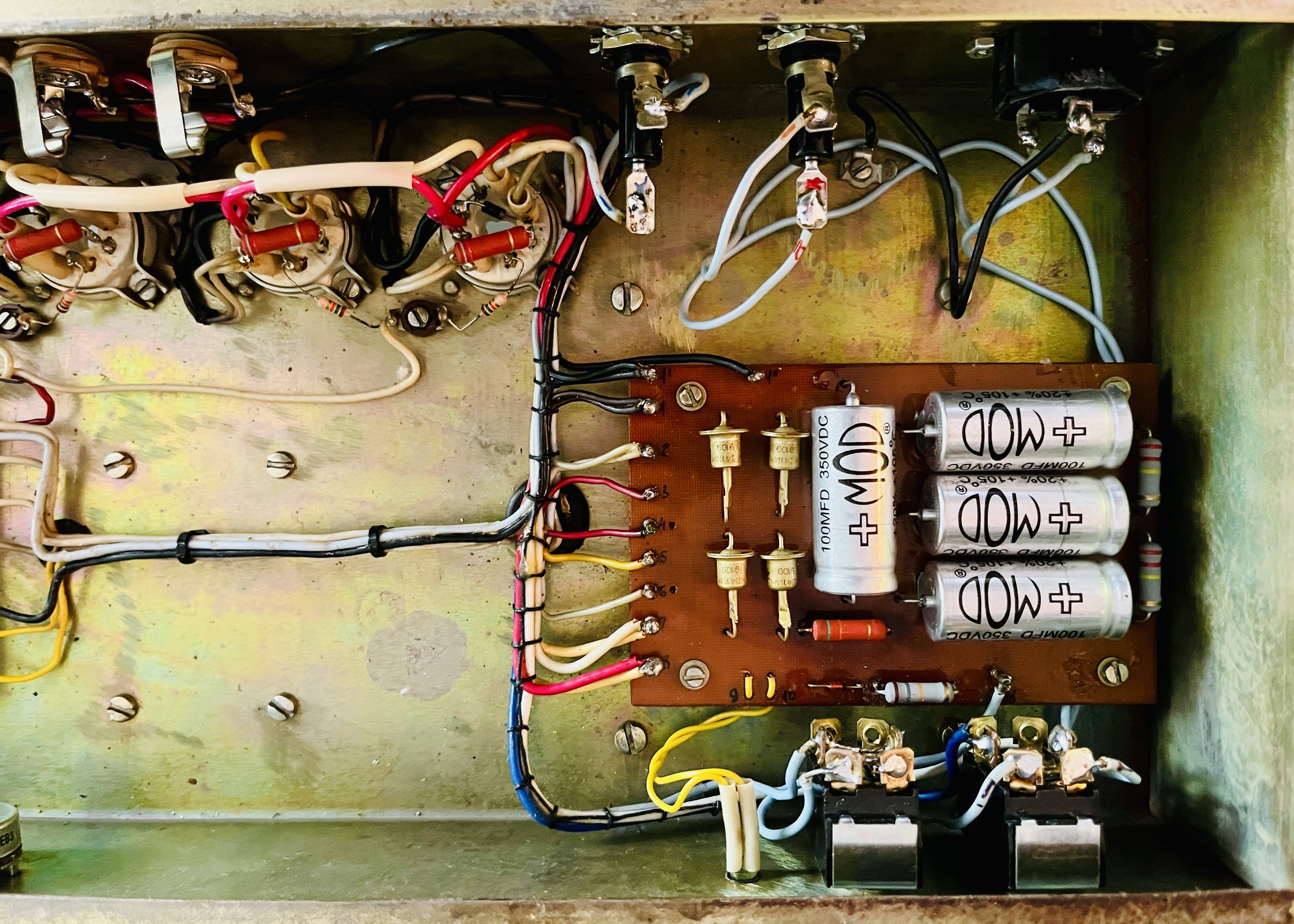
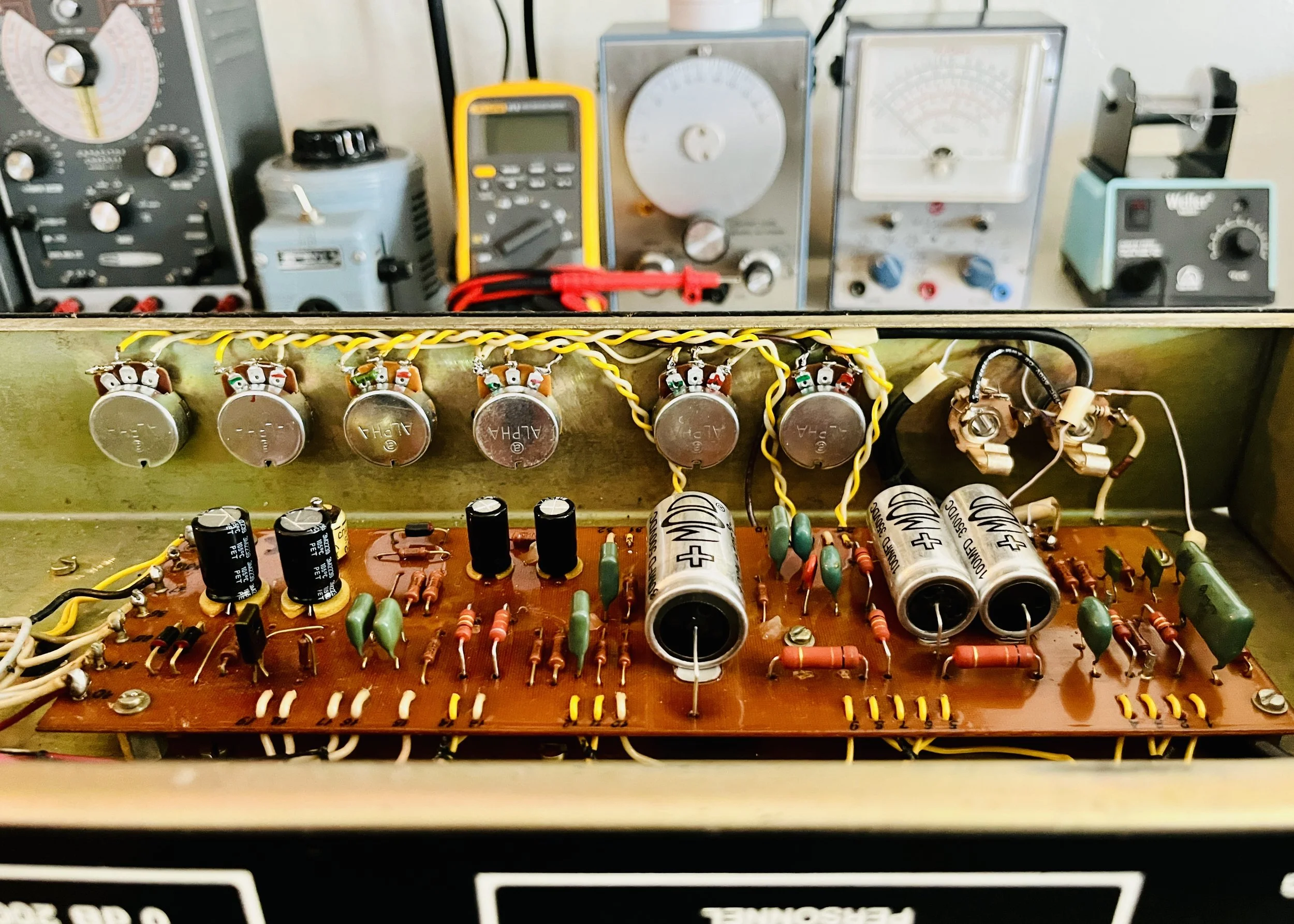
This amp came in to my shop in original electronic condition. This one needed a big restoration including a cap job, upgraded power/plate/misc. resistors, all new potentiometers and 1/4” jacks, new power switches, replacement fuse holders, cleaning, and new tubes/bias. These can be good amps but they have a reputation of being unreliable. Sovtek did cut some corners on the pots, jacks, switches etc. Basically all of the front and back panel hardware usually needs to be replaced on these. The other challenging aspect to these amps is that all the parts have non-standard Cyrillic markings for the values of resistors and caps, and the entire circuit board of this amp was coated in epoxy. This means that every part is super-glued down to the PCB’s and the metal leads do not make contact with a Multi-Meter. Because of this, it’s not uncommon when these get brought in for repairs that some techs do not want to work on them.
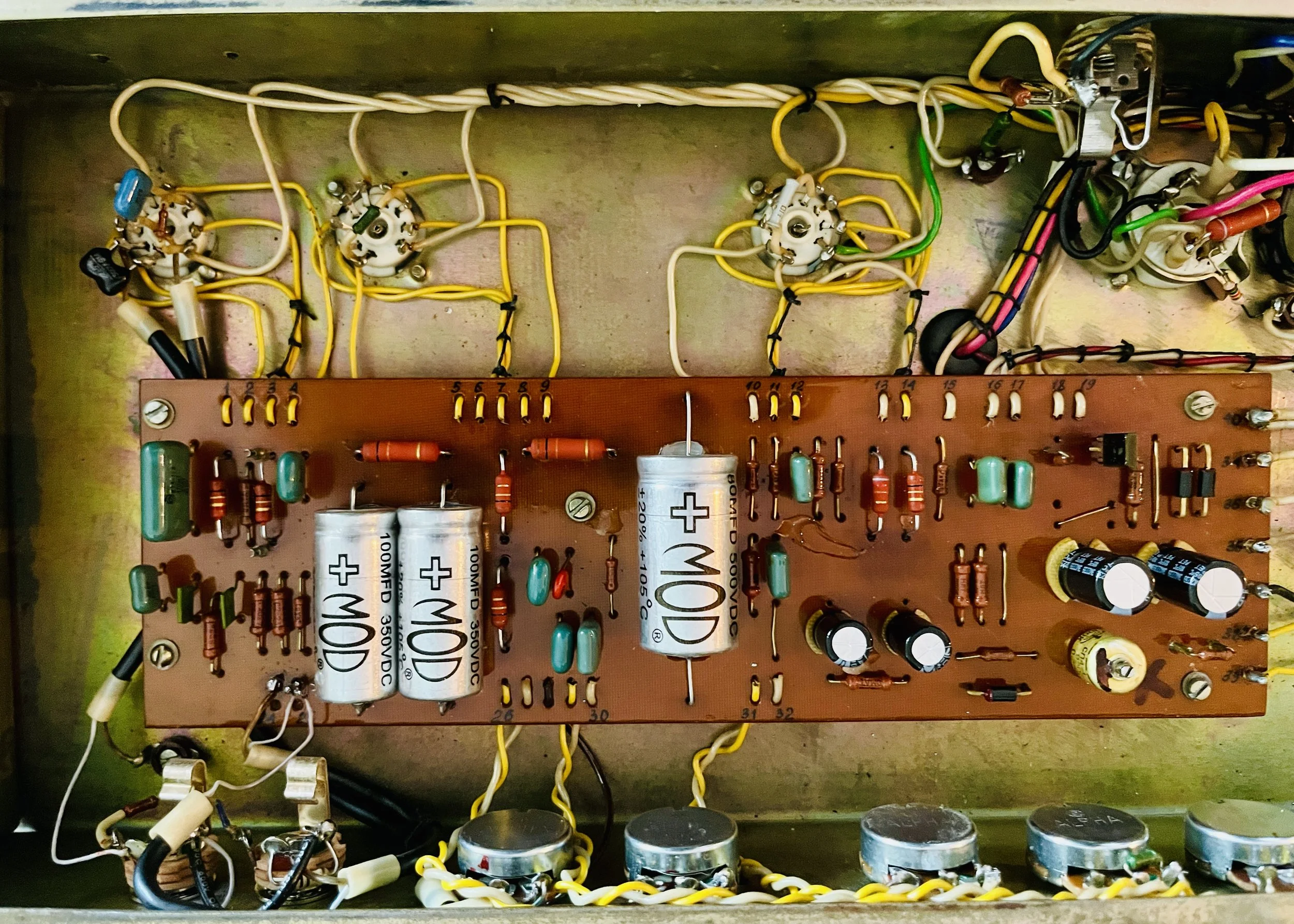
The amp was given a full restoration. All the axial lead electrolytic capacitors were replaced with upgraded voltage/temperature rated MOD brand units. The radial leaded electrolytic capacitors were replaced with new CE/Rubycon brand units with upgraded ratings. The power dropping resistors were upgraded to 2 Watt Metal Oxide and 3 Watt Metal Film type units. The Screen Grid Resistors were upgraded to 3 Watt Metal Film type units as the original parts were under-rated. This was also done for better noise floor and reliability. All plate resistors were replaced with 2 Watt Reduced Mass Metal Film type units for preventative maintenance, reliability, and low-noise.
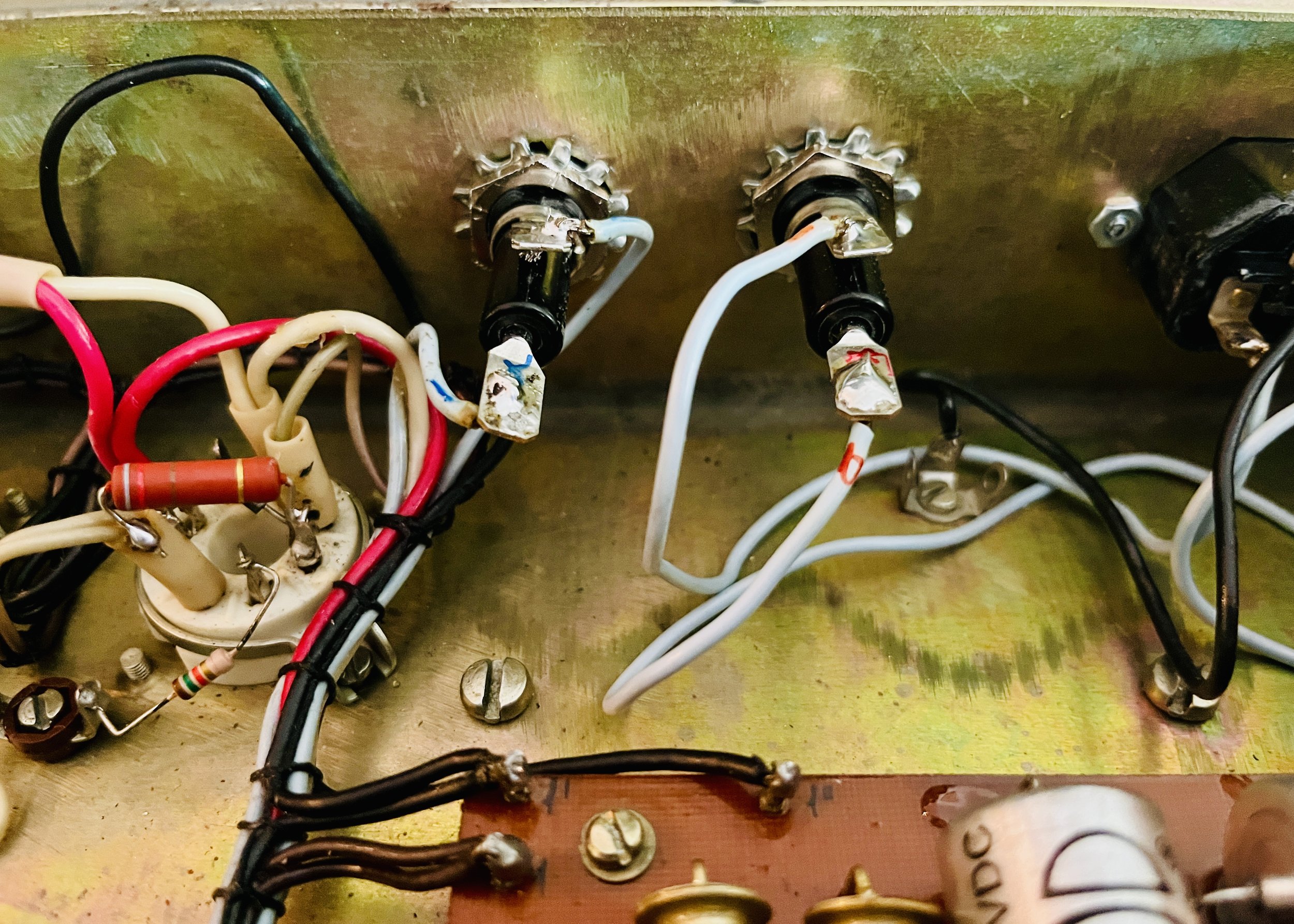
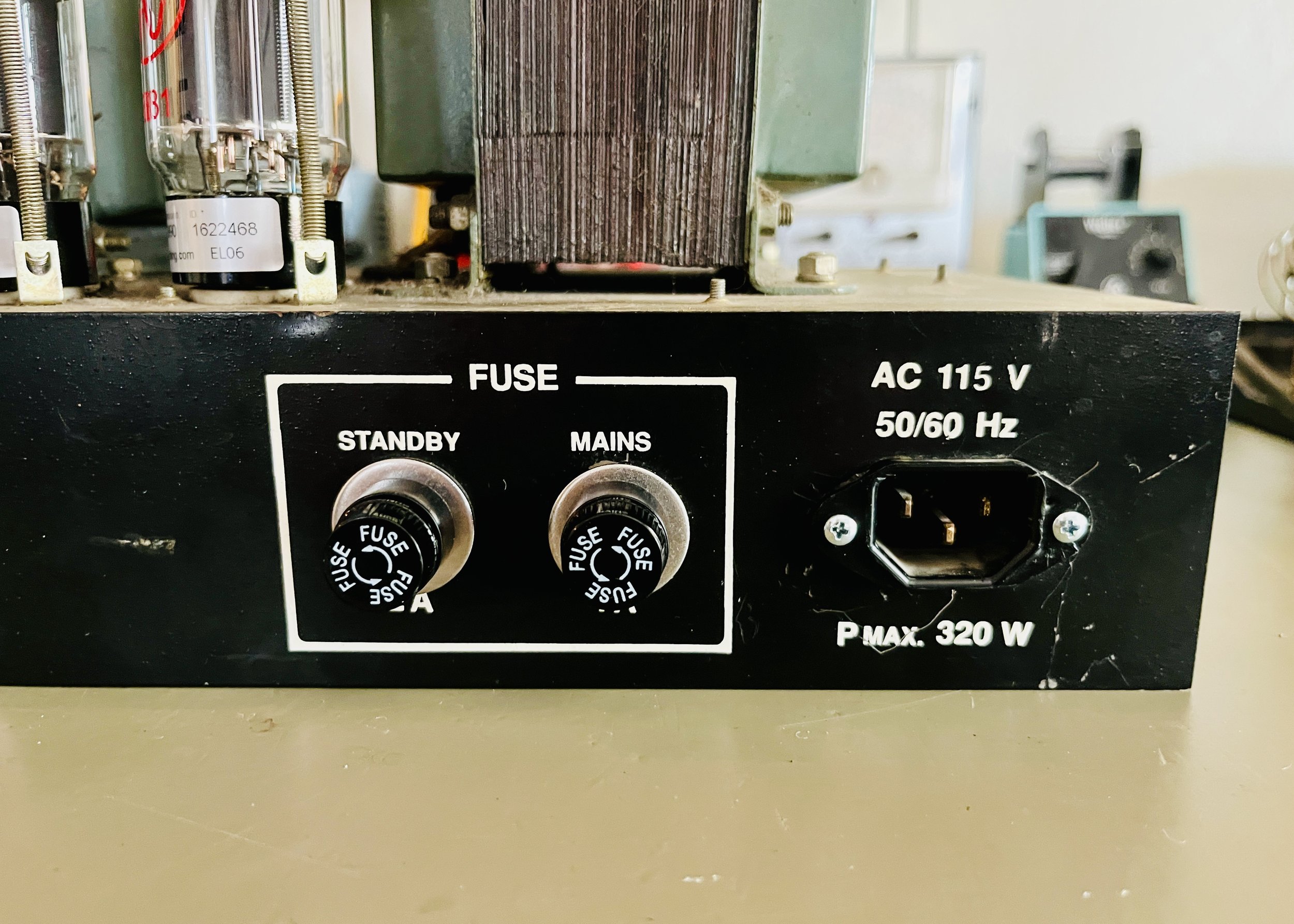
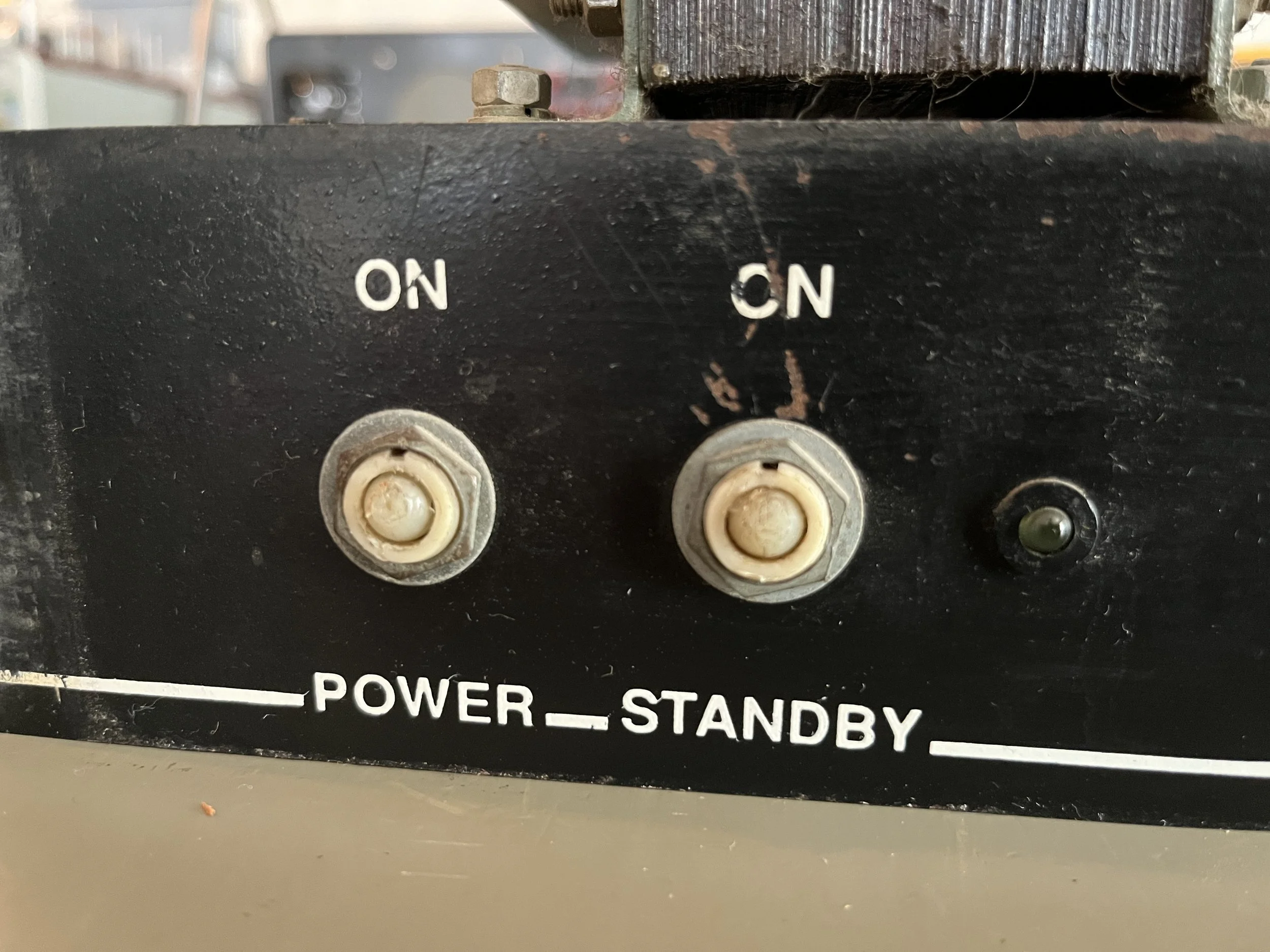
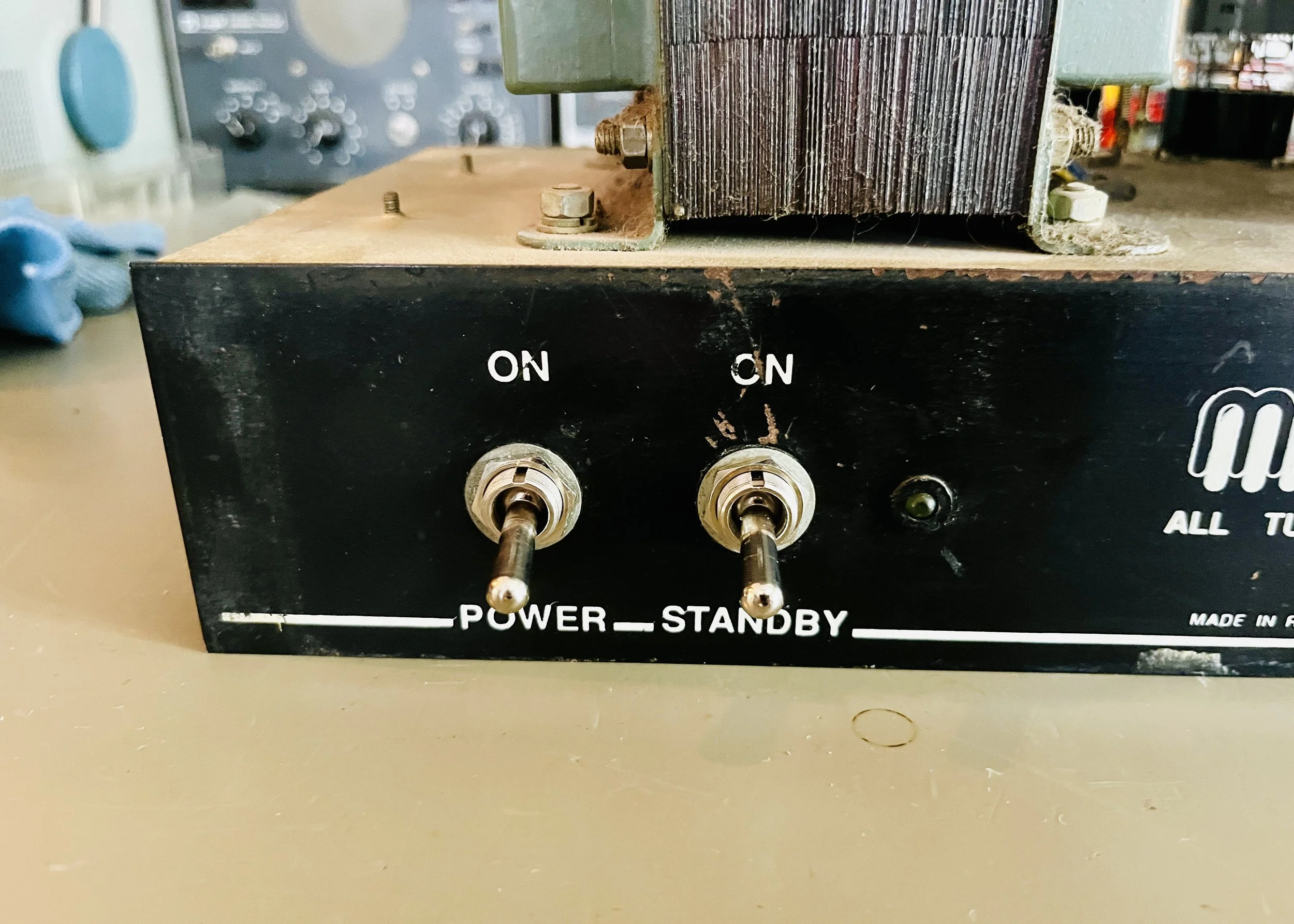
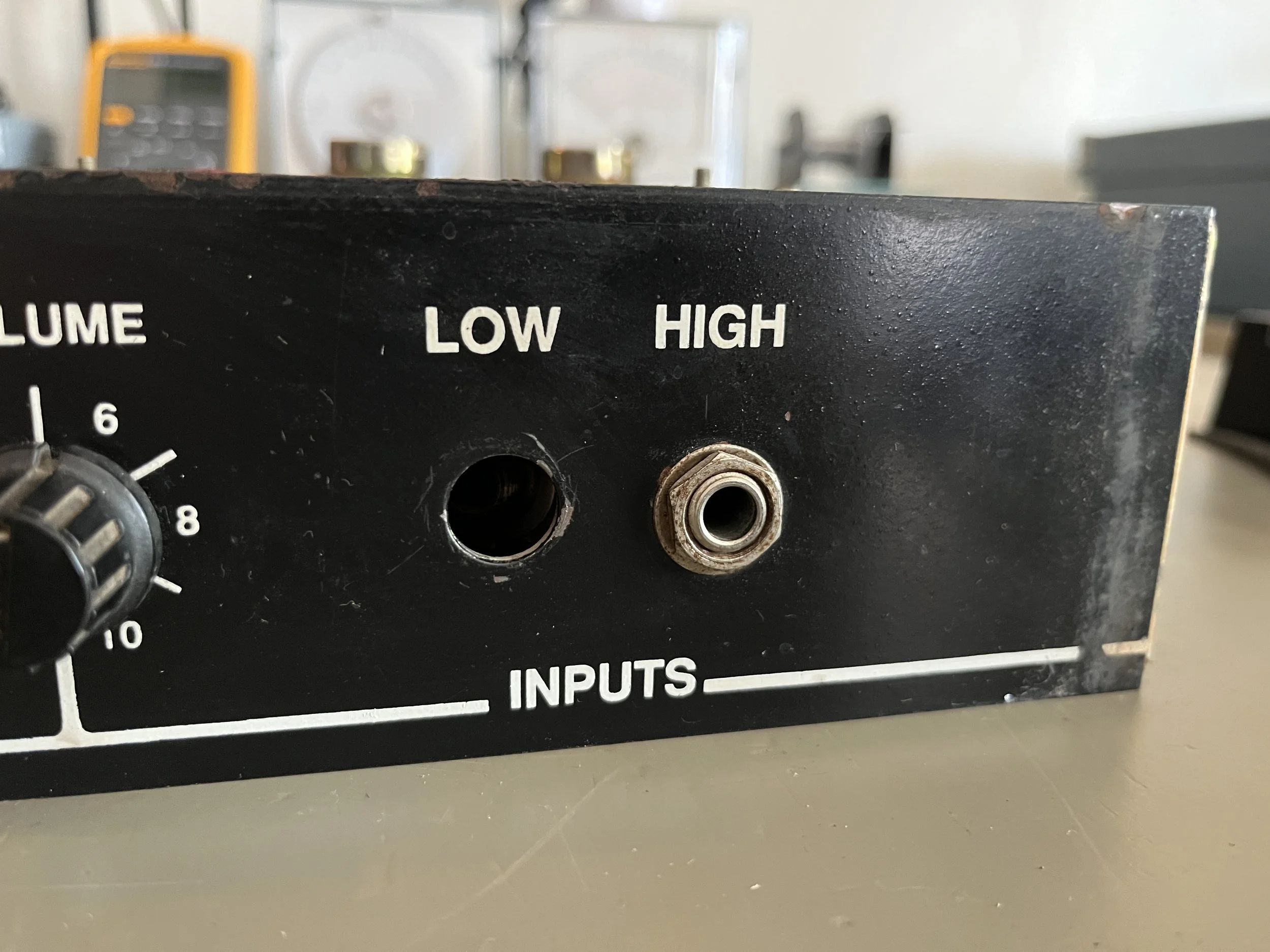
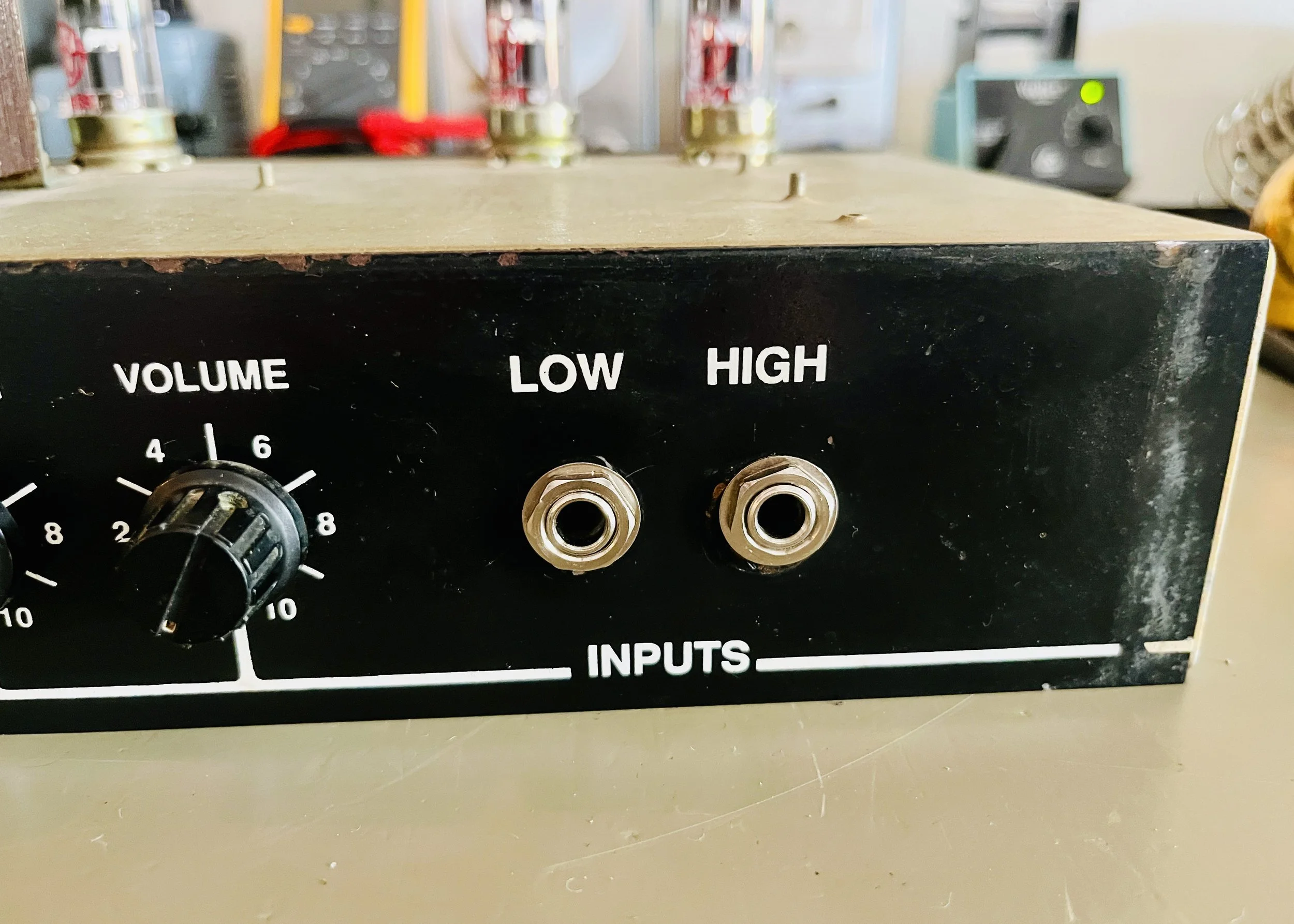
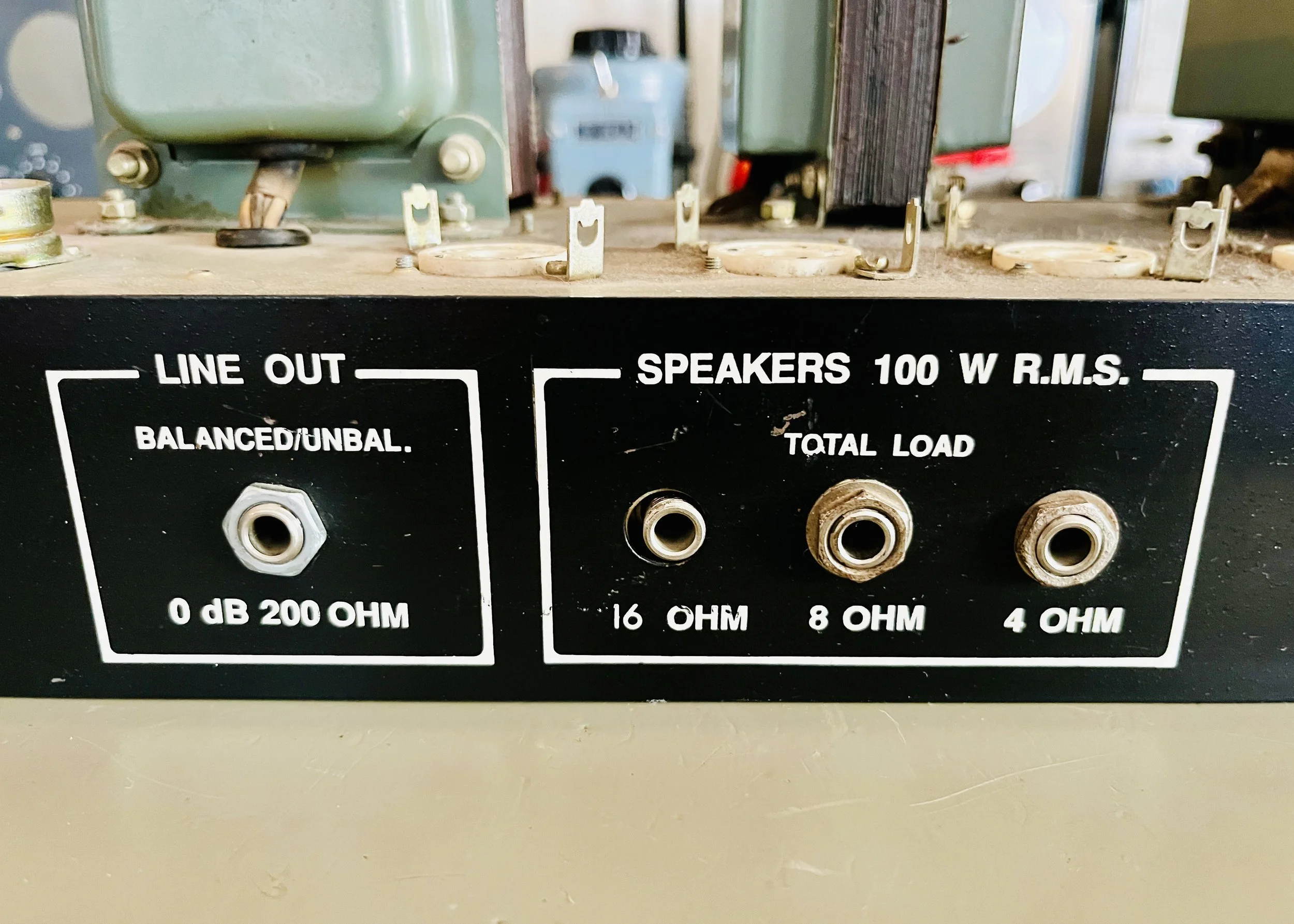
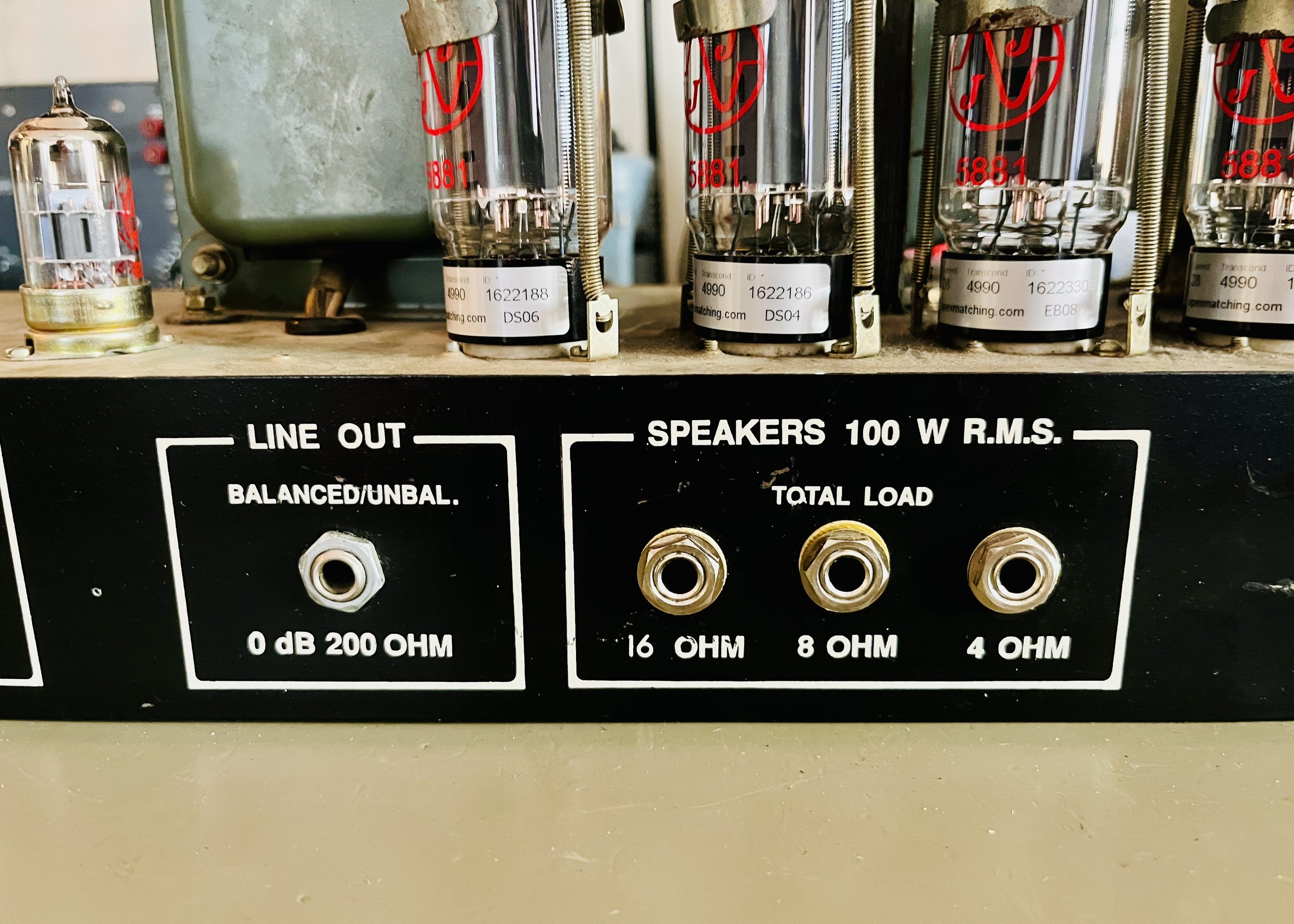
All of the 24MM - M8X0.75 potentiometers were replaced with new Alpha brand units due to the originals having volume drop/cutout issues. All Input/Speaker Output 1/4" jacks were replaced with new Switchcraft units, as the original parts were cheap, worn out, or had missing hardware with odd thread spacing. New high quality Carling DPDT Power Switches were installed to replace the broken originals. The original parts were made out of plastic, the new units are made from steel for long-life and reliability. Two new 3AG type fuse holders were installed to replace the original broken Bakelite fuse holders, stainless steel hardware was used to adapt the unusually large hole size to the standard size needed for the new parts. #6 Stainless Steel screws were used to replace the hardware holding in the front baffle of the cabinet, longer lengths were used to overcome the stripped holes present.
The original tubes did not test good and were all replaced: V1-V3 = JJ 12AX7S, V4-V7 = JJ 5881 Matched Quad. These tubes were picked for best tone, reliability, and low noise. The 5881's Fixed Bias was set to %69 Class AB Plate Dissipation with a B+ of 504VDC. The amp was cleaned inside and out and now works perfectly.